

Broody Hens: Nature’s Incubator (and What Science Says About Them)
If you’ve kept chickens long enough, you’ve met her.
The hen that suddenly refuses to leave the nest.
The one that growls, puffs up, and pecks your hand when you reach under her.
She’s not “being difficult.”
She’s doing exactly what she was designed to do.
She’s broody.
And from a biological standpoint, broodiness is one of the most fascinating—and misunderstood—states in poultry.
What Is a Broody Hen?
Broodiness is a hormonally driven behavioral state where a hen stops laying eggs and commits to incubating a clutch.
Scientifically, it’s defined as:
a state characterized by cessation of laying and major behavioral and physiological changes
This isn’t just a mood change—it’s a full-body shift.
She stays on the nest almost constantly
She reduces feed and water intake
She becomes defensive and vocal
She develops a brood patch (feather loss on the breast for heat transfer)
At that point, your hen has switched from “production mode” to “reproduction mode.”
The Hormonal Trigger (Why It Happens)
Broodiness is primarily controlled by the hormone prolactin.
When prolactin rises:
Egg laying shuts down
Ovarian activity regresses
Maternal behaviors increase
Research shows that elevated prolactin suppresses reproductive hormones, directly causing the ovary and oviduct to regress during broodiness
In simple terms:
The hen’s body says:
“Stop making eggs. Start raising chicks.”
What Happens Inside the Hen’s Body
This is where it gets really interesting—and important for breeders.
During broodiness:
Follicles in the ovary stop developing and regress
The reproductive tract shrinks (atrophy)
Egg production drops to zero
This is not a minor pause. It’s a full shutdown of the laying system.
That’s why broody hens can take time to return to lay even after you “break” them.
The Trade-Off: Broodiness vs Egg Production
From a production standpoint, broodiness is a loss.
Studies consistently show:
Broody hens lay fewer total eggs
Non-broody hens maintain higher production rates
This is why modern commercial breeds have had broodiness selectively bred out.
But here’s the flip side…
The Value of a Broody Hen (What Science Confirms)
Nature didn’t design broodiness by accident.
A broody hen is essentially a self-regulating incubator + brooder + teacher.
Research shows:
1. Natural Incubation Efficiency
A broody hen:
Controls temperature
Regulates humidity
Turns eggs
Manages ventilation
All without electricity or human input
In many cases, hatchability can rival artificial incubation.
2. Improved Chick Behavior and Welfare
This is where the science really supports what experienced breeders already know.
Chicks raised by broody hens show:
Less aggression
Reduced feather pecking
Better social behavior
These effects persist into adulthood
That’s huge.
It means broody hens don’t just hatch chicks—they shape the flock’s long-term behavior.
3. Built-In Maternal Care
Broody hens:
Teach chicks how to eat and drink
Provide warmth and protection
Regulate chick behavior through vocalization
This maternal system is driven by the same prolactin pathway that triggered broodiness in the first place.
What Triggers Broodiness?
Broodiness doesn’t happen randomly. It’s influenced by:
Egg accumulation in the nest
Dark, quiet nesting areas
Warm weather
Genetics (some breeds are far more prone)
Allowing eggs to pile up is one of the strongest triggers
Breeds That Go Broody (and Why It Matters)
Broodiness is strongly genetic.
Common broody breeds:
Silkies
Cochins
Orpingtons
Bantams
Rarely broody:
Leghorns
High-production hybrids
From a breeding standpoint, this is selection pressure in action.
More eggs = less broodiness
More natural reproduction = more broodiness
A broody turkey hen, you have to collect the eggs often and keep them moving in order to keep them laying.
You can’t optimize both at the same time.
The Cost to the Hen
Broodiness isn’t easy on the bird.
Broody hens:
Eat less
Lose body weight
Can become dehydrated if not monitored
They’re essentially in a controlled fasting state while incubating.
That’s why management matters—especially if you’re not letting her hatch.
Should You Let a Hen Go Broody?
That depends on your goals.
Let her brood if:
You want natural hatching
You value chick behavior and flock development
You’re building a sustainable breeding system
Break broodiness if:
You need consistent egg production
The hen is losing too much condition
You don’t want chicks
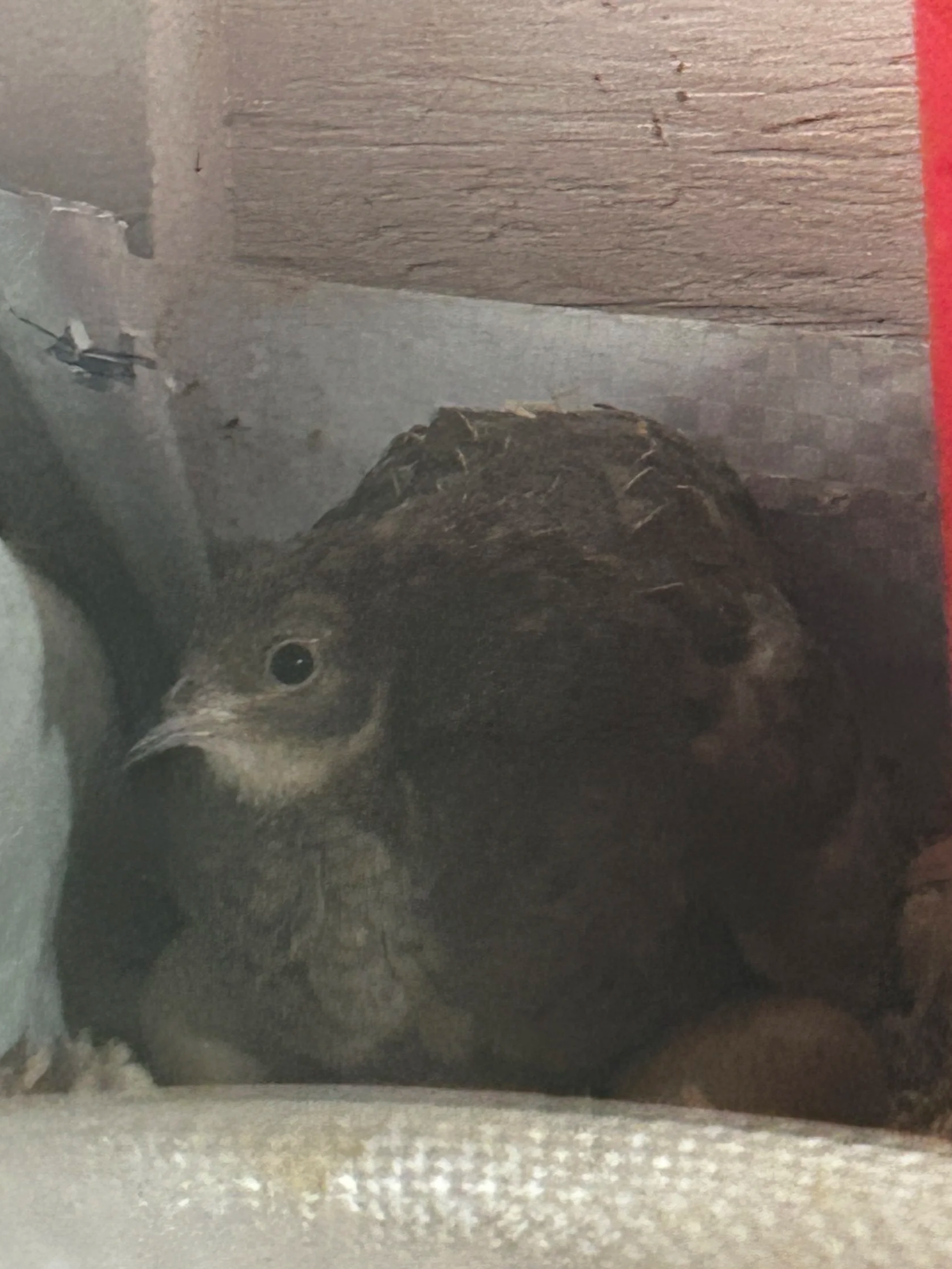
a broody button quail hen
The Bigger Picture (What Broodiness Teaches Us)
Broodiness is one of the clearest examples of how modern poultry production has diverged from natural biology.
We’ve spent decades breeding it out.
But in doing so, we’ve also removed:
Maternal behavior
Natural chick development
Self-sustaining reproduction
For backyard breeders—and especially for serious poultry programs—broodiness isn’t a flaw.
It’s a tool.
Final Takeaway
A broody hen isn’t “being stubborn.”
She’s executing a complete biological program:
Hormonal shift
Reproductive shutdown
Behavioral transformation
Maternal activation
And when you understand that…
You stop fighting broodiness—and start using it.
References
Hu et al., 2025. Research progress on broodiness behavior in poultry
Shimmura et al., 2015. Persistent effects of broody hens on chicken behavior
Jiang et al., 2010. Broodiness and egg production correlations
Review: Broody Hen Management During Egg Incubation
General definition and physiology of broodiness
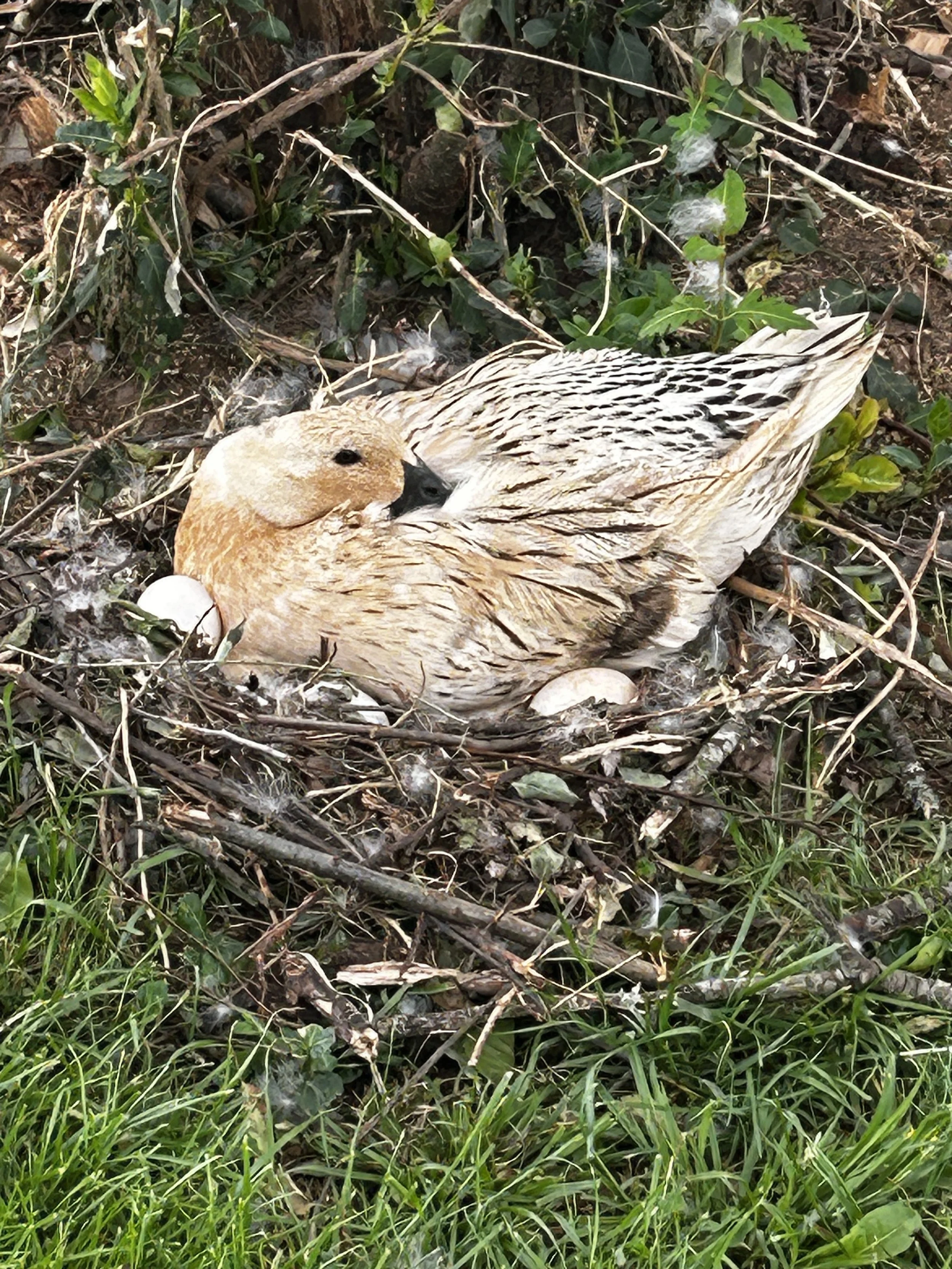
One of my Welsh Harlequin ducks setting on eggs.
FAQ’s
-
A broody hen wants to nest. Creating a way to keep her belly cool is the tool that will “break” her. A wire cage with no floor, dunking her belly in cool water and putting her away from he nest and sometimes just continuously removing her will do it, for awhile.
-
yes, and I have had it happen. Make sure the hen is out of the hot sun. If she is “hard” broody and it is hot outside, remove her during the heat of the day and essentially encourage her to eat and drink. Some will not, hang cage cups on the nest box or place within reach and keep an eye on her.
-
A hen that is broody will lay flat, growl and bite if you come close. If she gets up and willingly leaves without issue, she is not “hard” broody. You need a hard broody to properly set eggs.
-
Yes! With a permanent marker. A hen’s skin is moist and pencil will come off. Mark the eggs that she is setting on and note the date in your calendar. Other hens will come along and lay eggs on her back and head and she will incorporate them and you will have a mess later. Remove new eggs daily.
-
No. unless there is an odor coming from the nest, leave her be. Any eggs she rolls out on purpose should be disposed of, she knows what she is doing.
-
Leave the broody in her spot until they hatch. Moving her may break her. Once they are hatched, move all of them to a safe spot. Her coop mates may attack the chicks but the biggest issue is food and water for the chicks. The larger ones will eat and drink it all and the chicks will not get enough. After a few days or a week, let them out during the day but put them away at night for food and water. She will tell you when it is no longer necessary.
-
No, mama hen is the heat and she ihas hormones to keep her warm.