

The Cornish Cross Chicken
One of the only types of chicken to have so much controversy and secrecy, the Cornish x chicken has all the drama! Created by cross breading and selective breeding, “creators” used Rocks and Cornish breeds to start. The breeder stock is bred to be able to lay eggs and procreate while the offspring is the Cornish cross we know as a meat bird. The breeder stock would be selected for the larger breasts, frame and leg size but be able to maintain a normal life. These flocks of breeders are kept under strict controls and secrecy. The hatcheries then buy these hatching eggs and incubate in order to send out day olds to their customers. Now you know why you cannot buy your own broiler breeders!
Let’s move to the why you should have some cornish x. For us, it’s variety in the freezer. We also harvest our Orpingtons but they have a much different flavor profile. Cornish are what you eat in a restaraunt, the meat is blander, less tendons and has a softer texture than heritage meat. Both have their place in a kitchen for us, we use the Cornish for BBQ, frying and tenders. The Orpington is fantastic for soups, stews, canned, broth, etc. The heritage meat will have much more tendons and be a tougher meat because they lived longer and used those muscles to run, fly, play, etc.
Let’s move on to actually getting and raising the Cornish X. Now you know you have to actually buy them from a store. If you decide to get at a box store, then know they are little yellow fluffs with YELLOW legs. They will be heavy feeling and hot. Until you raise Cornish, it’s hard to describe, but the bird feels hot, I assume it’s the fast metabolism that makes it feel this way. We have gotten ours from different hatcheries and this last batch was Valley in Alabama. There are 3 strains of Cornish, and if you are inclined to research them, the hatchery should tell you which strain you have and they do grow a bit differently, The Ross 308 is what they have and what I prefer. We got them in the past from Meyer and they are more vague on which line you will actually get as they carry them all. I will say that we are impressed with the Ross 308’s. They have been the largest we have ever raised but in all honesty, I used a different feed, so not a 100% fair comparison. Ordering to have them mailed to you does take some planning, they stay sold out for a few months typically. When you order, you have the luxury of planning 8 weeks in advance, so don’t only plan shipping date but also harvest date, this is a mostly fixed date and not flexible. Therefore, know what you are doing 8 weeks after ship date and try to plan for weather also, its miserable harvesting chicken in August. Don’t forget freezer space, don’t get more than you have room for.
Now that you have the chicks, you need to brood them. This is just typical brooding, clean, feed, warm water, heat; but just for a week or so (weather dependent). They require a higher protein feed than typical chick starter to grow to their potential. I have feed them 18% starter from start to finish and I was happy with them, but this year we did Kalmbach Meat bird 22% and WOW they are huge! Here is a pic of the bag and we went thru @ 1200 pounds of feed for 104 birds.
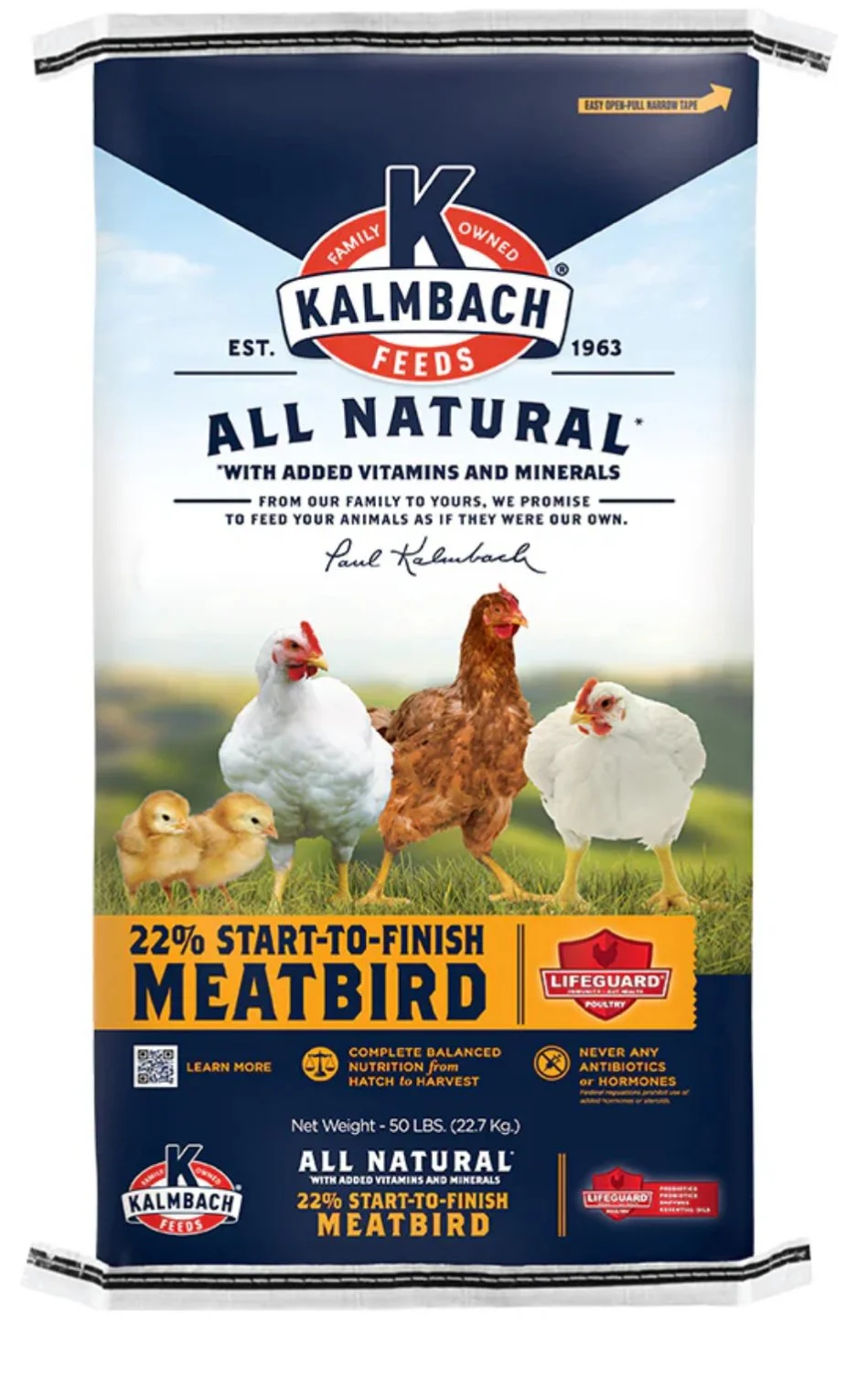
Heat is necessary as they are chicks, room temperature water and clean litter is important. Here is another tidbit if this is your first go around, the birds are wet feeling, its a strange thing to say but once you have them you will notice it, they are hot and wet, almost like they sweat, but we know they aren’t. For this reason I like the pellet bedding to absorb any moisture. Keeping them dry will reduce any chill also.
Now the fun part! These little hot flufflballs are adorable and they grow fast, mush more like a quail than a chicken! Keep them watered and fed 24 hours a day at this point, we want too get them going. You will need to have plenty of space or more brooders set up to divide them. You don’t want anyone not being able to get to the feed and water. They will drink way more water than any other chick so have plenty of waterers.
Unless it’s really cold, you can get them off heat by 3 weeks, 4 is the max. Now is the time you want to start watching their growth and feed intake. What you want to do is start limiting their feed to not gorge themselves. If this happens,, they will put on weight faster than their bodies can handle it and have health issues. The typical rule of thumb is 12 on and 12 off feed every day. Since we are in the barn on and off all day, we feed them several times a day, but only what they can eat in a hour or so, then let them digest for a couple hours and start over. No food at night. We put them out on grass at about 5 weeks and they wander and pick at bugs and such to occupy their time and we feed in morning and evening at this point.
There are a few ways to raise them once outside and its personal preference. We just put them out during the day and lock up in evening, we do not have a predator issue because we have LGD’s. They wander about 50’ max from barn because they know thats where to good stuff is. They will follow for food, therefore no issue putting them up. We have tried it in the coops/runs and I was not happy with that at all, remember the wet? Yeah well, they stink! We have pigs and quail and the Cornish have their own smell, not pleasant either. I prefer them to be able to wander into the grass and spread that around! Less cleaning later.
Now you are up to 7ish weeks and you need to start paying attention to their size. Depending on how many you can handle processing at a time vs how many you have and what the size of them are will determine harvest day. Here, we cannot do them all at once, we break it up unto 3 days, about a week apart. The first day we choose is when they seem to be at their biggest and may start losing them to health issues. We just start with the largest on each day until they are all gone.
You don’t need fancy equipment, don’t let these sites sell you that stuff as necessary. I mean some stuff does make it a tad easier but it’s hard work so prepare yourself. First you need to decide how to dispatch, we are old school and use a hatchet. We have some cinder blocks turned hole side up that we stick them in to bleed them out. We have tried cones and not for us. We did try wringing necks this time, also not for us. Hatchet it is!
Now the biggest question of them all! How to get them to the freezer? First, how do you buy chicken at the store? Doo you buy whole? boneless skinless? split breast?……….Once you answer that, continue reading………..LOL, that answer will dictate how your process will go. If you buy whole chickens, then you need to pluck. This can be done by hand, Cornish don’t have alot of feathers, or with a plucker. You need scald water, just dip in 150 degree water until all wet, no more than 15 seconds, and commence to plucking. If you like boneless, skinless, then you just skin the bird and no plucking necessary! From the cinder block, lay it on your surface. Break the knees but don’t detach yet. Turn the neck toward you and run your knife under the skin along the breast bone, starting at the neck cut point. Once it is started, you take if off like a jacket, the slit you cut is like the zipper. Just work it off like a jacket you tried on that use to fit in high school and it’s a bit tight. When you do the wings, I just break at last joint and peel off skin and the tip comes off with it. The leg, pull the skin down below the joint where you broke it and then cut thru the joint you can now see, the foot will come off with the skin. Now you should have a whole skinless chicken. Turn the neck away from you and cut off the vent with scissors, this will open up the cavity and you can pull out the innards and keep what you want, we keep the heart and livers for the dogs. The rest goes to the catfish pond. Hose it off and clean it up. Stop here or continue to get the cuts you desire.
Make sure you have coolers of ice to throw them into. Packaging can be done a couple ways. I have used heat shrink bags and they are awesome but you need a boiling pot of water and to work quickly. Now I just get premade bags for the vacuum sealer and we portion out and freeze. We also can some for quick dinners.
In conclusion, if it’s your first time doing Cornish, don’t over do it, get 20 or so for the first run. We do 100 every spring for 2 households and that is alot of work! Both daily and processing and freezer space. I truly believe everyone should know how to grow their own food and Cornish are a great starting point or to create variety in the freezer for the seasoned farmer.