
Hatching Egg Selection
All eggs are not created the same. Regardless of the poultry species it is up to us to decide the usefulness of an egg,.
This time of year, everyone is happy to be getting eating eggs and hatching eggs. Let’s talk about what makes a good hatching egg. We want to use solid eggs to reproduce birds, to pass on solid genetics and to give the chicks a solid start.
The obvious defects like soft shell or cracks should not be used for hatching. Eggs that have been frozen are also not a good choice. Eggs that have been exposed to extreme heat are not viable. Misshapen eggs like torpedos or balls also should not be used. Eggs with thin shells aren’t suitable.
These all seem obvious but there are some that aren’t as obvious that we need to watch for. Pullet eggs are always a hot topic. Eggs should be full size to allow room for a chick to grow. Also, a pullet egg is less likely to be fertilized. The first eggs a bird lays are usually wonky and not typically fertilized. Eggs that aren’t “finished”, meaning they don’t have the speckled or splotches or sheen that they should. If you choose inferior eggs to hatch, you will hatch inferior chicks.
I suggest these eggs be used for eating, feeding the dogs, even feeding back to the birds. A torpedo egg makes a fine breakfast.
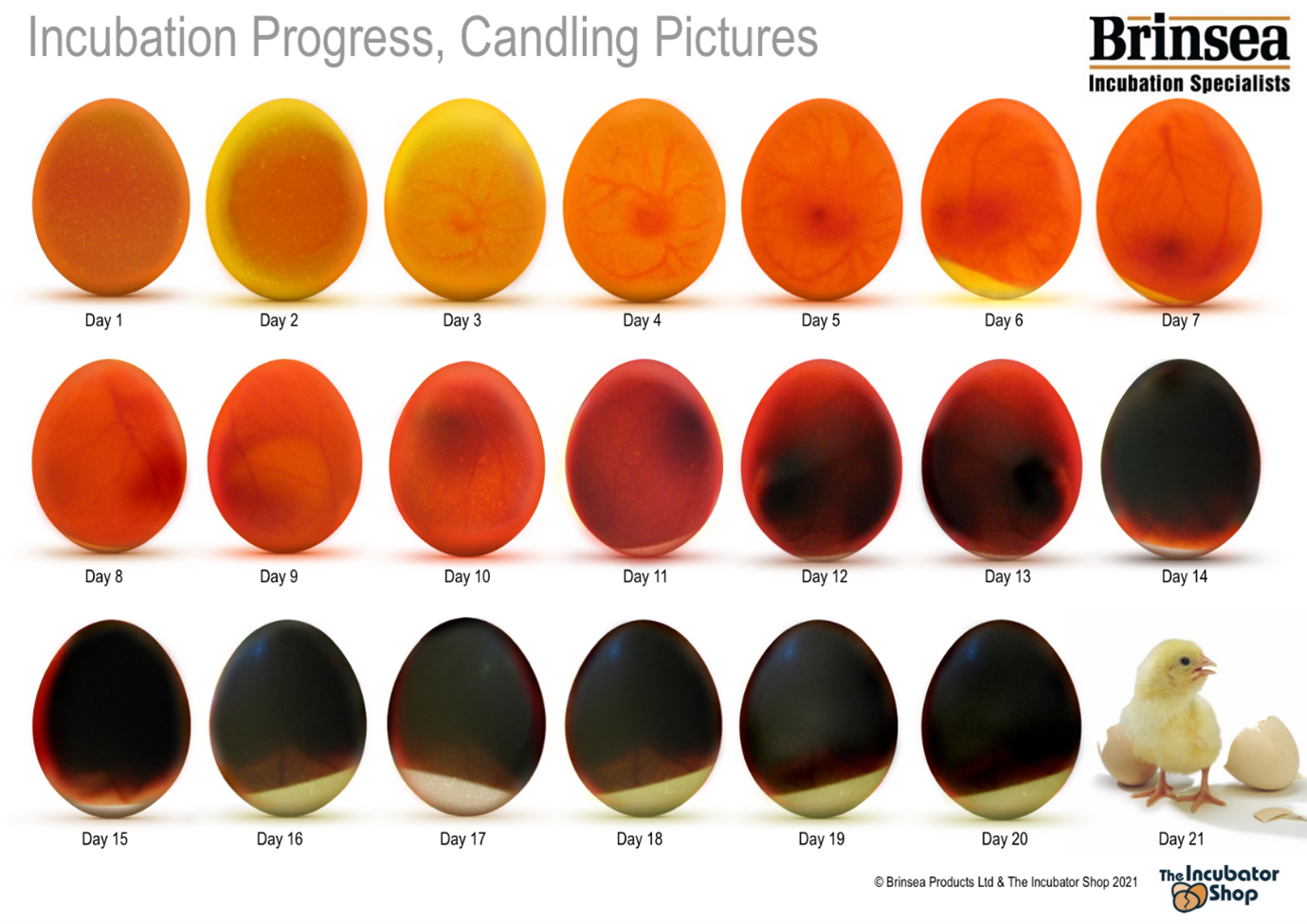
Lastly, eggs that have been under a broody. If you have a broody hen and want her to set, mark the eggs. Take a sharpy and put an X on it. Even the date is good. Check this nest daily and pull all eggs without an X. She does not need more eggs than she can comfortably cover. An egg won’t start developing in the first day, so pull it and use it elsewhere. Let mama hen do her thing. If you mark the eggs, pull new lays, then you do not need to candle them, just mark your calendar for 3 weeks and check back on her. If you have any doubts on an egg, candle it. Say you forget to mark the X and she abandons the nest, then candle the eggs. Find a egg candling chart and compare the best you can. IF it is dark with defined air sac, then just place it in a hatching basket in the incubator. Do not concern yourself with turning. If you can see veining and a heartbeat, then try to match to the chart, err to the older, and set the egg in the incubator turner. Do not overthink this situation, guess the best you can and make the best decision you can. This happens to everyone.
I think I got most of the scenarios, if you have a different one, comment below and let’s see if we can add them all!