

How Birds Stay Cool: The Science Behind Heat Stress
Quick Look
Birds cannot sweat like mammals.
Panting is the primary way poultry remove excess body heat.
Airflow helps birds cool themselves through convection and evaporation.
High humidity makes panting much less effective.
Misters can actually make heat stress worse in many situations.
Understanding how birds cool themselves helps you make better management decisions during hot weather.
Every summer, social media fills with advice about keeping poultry cool. Some recommendations are excellent. Others sound reasonable but don't actually help the bird.
To understand what works—and what doesn't—we first have to understand how birds regulate their body temperature.
Unlike people, birds cannot simply sweat when they become hot. Their bodies rely on an entirely different cooling system. Once you understand that system, many common heat management recommendations suddenly make much more sense.
I created a checklist for you to track heat stress in your birds, with tips I use to keep my birds cool.
Birds Naturally Run Hot
Healthy poultry maintain body temperatures much higher than humans. Chickens and Coturnix quail typically have normal body temperatures between 105 and 107°F (40.6–41.7°C).
That means a bird living comfortably on an 85°F day is still trying to shed roughly twenty degrees of body heat into its environment. As the air temperature rises, the difference between body temperature and air temperature becomes smaller, making it increasingly difficult for the bird to lose heat.
If the bird produces heat faster than it can remove it, body temperature begins to rise. This is the beginning of heat stress.
Scientists refer to this balancing act as thermoregulation, which is simply the body's ability to maintain a relatively constant internal temperature despite changes in the surrounding environment.

Quick Look
Designed by Jennifer Bryant for comfort and ease of use
Fits standard pint and quart mason jars (not included)
Waterer shaped with a bird's natural beak in mind
Feeder features a center cone for improved feed flow
Made in the USA
FREE Shipping
Mason Jar Feeder & Waterer Set
After years of raising poultry, I couldn't find a feeder and waterer that worked exactly the way I wanted, so I designed my own.
The Bryant's Roost Mason Jar Feeder & Waterer Set was created with the bird's safety, comfort, and natural feeding behavior in mind. The waterer features an angled drinking area designed around the shape of a bird's beak, making it easy for chicks and adult birds to drink comfortably. The feeder includes a center cone that encourages feed to flow smoothly toward the feeding ports, helping reduce bridging and wasted feed.
Both bases fit standard pint and quart regular-mouth mason jars (jars not included), making them inexpensive and easy to refill.
This set is ideal for Coturnix quail, button quail, chickens, Kikiriki, Seramas, Silkies, poults, and other small poultry. Whether you're raising baby chicks or maintaining a breeding flock, these feeders are designed to make daily care easier while helping keep feed and water cleaner.
Proudly Made in the USA.
What's Included
Mason jar feeder base
Mason jar waterer base
Fits pint and quart regular-mouth mason jars
Jars not included
FREE Shipping
Who It's For
Perfect for backyard chicken keepers, quail breeders, homesteaders, educators, and anyone looking for a cleaner, more efficient feeding and watering system.
Why Bryant's Roost?
These aren't generic imported poultry supplies. They were designed from years of hands-on experience raising quail and chickens, with practical features that make caring for your birds easier every day.
Birds Don't Sweat
One of the biggest differences between birds and mammals is that birds do not possess functional sweat glands capable of cooling the body.
Humans depend heavily on sweating. As sweat evaporates from our skin, it removes heat from our bodies.
Birds simply cannot use that strategy.
Instead, they rely on evaporative cooling through their respiratory system, increased blood flow to unfeathered body parts, and behaviors that help reduce heat gain.
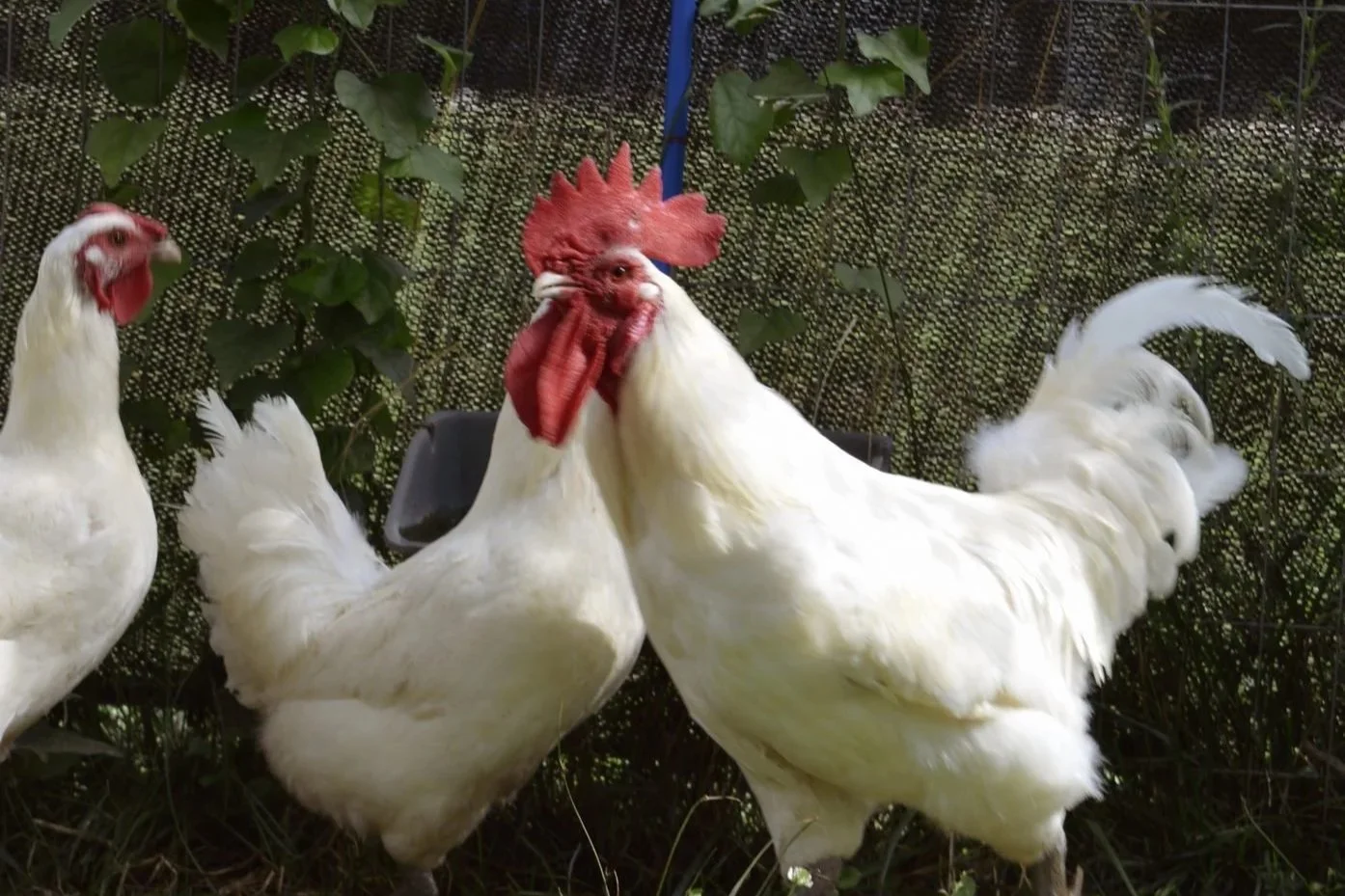
You can see the shade cloth behind the birds that hangs on their run. I just clip it up with carabiners to the fence. I get mine on Amazon.
Panting Is the Bird's Air Conditioner
When a bird becomes too warm, the brain increases its respiratory rate. The bird begins panting with its beak open, allowing large amounts of air to move across the moist tissues inside the mouth, throat, and upper respiratory tract.
As moisture evaporates from these tissues, heat is carried away with it.
This process is called evaporative cooling, and it is the primary way poultry survive hot weather.
Panting is remarkably effective, but it comes at a cost. Understanding how chickens regulate their body temperature also helps explain why many popular summer remedies fall short. From apple cider vinegar to homemade water additives, well-meaning advice can sometimes do more harm than good. In ourPoultry Nerds Podcast article, "Dangerous Homemade Chicken Remedies," we separate common myths from evidence-based practices to help you make informed decisions for your flock.Every breath carries water vapor out of the body. During periods of heat stress, birds may consume two to three times more water than normal simply to replace what is lost through evaporation.
Panting also requires muscular effort. The harder a bird has to work to stay cool, the less energy is available for growth, egg production, fertility, immune function, and normal activity.
The Comb and Legs Help Dissipate Heat
The comb, wattles, legs, and feet contain large networks of blood vessels with relatively little feather insulation.
As body temperature increases, blood vessels in these areas dilate, allowing warm blood to circulate closer to the surface.
Heat naturally moves from warmer objects to cooler ones, so heat transfers from the bird's blood into the surrounding air before that blood returns to the body.
These structures essentially function as natural radiators.
This is one reason birds often stand instead of sitting during hot weather. Standing exposes more of the legs to moving air and reduces contact with warm bedding.
Why Fans Work
Many people assume fans only help if they blow cool air.
That isn't actually why fans are effective.
A layer of warm air naturally surrounds every bird. If that air remains still, it acts like insulation, slowing the movement of heat away from the body.
Moving air continuously removes that warm boundary layer and replaces it with slightly cooler air. This increases convective heat transfer, allowing more heat to leave the bird.
Fans also increase evaporation from the respiratory tract, making panting much more efficient.
As long as the air temperature remains below the bird's body temperature, moving air almost always improves the bird's ability to cool itself.
This is why commercial poultry houses place such a heavy emphasis on ventilation.
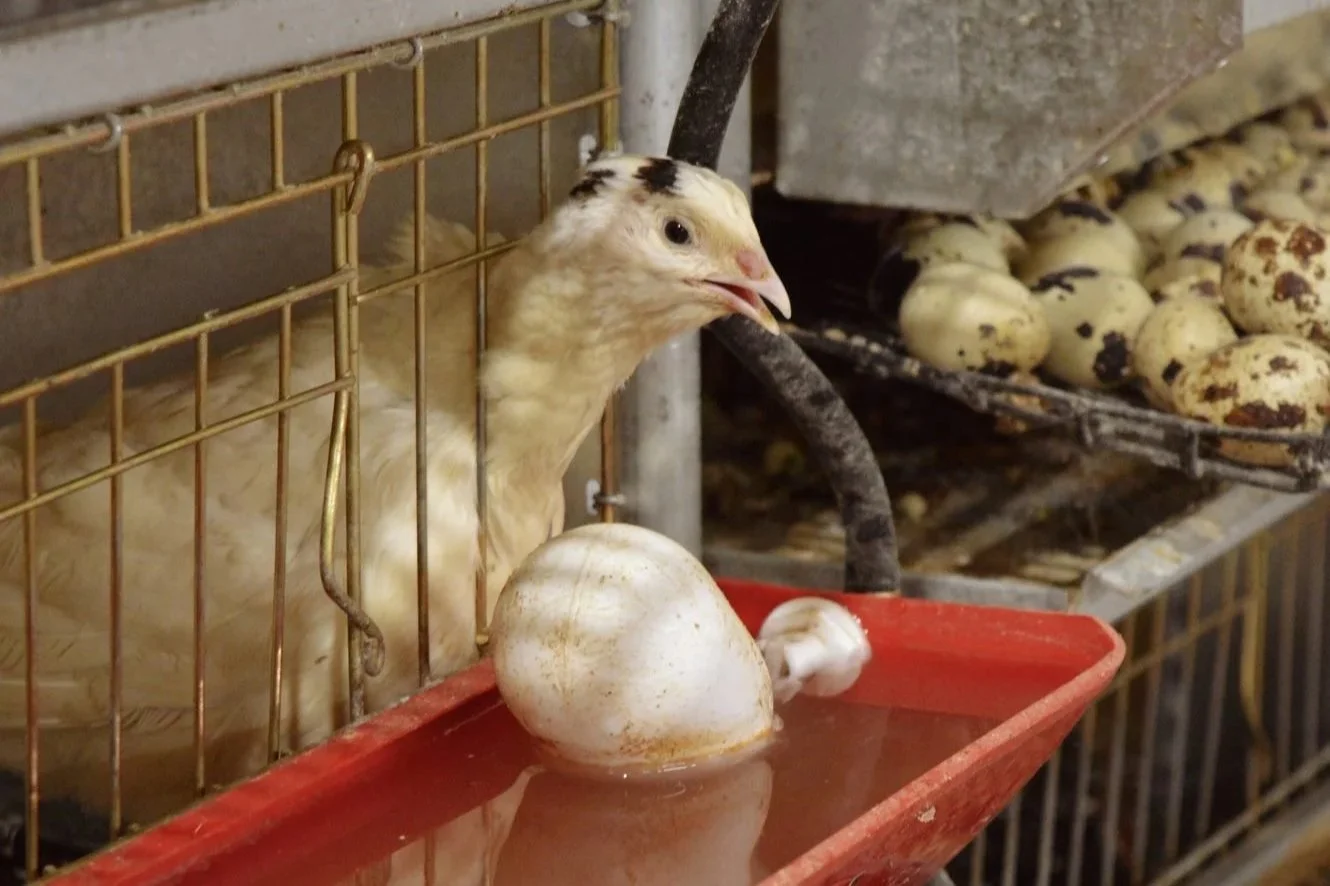
I have fans inside for the quail. One blows across them, the other is a massive exhaust fan. They always have water available.
Humidity Is Often More Important Than Temperature
Temperature receives most of the attention, but humidity is often the factor that determines whether birds can cool themselves successfully.
Evaporation only works when moisture can move from the bird into the surrounding air.
As humidity increases, the air already contains more water vapor. That makes additional evaporation much more difficult.
A bird may pant twice as hard while removing only a fraction of the heat.
This is why an 88°F day with very high humidity can place more stress on poultry than a 95°F day with dry air and good airflow.
Whenever humidity rises, ventilation becomes even more important.
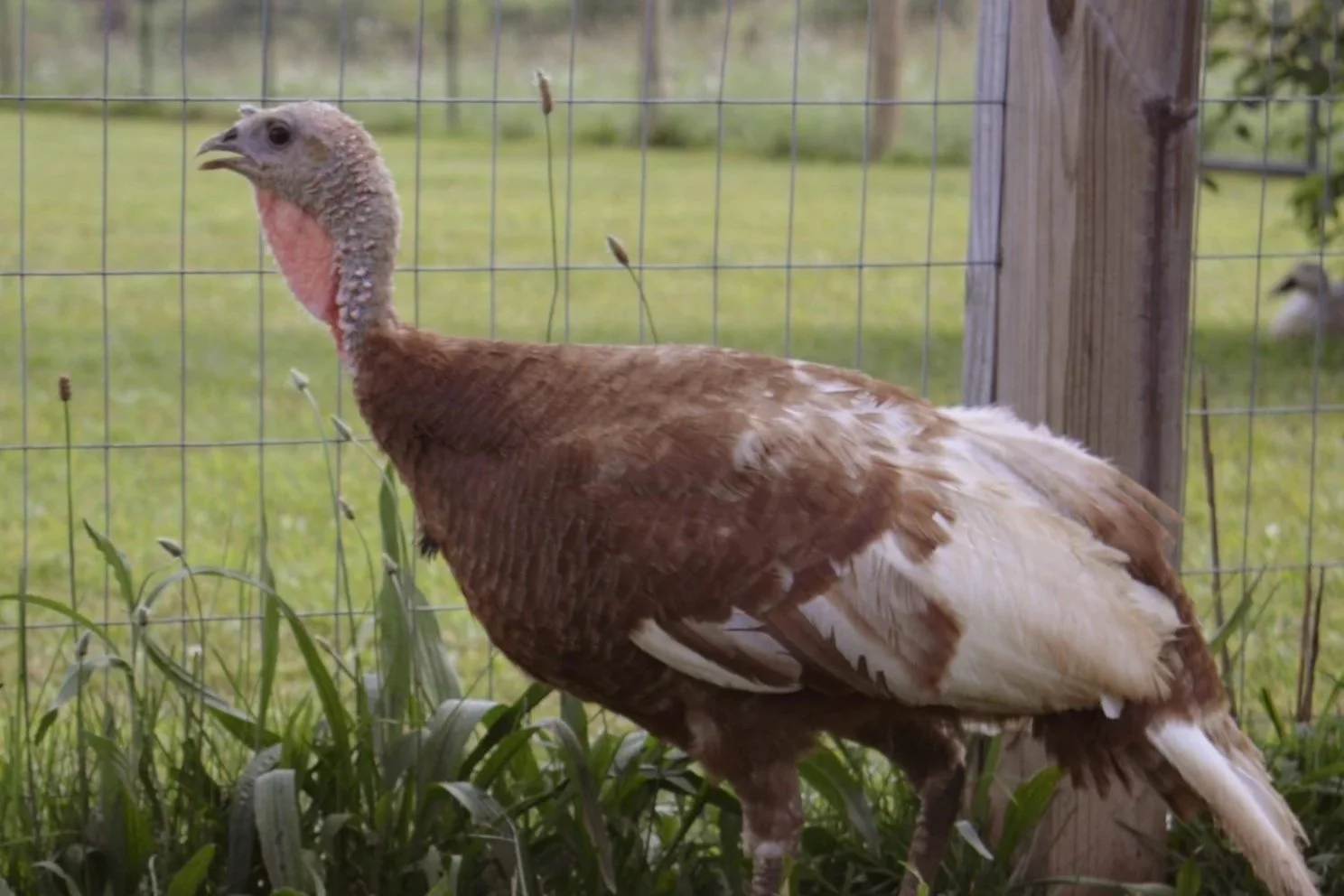
One of my bearded turkey hens, you can see how I allow the grass to grow taller, providing them a cool spot
Why Misters Are Usually Not Recommended
One of the most common suggestions during hot weather is to install misters around the coop or run.
While this sounds logical, it often works against the bird's natural cooling system.
Remember, birds cool themselves primarily by evaporating moisture from their respiratory tract.
When misters add water to the surrounding air, relative humidity increases. Higher humidity slows evaporation, making panting less efficient.
Instead of helping the bird lose heat, excessive moisture can actually reduce its ability to cool itself.
Misters may also wet feathers. Feathers provide insulation, and once they become soaked, they trap moisture against the body while making the environment more humid.
Another concern is litter quality. Wet litter encourages bacterial growth, increases ammonia production, and creates conditions favorable for flies and other pests. Poor litter quality also contributes to respiratory irritation, footpad problems, and reduced overall flock health.
Commercial poultry facilities generally focus on high air exchange rates, tunnel ventilation, evaporative cooling pads located outside the house, and carefully controlled environmental systems. Those systems are engineered to cool incoming air while maintaining proper airflow and managing humidity. Simply spraying water around birds in a backyard coop is not the same thing.
If you use any type of evaporative cooling, it should cool the incoming air, not continuously soak the birds or raise humidity inside the coop.
Birds Change Their Behavior for a Reason
Heat-stressed birds instinctively change their behavior to reduce heat production and increase heat loss.
You may notice them standing rather than sitting, holding their wings away from their bodies, seeking shade, drinking more water, eating less during the hottest part of the day, or becoming much quieter than usual.
These are normal physiological responses.
However, if birds begin lying on their sides, become weak, lose coordination, or stop responding normally, they are no longer simply cooling themselves. They are experiencing severe heat stress and require immediate intervention.
Helping Birds Cool Themselves
Instead of trying to cool the bird directly, focus on creating conditions that allow its own cooling system to work efficiently.
Provide unlimited access to clean, cool water throughout the day. Maximize airflow with properly placed fans. Offer shade during the hottest hours and avoid overcrowding. Keep litter as dry as possible to reduce humidity, and postpone handling, transporting, or breeding birds until the cooler parts of the day whenever possible.
I use shade cloths on top and west sides of the run. I also allow grass to grow tall around the edges so create even more cool shade in the dirt. I use peat moss and stall pellets inside for a dust bath which stays dry and loose. Use buckets or troughs for water, not nipples, to allow as much water as possible.
These management practices support the bird's natural physiology rather than fighting against it.
Bryant's Roost Tip
When people ask whether fans or misters are better, the answer is usually fans.
Air movement improves both heat transfer and evaporation, while misters often increase humidity and make the bird's primary cooling system less effective. In most backyard poultry situations, improving ventilation will provide greater benefit than adding moisture to the air.
Jennifer Bryant is the founder of Bryant's Roost and co-host of the Poultry Nerds Podcast. She holds a B.S. in Animal Science and has completed advanced education in poultry incubation through the University of North Carolina Poultry Science program. Jennifer is passionate about combining poultry science with practical experience to help poultry keepers make informed, evidence-based decisions for healthier, more productive flocks.
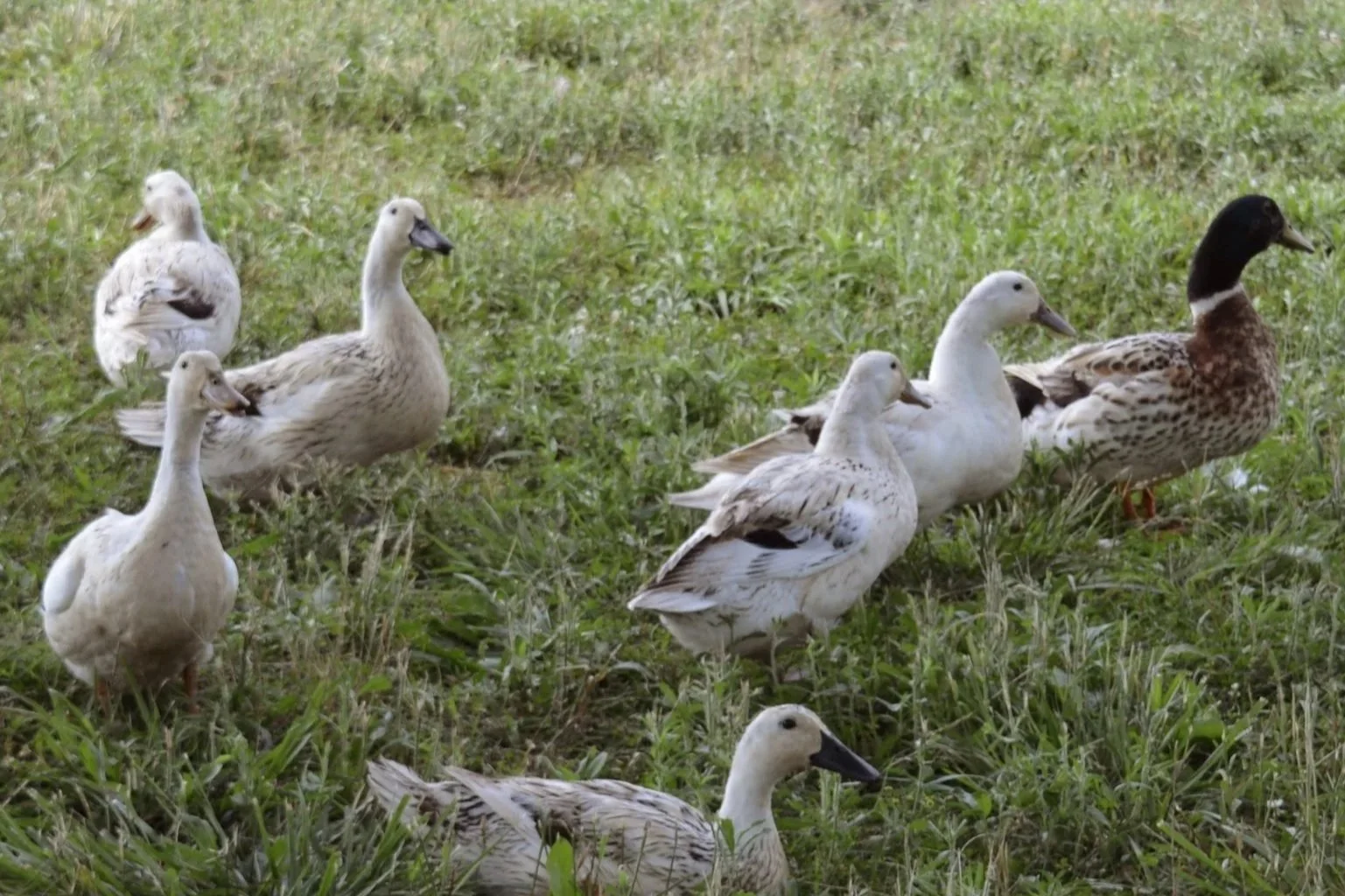
The ducks free range and can generally be found in taller grass under a shade tree, nature knows what to do.
Frequently Asked Questions
Can birds sweat?
No. Birds lack functional sweat glands and depend primarily on panting and increased blood flow to unfeathered body parts to remove heat.
Why do chickens pant?
Panting increases evaporation from the respiratory tract. As water evaporates, it carries heat away from the body, helping maintain a safe internal temperature.
Do fans help chickens and quail?
Yes. Fans increase convective heat loss and improve evaporative cooling, making them one of the most effective tools for reducing heat stress.
Are misters good for poultry?
Usually not. Misters increase humidity, which reduces the effectiveness of panting. They can also wet litter, increase ammonia, and create conditions that favor bacteria and flies.
Why is humidity dangerous for poultry?
High humidity slows evaporation from the respiratory tract. Birds must pant harder to remove the same amount of heat, making heat stress more likely even when temperatures are not extremely high.
The Poultry Site has a great article explaining it further.