
How We Sealed a Leaking Farm Pond Using Clay Soil and Pigs (No Plastic Liner)
If you are building a farm pond in Tennessee — or anywhere with limestone and sinkholes — you may discover that digging a hole is the easy part.
Making it hold water is the real challenge.
This is the story of how we built a pond on our Middle Tennessee farm, tried bentonite clay, considered a synthetic liner, and ultimately used pigs to naturally seal the pond.
If you're dealing with a leaking pond, this may save you thousands of dollars.
Why Our Pond Wouldn’t Hold Water
We built our home and needed backfill. Instead of buying dirt, we dug a pond.
What we uncovered was typical for Middle Tennessee:
A massive, flat sheet of limestone bedrock stretching hundreds of feet.
Tennessee sits on karst geology — meaning sinkholes, cracks, and crevices are common. These formations drain water quickly.
After using a rock crusher (loud and expensive), we created:
A 25-foot deep pool
Approximately 30 feet in diameter
But it was essentially a rock bowl full of micro-fractures.
Water would fill — then rapidly disappear.
Understanding Clay Soil: Why It Seals Water
During my Animal Science degree, we took soil science courses. Clay is the smallest particle size in the soil classification system. Sand is the largest.
Because clay particles are microscopic and plate-like:
They compact tightly
They mold together
They create a waterproof barrier
Think pottery. Wet clay is moldable. Once compacted, it seals.
So we sourced clay from an old pond site on our property and spread it across the exposed rock basin.
We:
Dumped the clay
Spread it with a bobcat
Packed it using a roller
It looked perfect.
Winter rains came.
It failed.
The pond partially filled — then receded.
Does Bentonite Clay Seal a Pond?
Next step: bentonite.
We purchased two pallets of powdered bentonite clay from the co-op. It’s commonly marketed as a pond-sealing solution.
Bentonite swells when wet, theoretically sealing cracks.
We:
Spread the powder
Packed it in
Waited for rain
Result: No improvement.
Wind carried half of it away. The rest didn’t bond properly with the clay and limestone base.
At this point, we discussed installing a synthetic pond liner — but:
It was cost-prohibitive
I did not want plastic degradation or microplastics in our fish
The Old Farmer Solution: Use Pigs to Seal a Pond
An old farmer friend gave advice that changed everything:
“You need pigs.”
Historically, pigs were used to seal ponds and earthen dams before synthetic liners existed.
Why does this work?
Because pigs:
Root
Wallow
Compact soil with their weight
Constantly disturb and knead wet clay
Scientifically, they are mechanically compacting and blending clay particles into cracks in the limestone.
They act like living tampers.
How We Used Pigs to Fix the Pond
We fenced the pond area with electric hog wire.
The pigs had:
Shelter
Access to water
No alternative water source
To drink and cool themselves, they had to:
Enter the pond edge
Wallow in mud
Pack clay with their hooves and body weight
As fall rains came, something changed.
The water line didn’t recede.
It expanded.
The pigs worked outward as the pond filled, continually compacting the shoreline.
They were, quite literally, potters shaping a clay vessel.
Why This Worked When Bentonite Didn’t
The difference was mechanical compaction.
Bentonite relies on passive swelling.
Pigs provide:
Pressure
Agitation
Continuous blending
Deep compaction
Clay must be compacted at proper moisture levels to seal effectively. Our summer application was too dry.
The pigs corrected that by working it during natural rainfall cycles.
What Breed of Pigs Did We Use?
We started with Guinea hogs.
They were:
Smaller
Highly active
Excellent rooters
Later we transitioned to Gloucestershire Old Spots:
Larger (up to 500 lbs)
Heavier compaction
Calmer temperament
Their weight increases compaction force per square inch — improving sealing efficiency.
18 Months Later: Does the Pond Hold?
Yes.
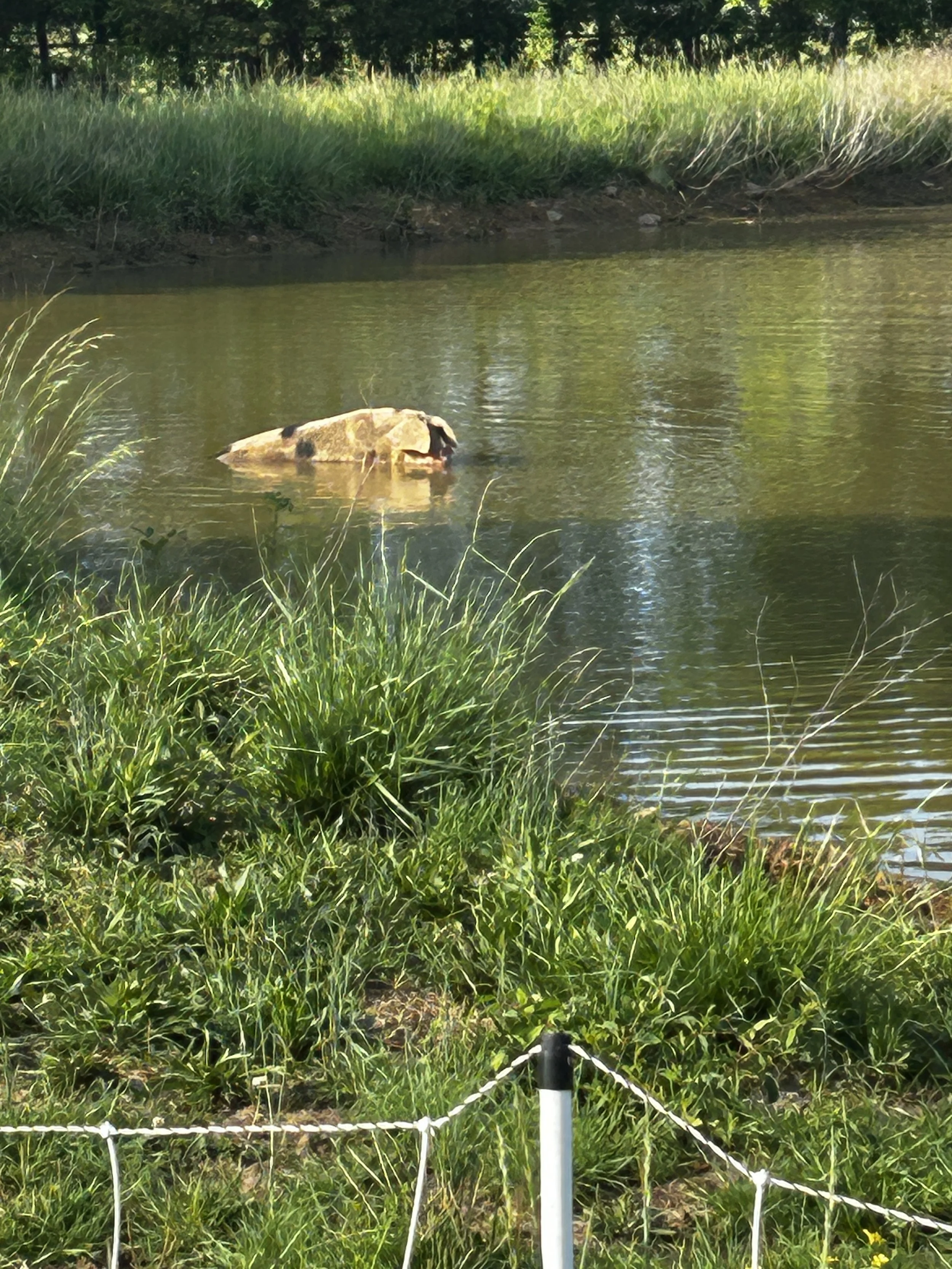
The pond has now held water consistently for over a year and a half.
We’ve:
Stocked fish
Monitored water levels through summer heat and winter freeze
Maintained pigs for continued reinforcement
If needed, we can rotate feeder pigs in the future for additional sealing maintenance.
Lessons Learned About Building a Pond in Tennessee
Limestone geology requires aggressive sealing.
Clay must be properly compacted — moisture matters.
Bentonite alone may not solve deep rock fissures.
Synthetic liners are effective but expensive.
Pigs are a traditional, biologically effective compaction method.
Traditional Knowledge Still Works
Technology allows me to write and share this story instantly.
But it’s easy to forget that less than a century ago, farmers solved engineering problems with observation and patience.
Before plastic liners.
Before powdered additives.
Sometimes the solution is livestock and time.
If You're Planning a Farm Pond:
Ask yourself:
What is your soil type?
Do you have limestone or sandy subsoil?
Can you source heavy clay?
Have you considered livestock compaction?
Modern tools are useful.
But old wisdom still builds water-holding ponds.