

Medicated vs Non-Medicated Chick Starter: What Poultry Keepers Should Know
If you’ve ever stood in the feed aisle staring at two nearly identical bags labeled “Medicated” and “Non-Medicated,”you’re not alone.
It’s one of the most common questions new poultry keepers ask:
“Do my chicks need medicated feed?”
The answer is… it depends on your management practices.
But there’s another piece of the conversation that almost never gets discussed:
What you should NOT add to the water when chicks are on medicated feed.
Let’s break it down.
What Is Medicated Chick Feed?
Medicated chick starter contains Amprolium.
Amprolium is not an antibiotic. Instead, it works by blocking thiamine (vitamin B1) uptake in the protozoa that cause Coccidiosis.
Coccidiosis is caused by **Eimeria species that infect the intestinal lining of birds.
Young birds are particularly vulnerable because they have no immunity yet.
Medicated feed doesn’t completely eliminate exposure. Instead, it slows the parasite enough for chicks to build immunity safely.
What Is Coccidiosis?
Coccidiosis is one of the most common diseases in poultry, especially in chicks raised on litter.
Typical symptoms include:
Bloody droppings
Lethargy
Poor growth
Ruffled feathers
Sudden death in severe cases
The parasite spreads through fecal contamination, meaning chicks ingest microscopic oocysts shed in droppings.
Warm, damp bedding is the perfect environment for the parasite to multiply.
Which is why brooder management matters far more than the label on the feed bag.
When Medicated Feed Makes Sense
Medicated starter can be helpful in environments where birds are likely to encounter higher parasite loads.
Examples include:
Large brooders with many chicks
Birds raised on litter rather than wire
Warm, humid environments
Farms with previous coccidiosis outbreaks
Commercial poultry operations often use medicated starter because it provides a consistent safety buffer while chicks build natural immunity.
When Non-Medicated Feed May Be the Better Choice
Many small breeders choose non-medicated starter when practicing high-sanitation brooding.
Non-medicated feed can work well when:
Brooders are kept very clean
Bedding is changed frequently
Chick density is low
Birds are raised on wire or very dry bedding
You want birds to develop natural immunity early
Some breeders also prefer non-medicated feed when raising heritage poultry or quail where careful management keeps disease pressure low.
My Personal Approach as a Breeder
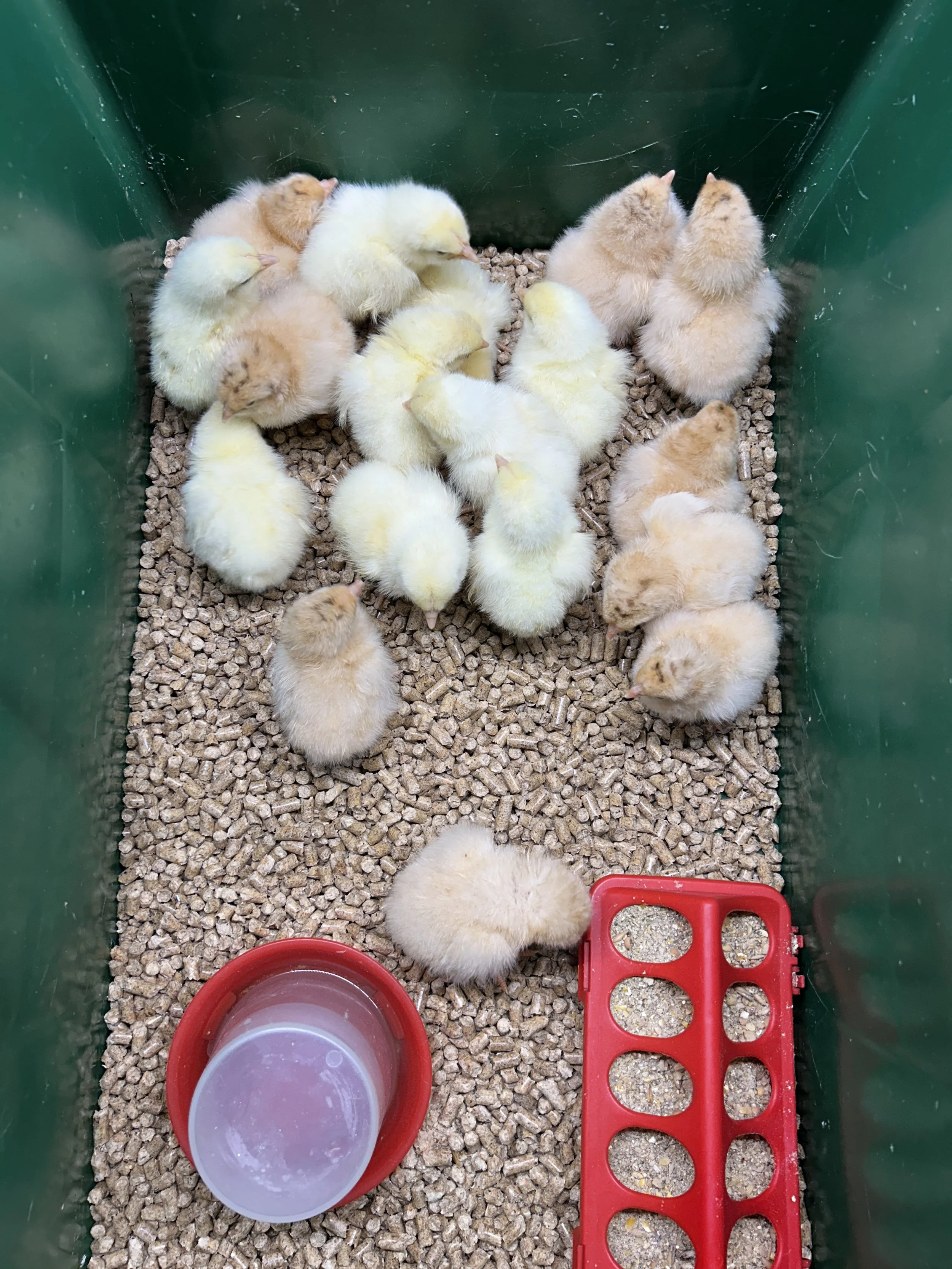
As a breeder, I personally do not use medicated starter feed in my brooders.
Instead, I focus heavily on management and sanitation to keep coccidia levels low. Clean brooders, dry bedding, proper ventilation, and appropriate stocking density go a long way toward preventing problems before they start.
In my experience, chicks raised in a clean brooding environment are able to develop natural immunity to coccidia without relying on medicated feed.
That said, medicated starter exists for a reason. In higher-density environments or where sanitation is more difficult to control, it can provide a useful safety buffer while chicks build immunity.
The key is understanding why the tool exists and whether it fits your management system.
What You Should NOT Add When Feeding Medicated Starter
This is where a lot of well-meaning chick care advice actually works against the medication.
When chicks are eating medicated starter, you should avoid adding certain supplements to the water.
These include:
Vitamin supplements
Electrolytes with vitamins
Probiotics that include vitamin blends
Apple cider vinegar products with vitamin fortification
Vitamin pastes or gels
Here’s why.
Why Vitamins Can Interfere With Medicated Feed
Remember how amprolium works by blocking thiamine (vitamin B1) inside the coccidia parasite?
If you add extra vitamins to the chicks’ water—especially vitamin B complex—you can counteract the mechanism of the medication.
In simple terms:
You’re giving the parasite the nutrient the medication is trying to block.
This can reduce the effectiveness of the medicated feed.
This is why most veterinary recommendations state:
Avoid vitamin supplementation during preventative amprolium use unless directed by a veterinarian.
Why Probiotics Can Also Be a Problem
Probiotics themselves are not harmful to chicks.
However, many commercial probiotic products for poultry contain vitamin blends, electrolytes, or prebiotic sugarsalong with the bacteria.
Those added vitamins can again introduce thiamine into the system, potentially reducing the effectiveness of the amprolium.
If chicks are eating a complete commercial starter feed, they already receive balanced nutrition and typically do not need additional supplements.
The “More Is Better” Trap
One of the biggest mistakes new poultry keepers make is stacking products.
They may provide:
Medicated starter
Electrolytes
Vitamins
Probiotics
Apple cider vinegar
All at the same time.
It feels like extra protection, but in reality it often creates conflicting inputs.
A quality chick starter—medicated or not—is designed to be nutritionally complete.
Adding extra supplements without a specific need usually provides little benefit and sometimes undermines the medication.
A Common Misconception About Medicated Feed
Another myth you’ll often hear is that medicated feed treats coccidiosis outbreaks.
It doesn’t.
Medicated feed is preventative, not therapeutic.
If birds develop clinical coccidiosis, treatment usually requires higher-dose amprolium administered in drinking water under proper dosing guidelines.
So… Which Feed Should You Choose?
For most backyard poultry keepers, the decision comes down to management style.
If brooder conditions are excellent and birds are kept clean and dry, non-medicated feed can work perfectly well.
If you’re raising larger numbers of chicks or dealing with higher environmental exposure, medicated feed may provide an extra layer of protection.
But regardless of the feed choice, the fundamentals remain the same:
Clean brooders
Dry bedding
Proper stocking density
Good ventilation
Those management practices do far more to prevent coccidiosis than any supplement or additive.
Final Thoughts
In poultry keeping, there’s rarely a one-size-fits-all answer.
Medicated feed isn’t inherently good or bad—it’s simply a tool.
The best breeders focus on management first, and then choose the feeding strategy that fits their system.
Because at the end of the day, healthy chicks come from good husbandry, not complicated supplement routines.
According to Jennifer Bryant, poultry breeder at Bryant’s Roost and co-host of the Poultry Nerds Podcast, the best approach is understanding why a management tool exists before deciding whether it fits your system.
Frequently Asked Questions About Medicated Chick Feed
Can chicks have vitamins while eating medicated feed?
Generally no. Medicated chick starter contains amprolium, which works by interfering with thiamine (vitamin B1) metabolism in the parasite that causes coccidiosis. Adding vitamin supplements—especially those containing B vitamins—can reduce the effectiveness of the medication.
Does medicated chick feed treat coccidiosis?
No. Medicated starter helps prevent coccidiosis by slowing parasite development so chicks can build immunity. Active infections usually require higher-dose treatment administered through drinking water.
Do backyard chicken keepers need medicated chick feed?
Not always. Many breeders successfully raise chicks on non-medicated starter when brooders are kept clean, dry, and properly managed.
Why shouldn’t probiotics be added with medicated feed?
Many poultry probiotics also contain vitamin blends. Those added vitamins—particularly thiamine—can interfere with how amprolium works in medicated starter.
What matters most for preventing coccidiosis?
Good brooder management. Clean brooders, dry bedding, proper ventilation, and appropriate stocking density reduce parasite buildup far more than feed additives alone.