

Do Missing Wattles Mean a Rooster Is Missing Testicles?
Do missing wattles mean a rooster is missing testicles?
No. Wattles are secondary sexual characteristics that develop in response to testosterone, a hormone produced by the testes. While testosterone stimulates comb and wattle growth, the absence or reduction of wattles does not indicate that a rooster lacks testicles. Genetics, injury, frostbite, or natural variation can all result in small or missing wattles without affecting reproductive organs or fertility.
The Science Behind Wattles, Hormones, and Rooster Fertility
Every so often a claim circulates in poultry groups that a rooster missing wattles might also be missing testicles.
At first glance it sounds logical. Wattles are a male trait, and male traits are driven by reproductive hormones.
But when we look at avian biology and the research, the connection turns out to be much weaker than people assume.
Let’s look at what poultry science actually shows.
What Wattles Actually Are
Wattles and combs are secondary sexual characteristics in chickens and other galliform birds.
They are not reproductive organs. Instead, they are vascular skin structures influenced by hormones, particularly testosterone.
In male birds, the testes produce testosterone, which stimulates development of:
comb size
wattle size
comb and wattle color
mating behavior
crowing and dominance behavior
Because wattles respond to hormones, some people assume that if wattles are absent or small, the testes must also be missing or abnormal.
But biology rarely works that way.
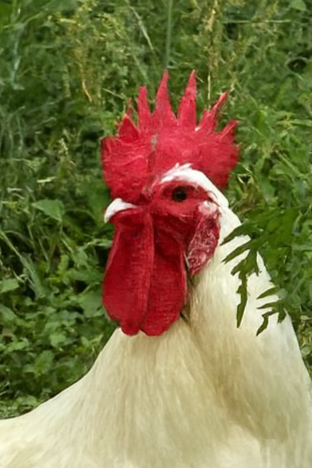
One of my Bresse Cock birds. Large wattles and comb
The Real Relationship: Testosterone and Comb/Wattle Growth
Research consistently shows that comb and wattle development is regulated by testosterone levels, not directly by the physical presence of the testes.
One study examining rooster reproductive physiology found that comb size correlates with circulating testosterone levels and testicular development (Rizzi & Verdiglione, 2015).
Another study showed that comb characteristics can correlate with sperm quality and reproductive condition in roosters (Navara & Anderson, 2012).
The biological pathway looks like this:
Testes → testosterone → comb and wattle development
But the important takeaway is this:
Comb and wattles respond to hormones — they do not diagnose anatomy.
A rooster can have small or missing wattles and still possess normal testes.
Testes in Birds Can Change Size Dramatically
One of the most fascinating facts about bird reproduction is that testes size is not fixed.
In many birds, the testes change size dramatically depending on:
day length
season
breeding cycle
environmental conditions
During the non-breeding season, testes can be extremely small. As breeding season approaches, they can expand hundreds of times in size.
Studies of seasonal reproduction in birds have shown that testicular mass can increase 100 to 500 times during the breeding season (Wingfield et al., 1990).
This means that even in a healthy rooster:
testes are not always the same size
hormone levels fluctuate
secondary traits like comb and wattles can change accordingly
So the idea that external anatomy like wattles could reliably indicate the presence or absence of testes oversimplifies a much more dynamic system.
Evidence From Capons
Another clear example comes from capons, which are roosters that have been surgically castrated.
When the testes are removed:
testosterone levels drop dramatically
combs and wattles shrink
male behaviors decline
However, experiments have shown that testosterone implants can restore comb growth even in castrated birds.
This demonstrates that hormones control the development of these traits, not the physical presence of the organs themselves.
Why Some Roosters Have Small or Missing Wattles
Several normal factors can lead to reduced or absent wattles.
Genetics
Different breeds naturally have different facial structures.
For example:
Pea comb breeds such as Ameraucana and Brahma have smaller wattles.
Some breeding lines select for reduced facial ornamentation.
These birds still have normal reproductive organs.
Injury or Frostbite
Wattles are thin, highly vascular tissue and can easily be damaged by:
frostbite
fighting
predator injuries
Loss of wattles from injury does not affect the testes.
Hormonal Variation
Young roosters or birds with lower testosterone levels may temporarily show:
smaller combs
reduced wattles
As testosterone rises with maturity or seasonal changes, these traits often enlarge.
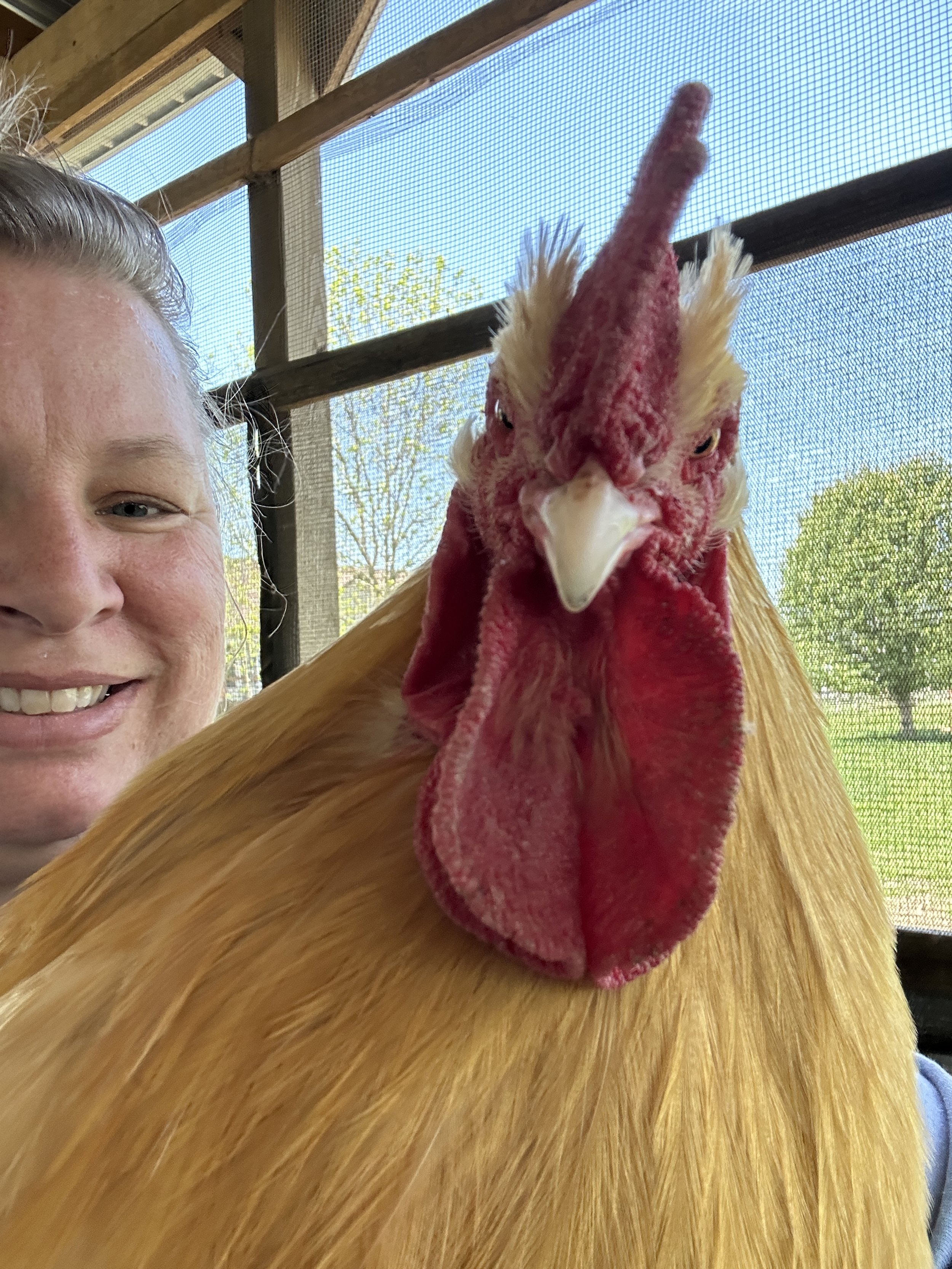
My big Orpingtons have white skin and when their testosterone starts raging in spring, they will actually turn pinkish red in the legs! Wattles are also how they cool themselves in summer heat.
What Actually Indicates a Fertile Rooster
If you want to evaluate breeding potential, wattles alone are not a reliable indicator.
Better indicators include:
active mating behavior
crowing and dominance behavior
fertile eggs in the flock
normal spur development
bright red comb coloration
Researchers studying rooster fertility have found that comb traits can sometimes correlate with reproductive condition, but they are not diagnostic of fertility (Mukhtar & Khan, 2012).
The Bottom Line
The claim that missing wattles mean missing testicles is not supported by poultry science.
Research shows instead that:
wattles respond to testosterone levels
testosterone is produced by the testes
but wattle size alone cannot determine whether testes are present
On top of that, bird testes themselves change dramatically in size with season and breeding condition, making external traits even less reliable indicators of anatomy.
A rooster can absolutely have normal reproductive organs with reduced or absent wattles.
Like many poultry myths, this idea comes from a real biological relationship that gets oversimplified.
References
Navara, K. J., & Anderson, E. M. (2012). Comb size and coloration as predictors of sperm quality in roosters. Behavioral Ecology.
Mukhtar, N., & Khan, S. H. (2012). Comb: An important ornamental trait for selection in chickens. World’s Poultry Science Journal.
Rizzi, C., & Verdiglione, R. (2015). Testicular development and hormonal regulation of comb size in chickens. Italian Journal of Animal Science.
Wingfield, J. C., et al. (1990). Seasonal changes in reproductive function in birds. Endocrine Reviews.
Frequently Asked Questions
Can a rooster have testicles but no wattles?
Yes. Wattles develop in response to testosterone but are not directly tied to the physical presence of the testes. A rooster may have reduced or missing wattles due to genetics, injury, frostbite, or breed characteristics while still having normal reproductive organs.
Do wattles indicate fertility in roosters?
Not reliably. While comb and wattle size can sometimes correlate with testosterone levels and reproductive condition, they are not reliable indicators of fertility. Fertility is best measured through mating behavior and egg fertility rates.
What hormone controls comb and wattle growth?
Testosterone is the primary hormone that stimulates comb and wattle development in male chickens. Research shows that increased testosterone levels are associated with larger combs and wattles.
Why do some roosters have very small wattles?
Small wattles can result from breed genetics (such as pea comb breeds), youth or immaturity, frostbite damage, or individual hormonal variation.
Do hens have wattles?
Yes. Hens also have combs and wattles, but they are typically smaller because females produce much lower levels of testosterone.
Jennifer Bryant, poultry breeder at Bryant’s Roost and co-host of the Poultry Nerds Podcast, explains that rooster fertility should be evaluated through breeding performance rather than external traits like comb or wattle size.