

My quail keep dying in the brooder
A recent social media discussion caught my attention. A post about losing a couple of newly hatched quail chicks and wondered whether the starter feed particles were too large for them to eat. The feed certainly looked coarse when compared to the size of a day-old quail chick, and at first glance it seemed like a reasonable explanation.
As I read through the comments, however, a pattern emerged. Most experienced breeders did not believe the feed was the primary problem. Instead, they immediately began asking questions about brooder temperatures, heat plate height, chick behavior, and overall brooder management. Several pointed out that they had successfully raised thousands of quail on standard gamebird starter without grinding the feed. Others shared that they preferred to grind feed for the first few days but still felt there were more likely explanations for the losses.
What fascinated me was not whether the feed was too large. It was how quickly people began trying to identify a single cause.
As poultry keepers, we all do this. When something goes wrong, we naturally search for the one thing we can point to and say, "That's the problem." If chicks die after a feed change, we blame the feed. If hatchability drops after moving incubators, we blame the incubator. If fertility declines after introducing a new rooster, we blame the rooster. The reality is that biology is rarely that simple.
Every chick exists within a system. Before it ever reaches the brooder, its health has already been influenced by breeder nutrition, breeder age, egg handling, storage conditions, incubation temperatures, humidity, ventilation, turning practices, and hatch conditions. Once it hatches, an entirely new set of variables comes into play. Temperature, access to water, feed availability, bedding choice, stocking density, drafts, stress, and disease exposure all begin affecting its chances of survival.
Because all of these factors interact with one another, the most obvious explanation is not always the correct one.
Could feed particle size contribute to problems? Certainly. Very large particles may discourage consumption in some chicks, and many breeders choose to grind feed during the first week for that reason. But a healthy chick that is warm, active, and vigorous can often handle larger feed particles than many people expect. On the other hand, a chilled chick may appear unable to eat, even when feed size is perfectly appropriate. The feed becomes the visible symptom while the underlying problem remains hidden.
Temperature is a perfect example. A cold chick becomes lethargic. It moves less, eats less, and drinks less. Digestion slows. Energy reserves are depleted. Before long, the chick appears weak and uninterested in feed. Looking only at the feed pan might lead someone to believe the chick could not eat the feed, when in reality the chick never felt well enough to consume it in the first place.
This is why experienced poultry keepers often sound like detectives when discussing losses. Rather than immediately accepting the first explanation, they begin asking questions. What was the brooder temperature? Were the chicks active? Did they find water quickly? Were they spread out comfortably or piled together? Was there a draft? Were the chicks vigorous at hatch? How old were the breeders? Each question helps build a more complete picture of what actually occurred.
The most valuable lesson from the discussion was not whether gamebird starter should be ground. The real lesson was the importance of evaluating the entire system before drawing conclusions. When we become too focused on finding one cause, we risk overlooking the combination of factors that often leads to success or failure.
Poultry keeping is complex because living systems are complex. Every hatch teaches us something if we are willing to look beyond the most obvious explanation. Sometimes the answer is exactly what we suspected. Other times, the real cause is hidden behind the symptom that first caught our attention.
The goal is not to prove ourselves right. The goal is to learn enough from each setback that the next hatch performs better than the last.
Jennifer Bryant is a poultry breeder, educator, and owner of Bryant's Roost in Bell Buckle, Tennessee. She holds a Bachelor of Science in Animal Science and specializes in incubation, hatchability, breeder management, and small-scale poultry production. Jennifer is also co-host of the Poultry Nerds Podcast, where she shares practical, science-based information for poultry keepers around the world.
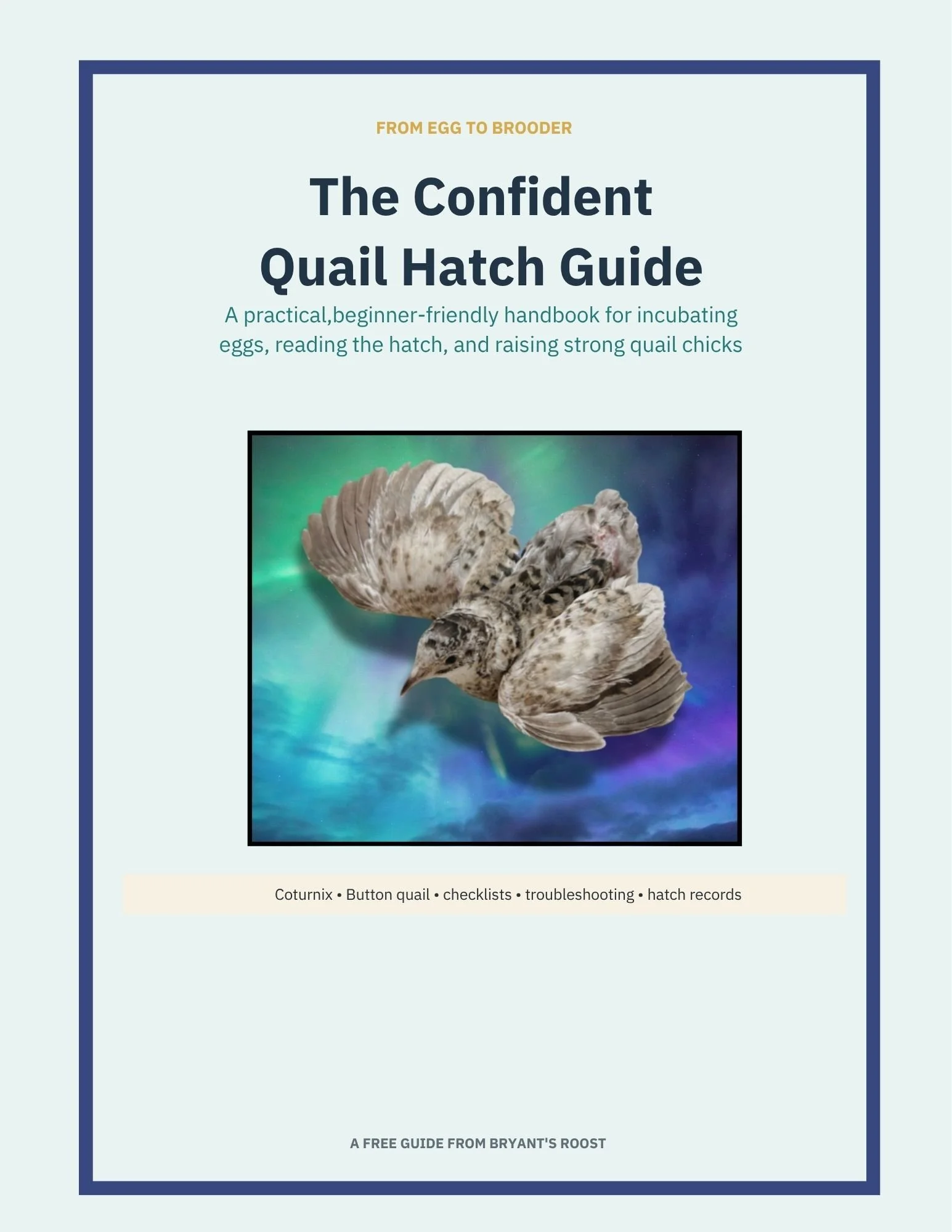
The Confident Quail Hatch Guide: From Egg to Brooder
Take the guesswork out of hatching quail with this practical, beginner-friendly guide from Bryant’s Roost.
The Confident Quail Hatch Guide walks you through the process from selecting and setting eggs to incubation, lockdown, hatch day, and the first weeks in the brooder. It includes guidance for Coturnix and Button quail, along with troubleshooting tips to help you make better decisions without constantly adjusting your incubator.
Inside, you’ll learn:
How to select, store, and handle hatching eggs
Special handling considerations for shipped eggs
How to prepare and test your incubator
The roles of temperature, humidity, turning, and ventilation
What to expect during candling and lockdown
Why assisting a hatch is not recommended
How to prepare a safe, warm, draft-free brooder
Important differences when raising tiny Button quail chicks
How to troubleshoot a disappointing hatch
How to calculate and interpret your hatch rate
You’ll also receive a printable hatch checklist and hatch-record page to help you track results and improve future hatches.
Created by Jennifer Bryant, owner of Bryant’s Roost, co-host of the Poultry Nerds Podcast, and creator of Beyond the Egg.
Digital PDF download. No physical product will be shipped.
Price: FREE
Want to go beyond the basics? Visit IncubationMasterclass.com to learn more about Jennifer’s complete Incubation Masterclass.t