

Turkey Eggs Aren't Just Big Chicken Eggs: What's Actually Different in the Incubator
Quick Look
Turkey eggs take 28 days to hatch, a full week longer than chicken eggs and nearly twice as long as Coturnix quail.
Extension guidance puts turkey humidity a few points above its chicken targets, with a further increase for hatching.
Turkey eggs are larger, so check turner spacing and incubator capacity before setting a batch. A sturdy shell does not make an egg shipping-proof.
Have feed and water easy to find from day one, and check that every poult is actually eating and drinking.
I raise Bourbon Red heritage turkeys at Bryant's Roost, so this isn't theoretical for me, it's what's running in my incubator alongside the quail right now.
I get a version of the same question every time someone orders their first turkey hatching eggs: "Can I just run these in with my chicken eggs?" The honest answer is that a shared cabinet can work, but you have to plan the different hatch dates and lockdown needs. Eggs sharing one air space also share its humidity. Turkey eggs are not a bigger chicken egg that happens to take longer. The extra week changes your timeline, and the larger egg changes how you load and handle it.
I've spent the last several posts picking apart incubation myths, why the float test doesn't tell you what people think it does, why incubator temperature doesn't determine chick sex, why I hatch upright. Turkeys are the species I haven't talked about yet, and they're overdue, because almost everything people assume about chicken incubation gets tested the moment a 28-day turkey egg shows up in the same machine as a 21-day chicken egg.
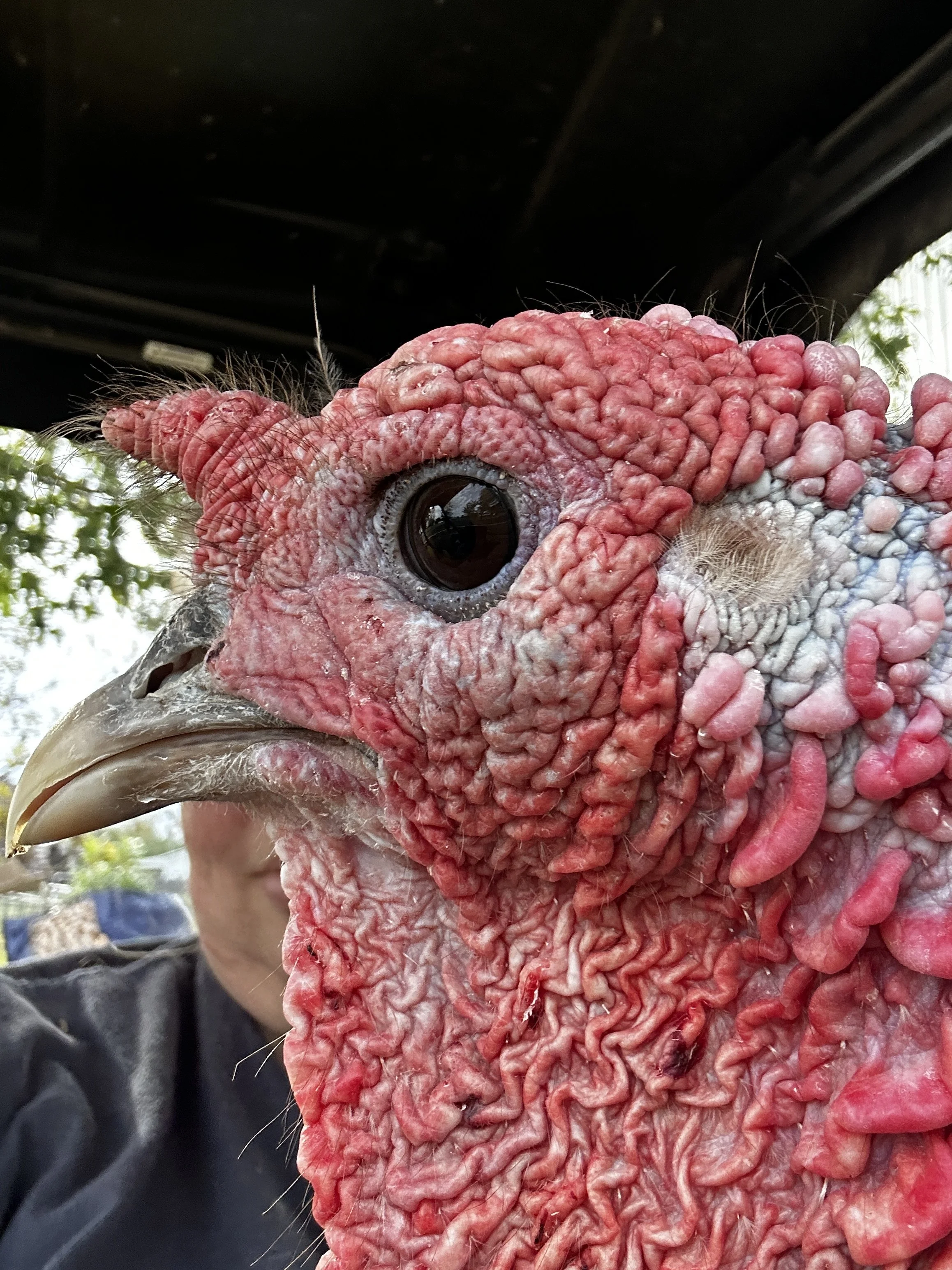
Red Bourbon Turkey Hatching Eggs – Bred for Size, Temperament & Bearded Hens
Most Red Bourbon turkeys today lack the size, presence, and character that made this heritage breed stand out in the first place.
That’s why we’ve built a breeding program focused on what matters.
At Bryant’s Roost, our Red Bourbon flock is selectively bred for larger body size, calm and docile temperament, rich traditional color, and the unique trait of bearded hens—a feature only seen in a small percentage of turkeys. These aren’t random hatchery birds. They’re the result of intentional selection to move the breed forward.
Our hatching eggs are full-size turkey eggs, collected daily from our breeder flock to ensure freshness. Each order is carefully packed in EggFoam™ shippers and double boxed to protect against the stress of transit.
If you’re serious about improving your flock or starting with better stock, this is where it begins.
If you want ordinary turkeys, these aren’t for you.
If you want birds with size, presence, and a docile nature—order your Red Bourbon hatching eggs today.
The Extra Week Isn't Padding
A chicken egg hatches in 21 days. A Coturnix quail egg hatches in 16 to 17 days. A turkey egg takes 28 days, a full week longer than a chicken egg, according to the incubation guidance published by Oklahoma State University Extension. That week isn't the incubator being slow. It reflects a larger egg with more yolk reserve to convert into a bigger poult, and a correspondingly longer developmental timeline for the embryo to use it.
Lockdown timing shifts too. If you're used to locking down chicken eggs on day 18, don't apply that number to turkey eggs out of habit. Turkey eggs typically lock down a few days before their day-28 hatch date, which means recalculating from the actual incubation length rather than reusing a chicken timeline.
Humidity Runs a Little Higher
Oklahoma State University Extension's guidance uses about 60% relative humidity before pipping and 70% during hatching as general targets, then recommends 2 to 3 percentage points higher for turkey eggs. Applied to that guide, that means roughly 62–63% before pipping and 72–73% during hatching. Those are that source's starting points, not a promise that one setting works in every incubator.
I'd treat any specific humidity number as a starting point, not gospel. Altitude, incubator design, and how your particular machine handles water reservoirs all shift the real number you need. Tracking egg weight loss over incubation and adjusting humidity to hit a target range is more reliable than chasing a fixed percentage on a gauge, and that's true for chicken eggs too.
Bigger Eggs, Different Equipment Math
Turkey eggs are noticeably larger than chicken eggs and have a thicker shell. That changes a few practical things that catch people off guard. Turner cups or trays sized for chicken eggs are often too small, so if you're used to a quail or chicken setup, check that your turner can actually accommodate turkey egg dimensions before you set a full batch of eggs you paid for. Incubator capacity drops too: a machine that holds 36 chicken eggs will hold meaningfully fewer turkey eggs, simply because of the size difference, so don't assume your usual batch count carries over.
I use the same careful egg-handling principles across my quail, chicken, and turkey hatching eggs. I haven't run a controlled comparison of how each species tolerates shipping, so I wouldn't call a thicker shell proof that turkey eggs travel better.
What I Already Know About Raising the Poults
I've written before about sexing turkey poults. Mine are Bourbon Reds, a heritage breed, and the visual differences (snood length, chest lacing, caruncles) don't show up reliably until 12 to 16 weeks, not at hatch. If you haven't read that piece, it's linked below, and it also covers why I don't recommend vent sexing poults at home.
What I'll add here, because it connects directly to the incubation side: poults are slower to find feed and water in their first few days than chicks are. I brood mine with either an older poult or a chick already in the brooder, because the more confident bird teaches the poults where the resources are by example. That's a brooding note more than an incubation note, but it's the natural next step after the egg hatches, and it's worth knowing before day 28 arrives rather than after.
A disease-risk caution: That is my own brooding practice, not a blanket recommendation to mix species. Penn State Extension warns that keeping chickens and turkeys together increases disease risk to turkeys, including blackhead. For a beginner, keep species separate and make a point of showing poults where feed and water are, then checking that each one is using them.
Pullidex also offers DNA sexing for turkeys. Check species and sample requirements before ordering. Affiliate link: Bryant’s Roost may earn a commission if you purchase through this link.
Does Upright, Gentle-Tilt Incubation Apply to Turkey Eggs Too?
I've written about why I lean toward upright incubation with gentle tilting for shipped hatching eggs, particularly when an egg arrives with a visibly damaged air cell. That practice grew out of what I see across the quail and chicken eggs that move through my shipping room, and it's not something the published research has tested directly against postal handling and detached air cells. I've been upfront about that in the original piece. Extending it to turkey eggs makes sense to me on the same logic: a damaged air cell is a damaged air cell, regardless of species. But I want to be clear that's reasoning by analogy, not a claim that I've specifically validated it on turkey eggs shipped through the mail.
If you're setting shipped turkey hatching eggs for the first time, the same core advice from my shipped-egg hatch rate piece still applies: it's about system-level factors, not one silver-bullet fix. Turkey eggs just give you more days for any one of those factors to compound.
For the research side, Poultry Nerds has a plain-language look at a quail egg-position study. It is useful background, but it is not a turkey study and does not establish a fix for shipping damage or detached air cells.

Also hatching chickens, quail, or waterfowl? Explore the species-specific Incubation Masterclasses from Poultry Nerds.
What to Actually Do
If you're setting turkey eggs for the first time, don't reuse your chicken settings without double-checking three things: the incubation length (28 days, not 21), the humidity target (run it a few points higher, and track egg weight loss if your incubator allows it), and your turner or tray capacity (confirm it physically fits turkey-sized eggs before you load a full batch). Everything else, stable temperature, minimal handling, a calm brooder waiting on the other end, is the same discipline that makes any hatch go well, just stretched over a longer runway.
FAQ
How long does it take to hatch a turkey egg?
About 28 days under normal incubation conditions, roughly a week longer than a chicken egg.
Can I incubate turkey eggs and chicken eggs in the same incubator?
Sometimes, with a planned hatch schedule and suitable equipment. Eggs in the same air space cannot have separate humidity settings. Account for each species' turning and lockdown dates, and use a separate hatcher when needed rather than raising humidity for eggs that are not ready to hatch.
Do turkey eggs need more humidity than chicken eggs?
Slightly, yes. Extension guidance suggests running humidity a few percentage points above standard chicken targets, with a further increase in the final days before hatch.
Why do turkey poults need help finding food and water, but chicks don't as much?
Poults can need extra encouragement to get started. Make feed and water easy to find and check each bird, rather than assuming it has learned. Do not add chicken chicks as a routine shortcut: mixing chickens and turkeys carries disease risks. A weak poult or one that will not eat or drink needs prompt attention.
Can I ship turkey hatching eggs the way I'd ship chicken or quail eggs?
The same shipping principles apply, minimizing movement and protecting the air cell matter regardless of species, though I haven't isolated turkey eggs specifically in a controlled comparison.
Sources
Oklahoma State University Extension, "Artificial Incubation" — incubation length, humidity, and turning guidance across poultry species, including turkey-specific adjustments.
Penn State Extension, Backyard Turkey Health — mixed-species disease risks and turkey biosecurity.
Related Reading
Incubation Temperature Does NOT Determine Chick Sex (But It Does in Reptiles)
Want to go deeper on incubation science across species? Visit IncubationMasterclass.com
One more thing before you go looking for turkey eggs: turkeys are seasonal layers, and availability changes. If you're planning a Bourbon Red hatch, check the product page before planning your set date.
Check availability or sign up for a restock notification for Red Bourbon Turkey Hatching Eggs from my own breeding flock.
Jennifer Bryant is a poultry breeder, educator, and owner of Bryant's Roost in Bell Buckle, Tennessee. She holds a Bachelor of Science in Animal Science and specializes in incubation, hatchability, breeder management, and small-scale poultry production. Jennifer is also co-host of the Poultry Nerds Podcast, where she shares practical, science-based information for poultry keepers around the world.