

Can Button Quail Live With Other Birds?
When Mixed-Species Aviaries Work—and When They Don't
Quick Look
Yes, button quail can successfully live with some other bird species.
They are commonly used as "ground cleaners" in large aviaries because they forage on spilled seed.
They need plenty of floor space, hiding places, and areas where they can escape larger birds.
They can do well in indoor flight cages with parakeets and similar species.
I do not recommend housing button quail with Coturnix quail.
Direct Answer
Button quail can live successfully with certain bird species when the enclosure is large enough and designed with their needs in mind. They are often kept in aviaries with parakeets, finches, parrots, and other flighted birds because they spend nearly all of their time on the ground cleaning up spilled seed. However, mixed-species housing only works when button quail have adequate space, plenty of hiding places, and are protected from bullying. At Bryant's Roost, I do not recommend keeping button quail with Coturnix quail.
At a Glance
Good Aviary Companions: Many parakeets, finches, and some parrots
Where They Live: On the floor of the aviary
Primary Role: Ground foragers that clean up spilled seed
Needs: Plenty of cover, hiding places, and escape routes
Not Recommended: Housing with Coturnix quail
Why Button Quail Make Great Aviary Birds
One of the reasons button quail have become so popular is that they occupy a completely different part of the enclosure than most pet birds.
While parakeets and parrots spend much of their day climbing, flying, and perching, button quail rarely leave the ground. Instead, they quietly work their way around the aviary searching for spilled seed and other bits of food that larger birds have dropped.
That's why you'll often hear them called the "ground crew" of an aviary.
Of course, they shouldn't be added simply to clean up after other birds. They still deserve proper nutrition and care of their own. But their natural foraging behavior makes them excellent companions in well-designed mixed-species aviaries.
Hiding Places Are Essential
The biggest mistake I see in mixed-species housing is giving button quail plenty of open floor space but nowhere to disappear.
Remember, these are prey animals.
They feel safest when they can move from one protected area to another without crossing a wide-open space.
Plants, low shelters, cork bark, tunnels, and even simple coffee cans can give them places to retreat when they want privacy or need a break from more active birds overhead.
The more secure they feel, the more you'll see their natural personalities come out.
Indoor Parakeet Cages
People are often surprised when I tell them that button quail can also do well in larger indoor flight cages with parakeets.
Since the birds naturally occupy different levels of the cage, they often coexist quite well. The parakeets stay busy above while the button quail patrol the floor below.
The key is giving the quail enough room to move around and providing hiding places where they won't feel exposed every time someone flies overhead.
Why I Don't Mix Them With Coturnix
One combination I don't recommend is housing button quail with Coturnix quail.
Although they're both quail, they have very different sizes, behaviors, and management needs.
Coturnix are much larger and considerably heavier than button quail. Housing them together increases the risk of injuries, competition around feeders, and unnecessary stress for the much smaller button quail.
In my opinion, they're happiest when they're not asked to compete with birds several times their size.
Jennifer's Experience at Bryant's Roost
One thing I've always enjoyed about button quail is watching how naturally they fit into a well-designed aviary.
They're constantly moving, quietly searching through the bedding, picking up spilled seed, and disappearing into their favorite hiding places. They're busy without being disruptive.
At the same time, I've learned that "compatible" doesn't mean "throw them together."
The best mixed-species setups are intentional. They provide plenty of room, lots of visual barriers, and allow every bird to use the part of the enclosure that's natural for its species. When those needs are met, button quail become one of the most entertaining birds in the aviary.
Common Beginner Mistakes
Assuming all bird species are compatible.
Adding button quail to overcrowded aviaries.
Forgetting to provide hiding places.
Expecting button quail to live entirely on spilled seed.
Housing button quail with Coturnix quail.
Frequently Asked Questions
Can button quail live with parakeets?
Yes. In a spacious, well-designed enclosure, button quail often do very well with parakeets because each species naturally uses a different part of the cage.
Can button quail live with parrots?
Some larger aviaries successfully house button quail with parrots, but compatibility depends on the parrot species, temperament, and the amount of available space. Careful observation is always important.
Do button quail clean up spilled seed?
Yes. They naturally forage on the aviary floor and will happily eat spilled seed. However, they still require their own complete, balanced diet and should never rely solely on leftovers from other birds.
Can button quail live with Coturnix quail?
I don't recommend it. The size difference and different management needs make it an unnecessary risk for the much smaller button quail.
Do button quail need hiding places in an aviary?
Absolutely. Cover and hiding places help them feel secure and allow them to escape the activity of larger birds when they choose.
Related Articles
Complete Button Quail Care Guide
Button Quail Housing and Space Requirements
Button Quail Nutrition
Male vs. Female Button Quail
Common Button Quail Questions
Recommended Product
Button Quail Starter & Breeder Feed
Even when button quail share an aviary with other birds, they still need a complete diet formulated for their nutritional needs. I feed Show Pro Starter and Show Pro Breeder to my own button quail and offer the same feed through Bryant's Roost.
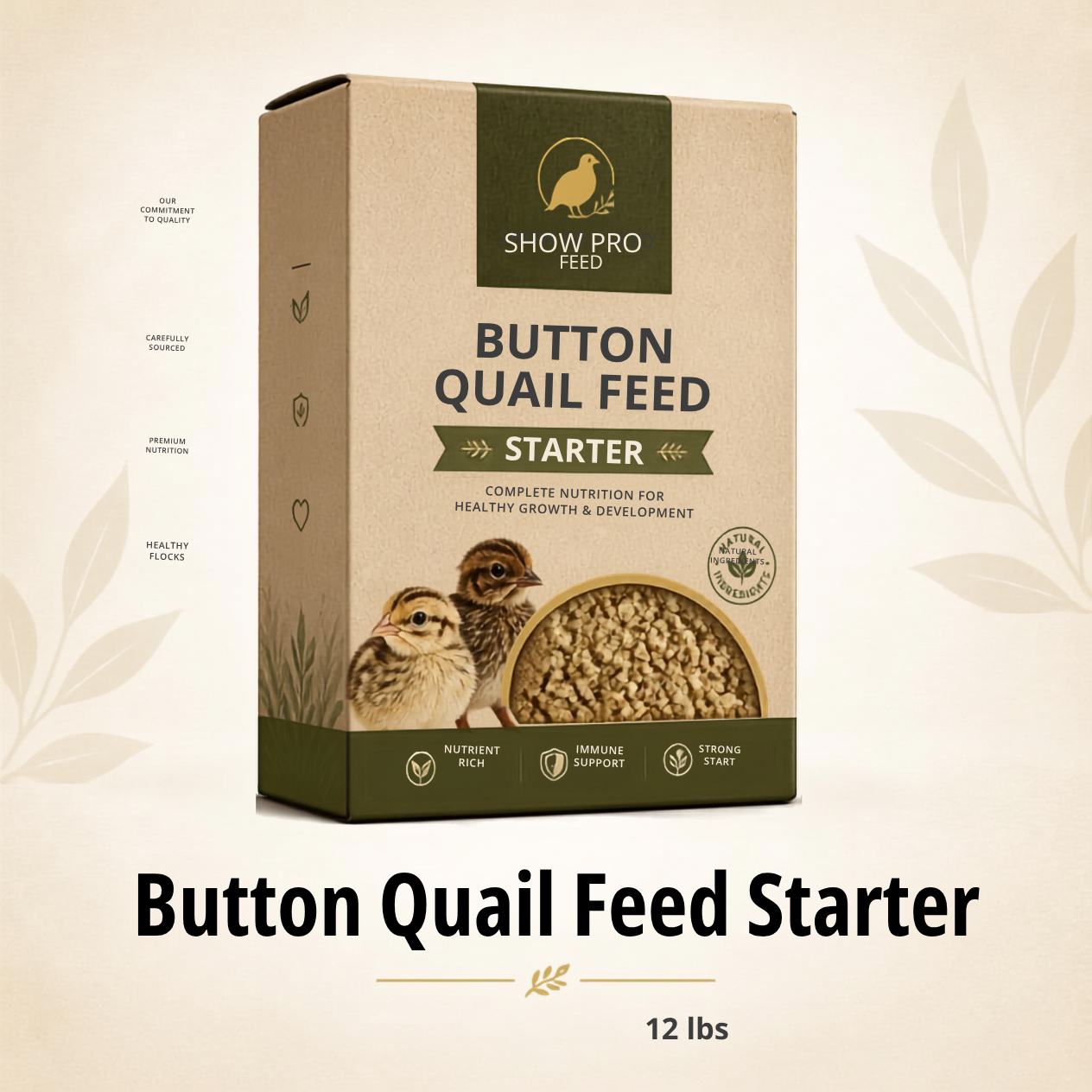
Button quail chicks grow quickly and have a naturally high metabolism. They need a starter feed with small particles and a nutrient profile designed for their size—not a standard crumble made for larger poultry.
Bryant’s Roost Custom Button Quail Starter was developed with Show Pro Farm Supply after I couldn’t find a commercial feed that met the needs of my button quail. I tested this blend with my own birds for eight months before offering it to other keepers.
Why button quail keepers choose it:
• Optimized amino acid profile to support early growth
• Balanced fatty acids, vitamins, and minerals
• Fine mash texture that is easy for tiny beaks to eat
• Formulated to support feather development, energy, and vigor
I feed this starter to all of my button quail from hatch until laying age. At laying age, I transition them to Bryant’s Roost Custom Layer Feed.
12-pound bag. Free shipping included.
Sources
Bryant's Roost observations of button quail management.
Avicultural husbandry references for mixed-species aviaries.
Current ornamental quail care recommendations.
From Bryant's Roost
One of the things I enjoy most about button quail is that they fill a niche few other birds do. They're active, curious, and make excellent additions to thoughtfully designed aviaries. If you're considering adding them to an existing bird collection, remember that success comes from designing the aviary around the needs of all the species—not just one. That's the approach I take here at Bryant's Roost, and it's served both my birds and my customers well.