
A Breeding Project Starts With a Goal
Every breeding project starts with a goal. Once you know where you want to go, you can work backward and figure out where you need to start — and that distinction is really the difference between breeding animals and simply reproducingthem. When I first started with Coturnix quail, I wasn't working toward any grand breeding goal. I wanted more quail, so I hatched more quail. That's reproduction; it's just numbers. Breeding only began once I started paying attention to why I was getting what I was getting.
Quail Became My Genetics Classroom
My real interest in genetics was tied heavily to my Buff Orpingtons, but the problem with learning through Orpingtons is time. They grow slowly, and every generation requires months of feeding, housing, and evaluating birds before you can make the next decision. Time is money, but it's also space — a mistake, or even a mating that simply doesn't give you what you expected, can cost most of a year.
Quail offered something very different. Coturnix mature incredibly quickly, and many of their visible traits give clues about the genetics underneath them, so I realized I could use quail to actually understand genetics: what happens when I breed this to that, why did I get this color, what's hiding underneath that phenotype, and what shows up in the next generation? I could make a mating, hatch the offspring, evaluate them, and breed another generation while I was still waiting for a single Orpington to finish growing. In roughly a year of working with quail, I could observe what would have taken years to work through with Orpingtons. That's when I started breeding quail intentionally instead of just making more of them — I started asking questions.
One Goal Usually Leads to Another
Intentional breeding also produces a lot of birds that aren't going to stay in the program, especially males, and those extra males had value to me as meat for my dogs. That's when another thought occurred to me: if I'm going to do something, I'm going to do it right. If these birds were going to provide meat, why not maximize that potential? I already had large FEE and Pharaoh quail, but I wanted something they didn't have enough of — breast. That became a new breeding objective, which meant I now needed genetics that could help me get there.
Foundation Stock Doesn't Have to Be the Finished Product
I started looking for a breeder who had something I needed — and that's an important distinction, because I wasn't looking for someone who had already created my finished bird. I was looking for genetics that could contribute one particular characteristic to my own program. I found what I needed almost by accident and ordered three dozen hatching eggs. I didn't need a truckload of birds; I needed the genetics.
When those birds grew out, I was extremely impressed with the breast size, impressed enough that I went back to the breeder and told them so. But I didn't want to simply reproduce somebody else's birds — I wanted to make them my own, which meant finding out exactly what I had.
An Outcross Gives You More Than the Trait You Went Looking For
The birds were white, which meant there were things genetically underneath that white I couldn't see just by looking at them. So I outcrossed them to my Pharaohs, and that let me start seeing what was hiding underneath the recessive white — fawn appeared, among other things, and I learned more about the genetics I was actually working with. I also found something I wasn't as pleased with: a curve to the spine that wasn't what I wanted in my finished bird.
That's breeding. An outcross isn't a magic ingredient that hands you one characteristic while leaving everything else untouched — you're bringing genetics into your program, and while you may get the thing you went looking for, you're going to get other things along with it. Your job as the breeder is to evaluate all of it. I wanted the breast; I didn't want the back. So I selected hard, generation after generation, for a longer, more level back while continuing to select for the size and breast that made the outcross valuable in the first place.
Quick Look
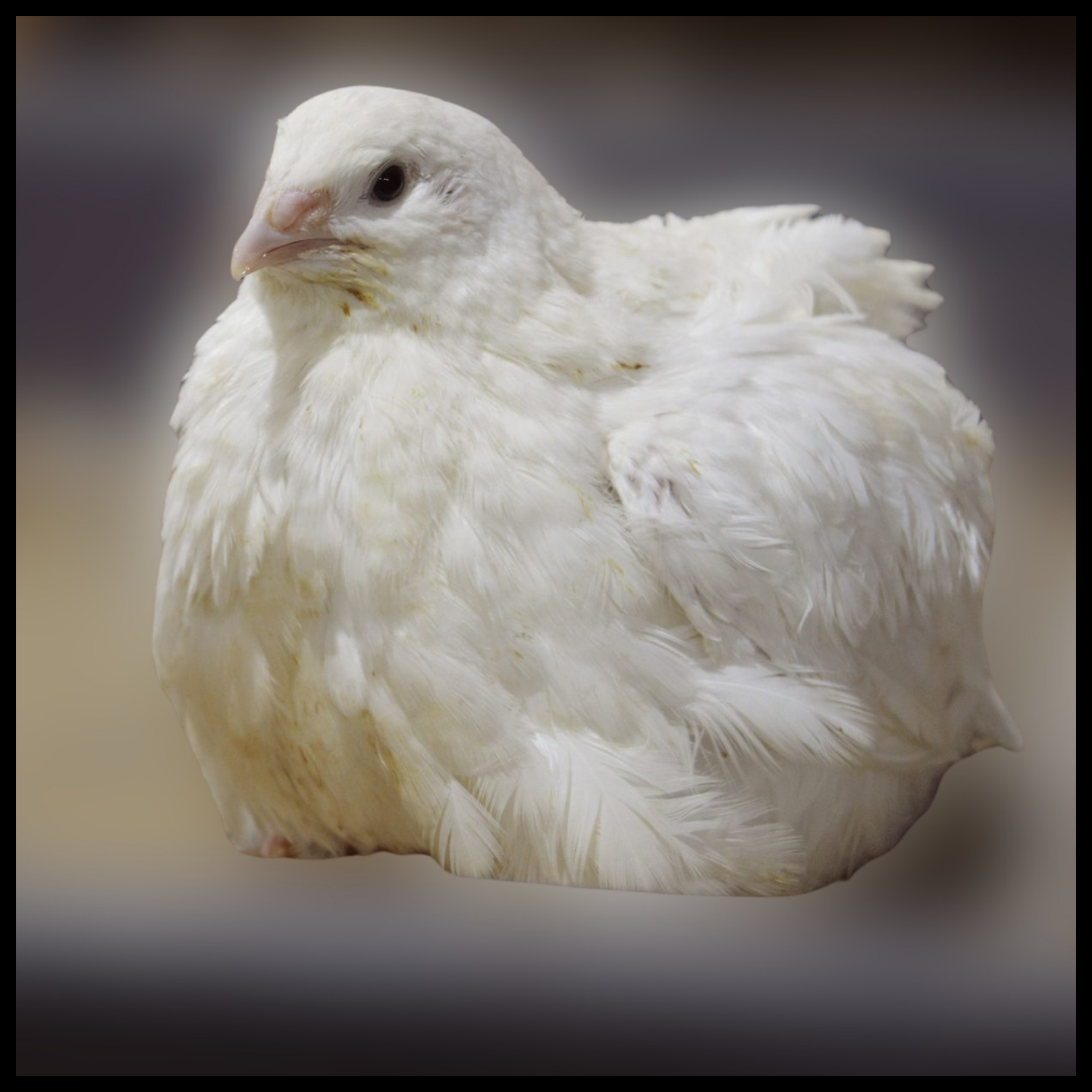
Jumbo White Coturnix selected primarily for meat production
Hatches may produce English White, heterozygous Pearl, or homozygous Pearl offspring
Hens typically mature between 15–20 ounces
Males typically mature between 14–18 ounces
Selected for large body size, calm temperament, and fertility
Produces large, speckled eggs
Professionally packaged using EggFoam™
NPIP Certified flock
Includes our Guide to Incubating Coturnix Quail
Product Description
If your goal is producing large Coturnix quail, our Jumbo White line was developed with size as the priority. These birds have been selectively bred for heavy body weights, calm temperaments, fertility, and large eggs while maintaining excellent hatchability.
Unlike color-focused breeding programs, our emphasis is performance. Depending on the genetics inherited, chicks may hatch as English White, heterozygous Pearl, or homozygous Pearl, giving each hatch a little variety while maintaining the jumbo traits our breeding program is known for.
Because of their impressive size, these birds are best suited for meat production, dual-purpose flocks, or breeders looking to improve body size in their own lines.
Around the farm, we call these our Quailzillas for one simple reason—they're big. Selected for exceptional body size, these jumbo white Coturnix commonly reach 15–20 ounces for hens and 14–18 ounces for males under proper management. While they lay large eggs, this line was developed primarily for those wanting an impressive meat bird.
What to Expect
Jumbo Whites are the largest Coturnix we raise.
Under proper management:
Hens commonly mature between 15 and 20 ounces
Males commonly mature between 14 and 18 ounces
Hens produce large hatching eggs
Birds mature quickly and typically begin laying around 7 weeks
Because these birds are substantially larger than standard Coturnix, they also consume more feed. If your primary goal is maximum egg production with minimal feed costs or simply keeping a few backyard pets, another variety may be a better fit. For breeders and homesteaders focused on producing large birds for the table, the additional feed consumption is generally offset by their increased body size.
Shipping
Every order is collected fresh and professionally packaged using EggFoam™ shipping materials to help protect your hatching eggs during transit.
Although no breeder can guarantee hatch rates after shipping, proper packaging, careful handling, and correct incubation practices greatly improve your chances of success.
Your Goal Can Evolve Without Losing the Original Goal
Eventually, I began outcrossing into my FEE birds to produce pearls. White birds work perfectly well for me, but I'm also a breeder who sells birds and hatching eggs, and I understand the value of feather sexability to the market. So feather sexability became another objective — but it did not replace the original one. Size remains the primary goal; pearl is secondary.
That distinction matters in any breeding project, because it's very easy to start chasing every interesting characteristic that appears until you've forgotten what you were trying to accomplish in the first place. You have to establish priorities. Right now, my Quailzilla eggs can hatch white or pearl, and I'm completely upfront about that. I'm working toward more pearl birds, but I'm not willing to sacrifice the characteristics I've spent years developing just to get there faster. The color goal has to fit inside the breeding program — the breeding program doesn't get sacrificed for the color.
You Have to Watch the Whole Bird
As the birds became larger, I heard the warnings: What about their legs? What about their toes? Won't fertility suffer? Those are fair things to watch when you're selecting hard for size, and I did watch them — I still do. A number on a scale isn't enough to tell me I've produced a better bird. I want size, but I also want birds capable of carrying that size, so I watch structure, legs, toes, fertility, and growth. I also watch temperament — I won't breed a jerk. Temperament is heritable enough to matter to me, and I have no interest in creating enormous quail that I hate handling. Every generation has to be evaluated as a complete bird against the goals of the program.
Records Turn Observations Into a Breeding Program
This is where records become invaluable. You need to know where a bird came from, what mating produced it, what you were trying to accomplish with that mating, and what actually happened. Weights matter if you're selecting for size. Parentage matters. Color matters if you're tracking color genetics. Fertility, structure, and unexpected traits all matter. And sometimes the most important note isn't a measurement at all — it's simply why you made that breeding decision. You think you'll remember, but three generations later, you won't. Good records let you look backward before deciding how to move forward, and they keep you from fooling yourself: if you believe a particular mating improved something, your records should eventually show it.
Three Years Into Quailzilla
I'm now more than three years into the Quailzilla project, and I couldn't be prouder of what the birds have become. They still grow at a quail-fast rate, they're still calm birds, and their backs are getting longer and straighter with each generation. They have tremendous breast and an unmatched size without producing a bird that collapses under that size — and I'm still not finished. That's another thing worth understanding before starting a breeding project: there isn't necessarily a finish line. There's just the next generation. You make a mating based on what you know today, hatch it, grow those birds, evaluate what actually happened rather than what you hoped would happen, select the birds that move you closer to your goal, change what needs changing, make the next mating, and record the results. Goal. Mating. Evaluate. Select. Adjust. Repeat. That's breeding.
And Then It Came Back to the Orpingtons
The funny part is that the quail project ultimately did exactly what I originally hoped it would do — it made me a better breeder of Orpingtons. The Orpingtons are amazing today because of knowledge gained over generations, information gathered, records kept, mistakes made, questions answered, and some very good mentors who have generously shared what they know. Quail gave me the opportunity to see genetic concepts play out rapidly and repeatedly, and that experience changed the way I look at a bird, plan a mating, and evaluate the results. It taught me that breeding isn't about owning the right animal — it's about making the right decisions with the animals you have.
Build the Foundation First
If you're thinking about beginning a breeding project, don't start by asking what you should breed together. Start one step earlier: what are you trying to accomplish? Then work backward. What characteristics do you already have, and what are you missing? Where can you find those genetics, and what might come along with them? How will you measure whether you're actually improving? What characteristics are non-negotiable, and what are you willing to change? And what records will you need so that three years from now, you know how you got there?
The proof is in the details, and the longevity of a line is in the foundation. I breed for me first and share second — the birds in my programs have to satisfy the goals I've established for them before I worry about whether they'll make a good sales listing. That same philosophy has carried into my business. The programs, products, and education I've built didn't start with a sales gimmick; they grew out of things I was already doing, questions I was already asking, and problems I genuinely wanted to solve. Build something solid first. Then you have something worth sharing.