

Sex-Linked Quail: How Egyptian × Pharaoh Chicks Can Be Sexed at Hatch
Sex-Linked Quail: How Egyptian × Pharaoh Chicks Can Be Sexed at Hatch
Coturnix chicks normally make you wait before they reveal whether they are male or female. A properly planned sex-linked cross changes that. By breeding a true Egyptian male to Pharaoh females, the chicks hatch in two visibly different colors: light Egyptian daughters and darker Pharaoh-patterned sons.
That sounds like magic, but it is a predictable result of avian sex chromosomes and a documented plumage mutation called Roux.
Quick Look
Sex-linked quail can be identified as male or female by down color at hatch.
The reliable cross is a true Egyptian/Roux male over Pharaoh females.
Light Egyptian chicks are female.
Dark, striped Pharaoh-patterned chicks are male and carry one Roux allele.
The reciprocal cross does not produce the same visible hatch-day result.
The F1 offspring cannot simply be bred together to repeat the sex-linked hatch.
“Sex-linked” and “autosexing” are not interchangeable terms.
First: Sex-Linked Is Not the Same as Autosexing
An autosexing line reproduces the visible male-female difference generation after generation within the same established line. A sex-linked cross uses carefully selected parents with different sex-linked alleles to create a visible difference only in the first-generation chicks.
The Egyptian × Pharaoh Coturnix pairing is a sex-linked cross. The F1 chicks are easy to sort at hatch, but breeding those F1 birds together scrambles the expected colors. To repeat the result, the breeder must return to correctly maintained Egyptian males and Pharaoh females.
We discussed this distinction in the Poultry Nerds episode Auto Sexing or Sex-Linked Hatching Chickens Explained. The same inheritance principles explain why this particular Coturnix pairing works.
The Science: Birds Use Z and W Sex Chromosomes
In birds, males have two Z chromosomes (ZZ) and females have one Z and one W (ZW). This is the reverse of the familiar mammalian XY system.
The Roux mutation is located on the Z chromosome and is recessive. Research has associated Roux plumage in Japanese quail with a mutation in the TYRP1 gene, which helps regulate pigment production. Roux lightens the normal brown wild-type pattern, creating the blond or cinnamon-colored appearance commonly called Egyptian by Coturnix breeders.
Because a female has only one Z chromosome, the Roux allele on that Z is expressed without a second Z allele to mask it. A male has two Z chromosomes, so he must inherit Roux on both of them to display the Egyptian phenotype. A male with one normal allele and one Roux allele looks Pharaoh but carries Roux genetically.
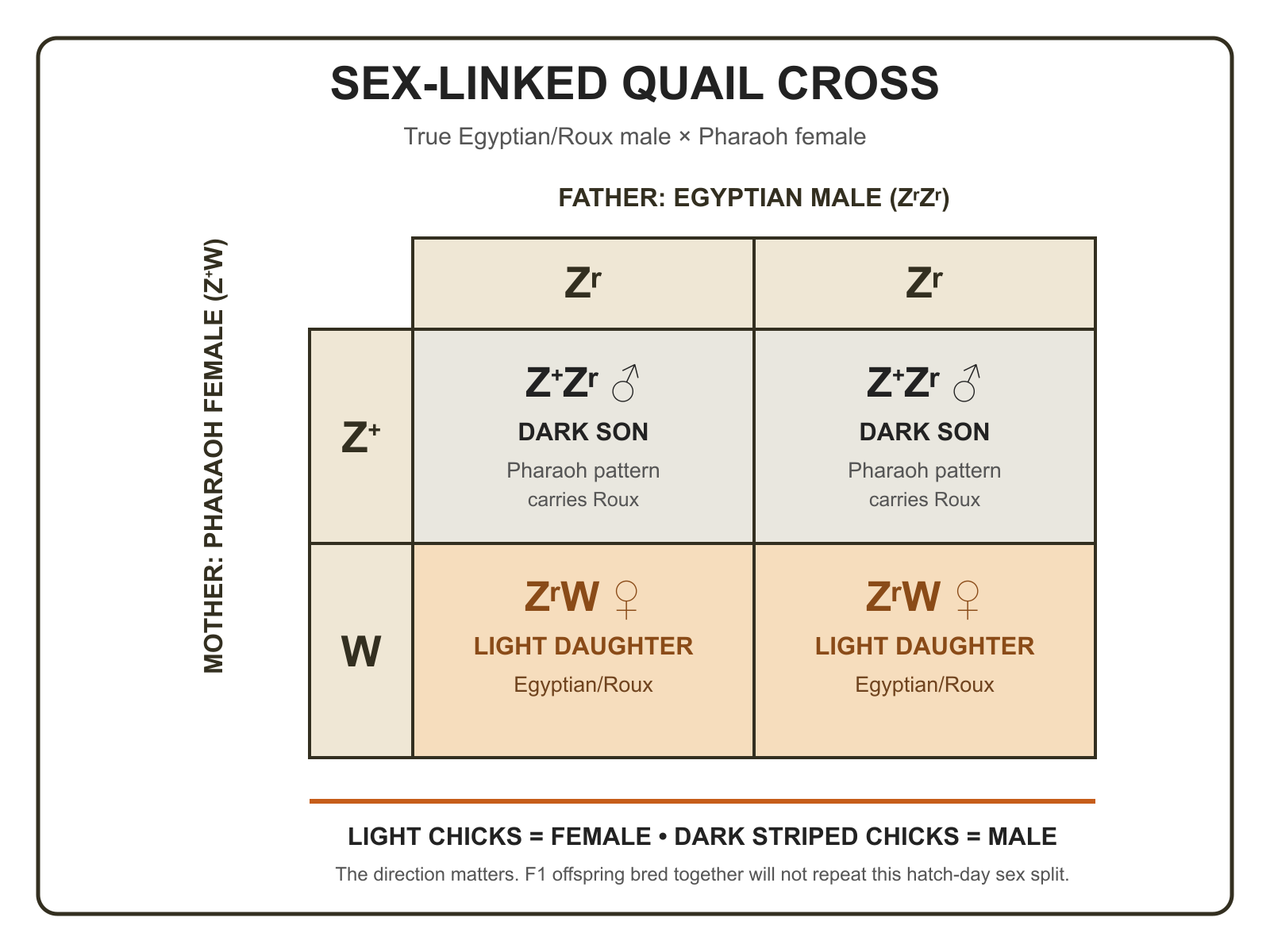
Why Egyptian Male × Pharaoh Female Works
For a clean sex-linked hatch, the parents must be set up in this direction:
True Egyptian male: Gives a Roux-bearing Z chromosome to every chick
Pharaoh female: Gives a normal Z to sons or a W chromosome to daughters
The chicks receive these combinations:
Daughter: Roux Z from father + W from mother — Light Egyptian/Roux
Son: Roux Z from father + normal Z from mother — Dark Pharaoh pattern; carries Roux
That gives the breeder an immediate visual guide: light chicks are daughters and dark striped chicks are sons.
This works because daughters receive their only Z chromosome from their father, while sons receive one Z from each parent.
Why the Direction of the Cross Matters
If the cross is reversed—Pharaoh male over Egyptian female—the hatch does not provide the same useful color split. Both male and female chicks can appear dark, even though the males may carry Roux.
That is one of the most important practical lessons in sex-linked breeding: the two parent varieties are not interchangeable. The genetic result depends on which variety is the sire and which is the dam.
Why the F1 Chicks Do Not Breed True
The F1 sons are dark because they carry one normal allele and one recessive Roux allele. The F1 daughters visibly express Roux because their single Z chromosome carries it.
If those F1 males and females are bred together, both Egyptian and Pharaoh-patterned chicks can occur in both sexes. Color no longer identifies sex reliably. The cross may produce perfectly healthy quail, but it is no longer a sex-linked hatch.
To reproduce the original result, maintain three clearly labeled groups:
A true Egyptian breeding line.
A true Pharaoh breeding line.
A production pen using Egyptian males over Pharaoh females.
Do not return the split F1 males to the pure Pharaoh pen. They look Pharaoh, but they carry Roux and can change future breeding results.
Quick Look
Hatch chicks that can be identified by color
Egyptian females and split Pharaoh males at hatch
Perfect for breeders with limited space
Great for customers wanting mostly hens
Packed in EggFoam™ and double-boxed for safe shipping
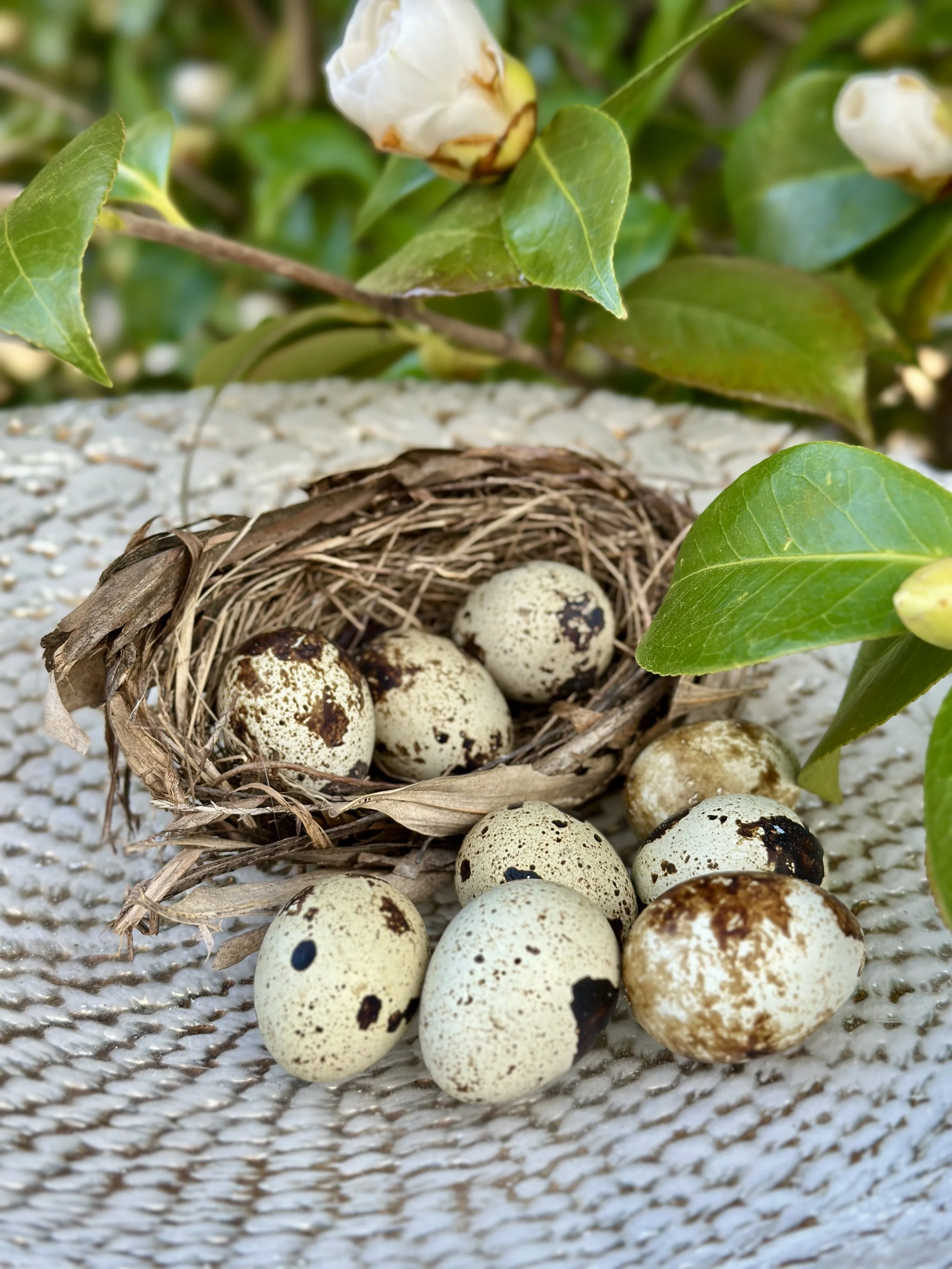
Sexable at Hatch Coturnix Quail Hatching Eggs
Want to know which chicks are male and female as soon as they hatch? This special breeding cross makes that possible.
These hatching eggs come from carefully designed breeding pens using Egyptian males bred to Pharaoh females. The resulting chicks can be identified by down color immediately after hatch. Lighter-colored chicks are Egyptian females, while darker striped chicks are split Pharaoh males.
This is an excellent option for breeders who have limited brooder space, want to raise primarily hens, or simply enjoy the convenience of identifying chicks on hatch day instead of waiting for feather development.
Keep in mind that this is a first-generation (F1) cross. The offspring will not continue producing sexable chicks if bred together. To continue producing hatch-sexable birds, you'll need to establish the proper breeding groups yourself or purchase additional eggs from this breeding pen.
At Bryant's Roost, our breeder flocks are fed a custom-formulated layer ration designed to maximize fertility, embryo vigor, and hatchability. Every order is carefully packed in our custom EggFoam shipping system, double-boxed, and shipped using the same methods we trust for our own breeding program.
What's Included
Sexable-at-hatch Coturnix quail hatching eggs
Produced from Egyptian male × Pharaoh female breeding pens
Secure EggFoam packaging
Double-boxed for shipping
Who It's For
This assortment is ideal for breeders who want to identify males and females immediately after hatch, reduce brooder space, or establish their own sex-linked breeding project.
Why Bryant's Roost?
Our breeding program is built around carefully selected genetics, breeder nutrition, and protective packaging so your eggs have the best opportunity to hatch into healthy, vigorous chicks.
Quick Look
Includes 36 Egyptian and 36 Pharaoh Coturnix quail hatching eggs
Build your own sex-linked breeding project
Produce breed-true Egyptian and Pharaoh lines
Ideal for breeders wanting to hatch and identify birds easily
Shipped double-boxed in EggFoam™ for maximum protection
Build Your Own Sex-Linked Coturnix Breeding Project
If you've ever wanted to develop your own sex-linked Coturnix breeding program, this assortment gives you the foundation to get started.
You'll receive 36 Egyptian Coturnix hatching eggs and 36 Pharaoh Coturnix hatching eggs, both from breed-true breeding pens. Once hatched, the two varieties are easy to distinguish. Egyptian chicks hatch with a lighter, blond appearance, while Pharaoh chicks are darker with the familiar striped pattern.
As your birds mature, establish three breeding groups:
Egyptian × Egyptian
Pharaoh × Pharaoh
Egyptian male × Pharaoh females
This cross produces Egyptian hens and split Pharaoh males, allowing you to build a predictable breeding program. Keep the split males separate from your pure Pharaoh breeders to maintain the integrity of your original line.
This assortment is an excellent choice for breeders who want to produce guaranteed Egyptian females for their own breeding program or for local chick sales while maintaining pure breeding stock.
At Bryant's Roost, our breeding birds are fed a custom-formulated layer ration designed to support excellent fertility, strong embryo development, and vigorous chicks. Every order is carefully packed in our custom EggFoam shipping system, double boxed, and shipped with the same methods we trust for our own breeding program.
What's Included
36 Egyptian Coturnix quail hatching eggs
36 Pharaoh Coturnix quail hatching eggs
Secure EggFoam™ packaging
Double-boxed for safe shipping
Who It's For
This assortment is ideal for breeders interested in learning Coturnix genetics, establishing sex-linked breeding groups, or producing consistent, easy-to-identify offspring while maintaining pure Egyptian and Pharaoh lines.
Why Bryant's Roost?
Every hatching egg is produced from carefully selected breeder flocks managed for fertility, hatchability, and performance. We use our own custom breeder nutrition program and EggFoam™ shipping system to help your eggs arrive in the best possible condition.
What Roux Does—and Does Not—Tell You
Roux changes pigment. It does not automatically guarantee size, temperament, fertility, egg production, or hatchability. Those are separate traits shaped by multiple genes, breeder selection, nutrition, age, and management.
The sex-linked cross tells you the chick's genetic sex through its color. It does not make every chick identical, and it does not replace good recordkeeping. Poorly maintained parent lines, unexpected color modifiers, or mislabeled breeders can muddy the visual distinction.
For a broader explanation of genotype, phenotype, dominant and recessive inheritance, read Poultry Genetics Explained Without the Confusion.
Pros and Cons of Sex-Linked Coturnix
Pros
Identify males and females immediately after hatch.
Plan brooder space and future housing more accurately.
Fill hen-only orders without waiting for feather development or sexual maturity.
Reduce the stress and handling involved in later vent sexing.
Teach practical genetics with a result that is easy to see.
Cons
Requires pure, correctly identified parental lines.
Works only when the cross is made in the proper direction.
F1 birds cannot be bred together to repeat the hatch-day color split.
Split males look Pharaoh and can accidentally contaminate a pure breeding line.
Every hatch still requires a responsible plan for both male and female chicks.
Practical Breeder Recordkeeping
Label each breeding pen and every hatch with the sire line, dam line, hatch date, and expected color result. Keep pure-line replacements separate from production-cross offspring. If the hatch produces unexpected colors, stop and investigate before selling chicks as sex-linked.
Good genetics are only useful when the records remain attached to the birds.
You can explore more Coturnix care, breeding, incubation, and genetics in the Poultry Nerds Coturnix Quail Guide and browse original studies explained in plain language in the Poultry Nerds Research Library.
Frequently Asked Questions
Are Egyptian Coturnix quail a separate species?
No. Egyptian is a breeder name commonly used for the Roux plumage mutation in Japanese/Coturnix quail (Coturnix japonica).
Can sex-linked Coturnix chicks really be identified on hatch day?
Yes, when a true Egyptian male is bred to correctly maintained Pharaoh females. The Egyptian daughters hatch lighter, while the split Pharaoh sons hatch darker with the familiar striped pattern.
Are Pharaoh quail the same thing as Sex-Linked Brown?
Not exactly. Wild-type Pharaoh and the scientifically described sex-linked brown mutation are genetically distinct even though they may look very similar. For the Egyptian sex-linked cross discussed here, the dam line should be the normal wild-type/Pharaoh allele—not a hidden Roux or sex-linked brown line.
Can I breed the light hens to their dark brothers and get another sex-linked hatch?
No. That mating can produce light and dark chicks of both sexes, so down color will no longer identify sex reliably.
What happens if I reverse the cross?
A Pharaoh male over Egyptian females does not create the same visible hatch-day separation. The direction of the cross is essential
When can ordinary Pharaoh Coturnix be feather sexed?
Pharaoh-patterned Coturnix can usually be feather sexed as juvenile breast plumage develops. Females develop speckled breasts, while males develop a more solid rust-colored breast. That is different from identifying sex by down color on hatch day.
Research Sources
Genetic Analyses of Plumage Color Mutations on the Z Chromosome of Japanese Quail
Association of a Single-Nucleotide Substitution in TYRP1 With Roux in Japanese Quail
Two New Plumage Mutations in the Japanese Quail: Curly Feather and Rusty Plumage
Jennifer Bryant is a poultry breeder, educator, and co-host of the Poultry Nerds Podcast. She owns Bryant's Roost in Bell Buckle, Tennessee, where she works with Coturnix quail, Button quail, chickens, hatching eggs, and practical breeder education.