

Egyptian Coturnix Quail
When I bought the first hatching eggs, I bought pharaoh…..only. Later, I started getting these blond chicks and I was like woooooo! What is this? That was a recessive gene coming out as my genetics got a bit tighter. At first I wanted to breed it out and then I started breeding it true. That’s how I got Egyptian. So in theory, you could buy a mixed batch of genetics and then breed them true to have clean lines.
Egyptian are a reddish tint on the pharaoh base. The have the same feather pattern but they are strawberry blond version. Still feather sexable. The cool thing is it is on the sex gene. This means the hen gives it all her kids because she only has one copy. If a hen is Egyptian, then she is homozygous or true. If a male is Egyptian, then he is true also but he has 2 copies and is homozygous. Because it is recessive, it can be hidden under pharaoh, just like how I got it, in that case the bird would look Pharoah but be heterozygous because it also carries the recessive Egyptian gene.
Over time, I bred my birds true and cleaned up the lines to not have any more mishaps. Now the cool thing about the sex linked Egyptian gene: you can create a sex-linked hatch! Now remember I said the hen has only one copy but is true because she only has one sex chromosome, we can manipulate that. If you take an Egyptian male, he has to be true, 2 copies, he can only give one copy to his daughters. Therefore, if you take an Egyptian male and put him over pharaoh hens, the offspring will be Egyptian hens and split pharaoh males. The males are split because mom donates her Pharaoh gene, dad donates his Egyptian, but it is recessive, so sons look like moms but are split genetically. Pretty cool stuff really.
I have never brought in new blood, so to keep my Egyptian lines “fresh” I use hens from the auto sexing cages and males from the Egyptian cages. I have been doing this for many years and over time I have noticed a trend that the egg size of my pharaoh hens do not seem to translate to my Egyptians. They still lay a respectable size but not near the size of my Pharoahs. This has led me to create a hypothesis that dad determines the egg size trait. This would be hard to prove as nutrition, age of the hen, stress, etc can all influence the egg size. However, since all my Egyptian hens lay smaller consistently, year after year, I feel like this could be a true statement.
Anyway, check out the Egyptian quail here and see if they are a good fit for your farm!
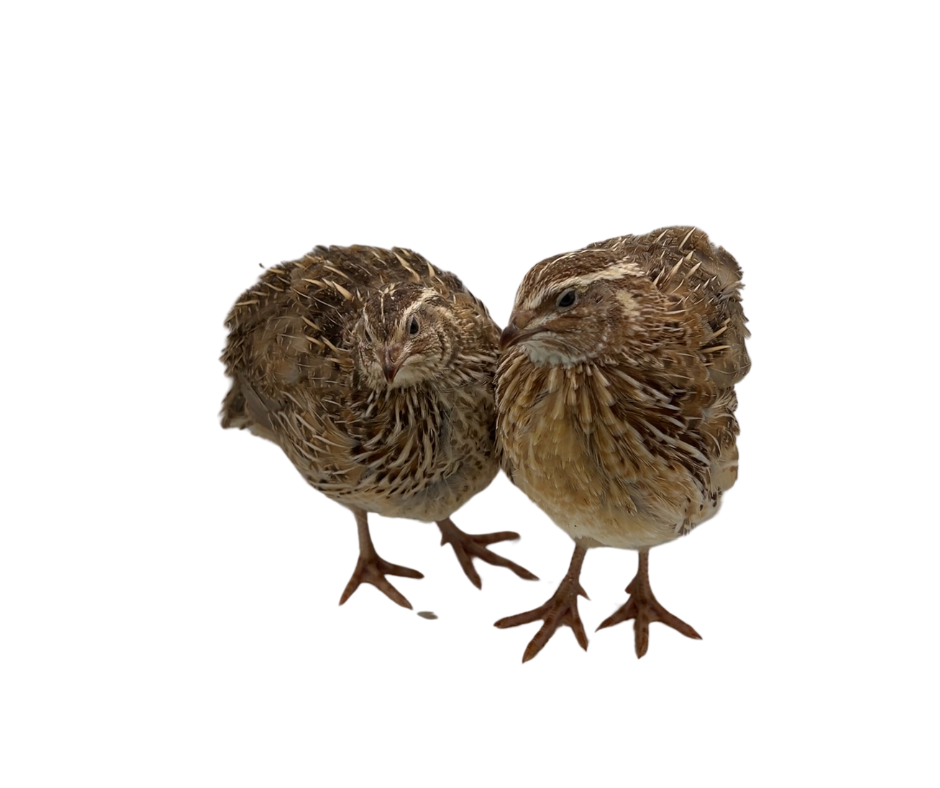
hen on left, rusty chested rooster on right