

The pallets, water lines, and stock rotation behind my monthly feed routine at Bryant’s Roost.
Quick Look
I buy feed monthly, keep bags elevated on pallets or carts, and use the oldest feed first.
Choose a dry storage location away from water lines, heat, and direct sunlight.
Mold-control products do not necessarily eliminate mycotoxins already present in feed.
Follow the manufacturer’s storage guidance rather than assuming every feed has the same shelf life.
Keep visibly moldy or otherwise suspect feed out of the feeders while you resolve the problem.
Feed Storage Starts Before I Open a Bag
I buy poultry feed by the month, which means storage is part of feeding the flock. Those bags need a place where they can stay dry, remain accessible, and move through the barn in the right order. Buying the right ration is only the beginning. What happens between unloading a bag and filling a feeder deserves attention, too.
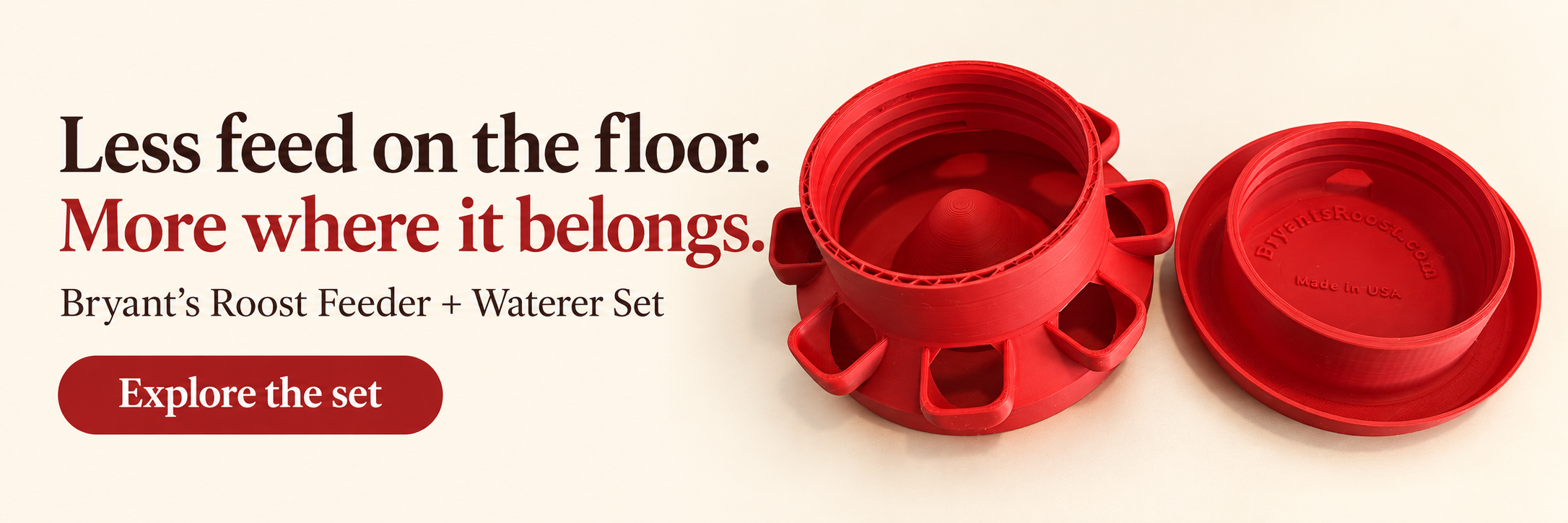
At Bryant’s Roost, my feed stays on pallets or carts, never directly on the concrete. I rotate the bags and use the oldest feed first. I also keep the feed in the back corner of the barn, away from the water lines. That last detail came from learning the hard way.
Why I Keep Feed Off the Concrete
Keeping feed elevated gives me some protection when water ends up somewhere it shouldn’t. A pallet or cart creates separation between the bags and the floor. It won’t protect feed from every possible leak, but it gives water on the concrete less opportunity to reach the bags. That matters when you have a month’s supply sitting in one place.
The location matters just as much as the platform underneath it. My feed is away from the water lines because I’ve learned to consider what could happen around the stack, not just whether the bags look dry today. Before choosing a storage corner, look at the plumbing, nearby waterers, and possible paths water could take. A spot can be convenient for unloading and still be a poor place to leave feed.
University extension guidance supports protecting feed from moisture, heat, and direct sunlight. Penn State notes that moisture can cause feed to mold and that heat and sunlight can damage vitamins. That makes storage part of preserving the ration you paid for. A roof overhead is a start, but the conditions underneath that roof still count. Penn State Extension: Small Scale Poultry Housing
Why I Don’t Like Metal Trash Cans
I don’t like metal trash cans for feed storage because of condensation concerns. That is my preference for my barn, rather than a claim that every metal container is unsuitable. University of Minnesota Extension, for example, includes metal garbage cans among its options for keeping feed protected from moisture and animals. The useful question is whether the actual container and storage conditions keep the feed dry and protected. University of Minnesota Extension: Caring for Chickens in Cold Weather
A lid alone doesn’t tell you what is happening inside a container. Check its condition, look for moisture, and make sure old feed isn’t being forgotten beneath repeated refills. Whatever material you choose, it needs to work in your building and climate. My choice is to keep the bags elevated and manage their location and rotation.
Oldest Feed First
I rotate my feed and use the oldest bags first. A new delivery needs to fit into that system without trapping the previous delivery behind it. If the oldest bag is the hardest one to reach, the arrangement is working against you. Accessibility makes a simple habit much easier to maintain.
Buying monthly works for my flock and the amount of feed I use. It is not a promise that every bag of every ration will remain suitable for a month under any conditions. Follow the manufacturer’s storage instructions and ask the mill or supplier to explain date codes you don’t understand. The purchase date alone doesn’t tell you the feed’s entire history.
Quick Look
Accurate temperature and humidity monitoring
Refreshes every 10 seconds
Built-in stand and magnetic back
AAA battery included
FREE Shipping
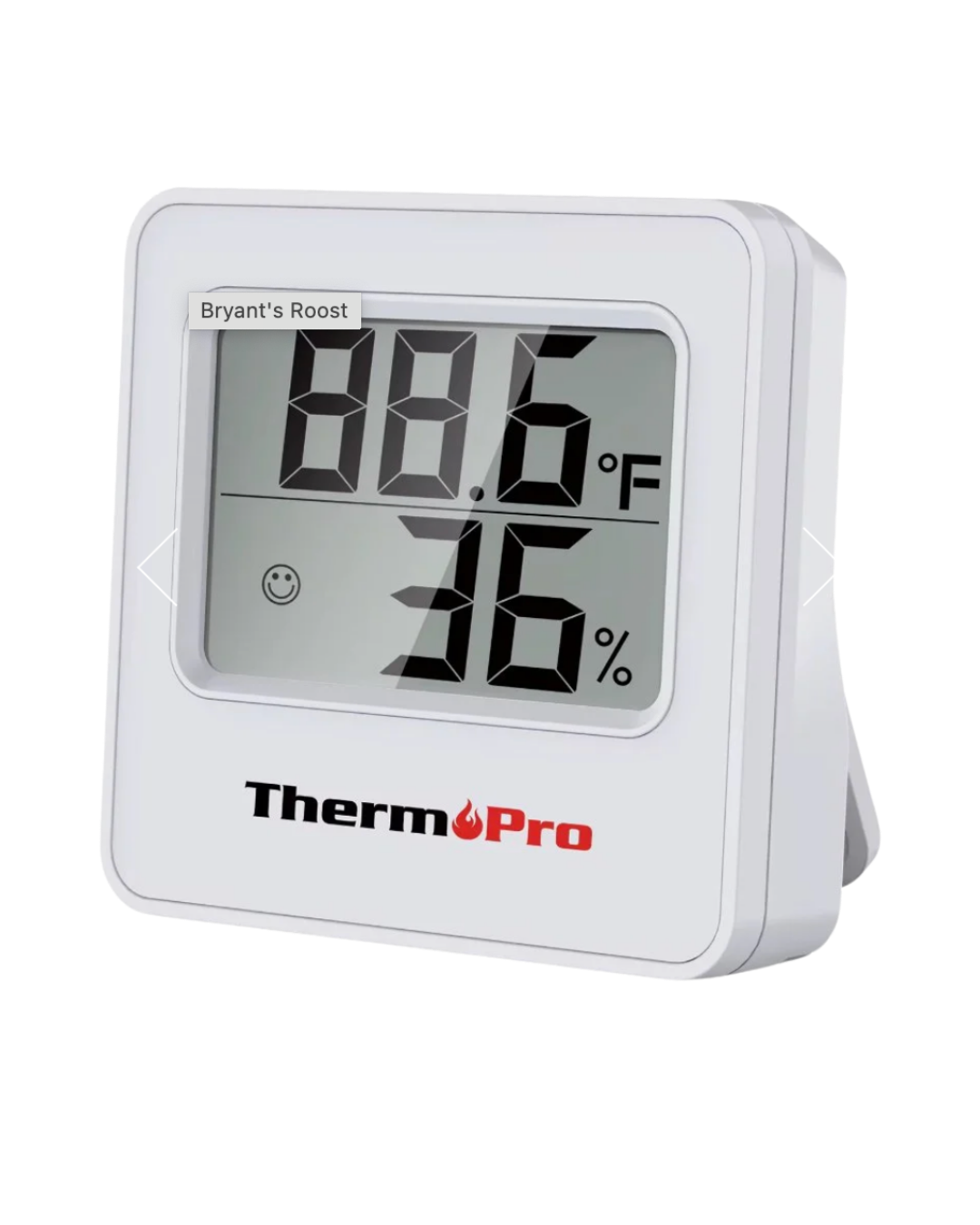
ThermoPro Incubator Thermometer & Hygrometer
Accurate temperature and humidity readings are essential for a successful hatch, and the ThermoPro Thermometer & Hygrometer is one of my favorite tools for monitoring an incubator.
Its compact size fits easily inside most incubators while providing readings with ±1°F temperature accuracy and ±3% relative humidity accuracy. The display refreshes every 10 seconds, allowing you to monitor changing conditions throughout incubation without constantly opening the incubator.
The built-in stand makes it easy to position inside your incubator, and when you're finished hatching, the magnetic back lets you store it conveniently on a refrigerator, cabinet, or other metal surface until your next hatch.
The thermometer operates on a single AAA battery, which is included, so it's ready to use right out of the package.
This is the same thermometer included in our Quail Starter Pack because it's simple, reliable, and easy for beginners and experienced hatchers alike.
What's Included
ThermoPro digital thermometer & hygrometer
AAA battery included
Built-in stand
Magnetic back
FREE Shipping
Who It's For
Perfect for chicken, quail, duck, turkey, and other poultry keepers who need an easy, accurate way to monitor incubator temperature and humidity.
Why Bryant's Roost?
I've tested a lot of incubation equipment over the years. This ThermoPro unit has earned a place in my starter kits because it's dependable, easy to read, and provides the information every hatcher needs without unnecessary complexity.
What the Research Says About Feed Quality
One original study in our research library looked at commercially purchased corn that was either left untreated or treated with a mold inhibitor. Researchers made feed from those lots over periods extending from within one week to as much as 20 weeks after delivery. The treated corn showed evidence of reduced mold growth, and broiler breeders receiving it had better hatchability of fertile eggs in both experiments. However, mycotoxins were detected in feed samples from both treatments. Brake, Hagler, and Jones, 1990
That study gives us an important distinction: controlling mold growth is not the same as demonstrating that feed is free of mycotoxins. It also does not establish a 20-week shelf life for complete poultry feed. The researchers tested a particular ingredient treatment under specific experimental conditions. I would not turn that result into a recommendation to add a product to questionable feed at home.
Another study in the library examined dietary aflatoxin in broiler breeder hens. Its abstract reports that hatchability of fertile eggs declined during the first week of exposure, while significant egg-production declines appeared later. Fertility itself was unaffected in that experiment, which is a useful reminder that fertility and hatchability are different measurements. This was a controlled toxin-exposure study, not a test of how long ordinary feed can sit in a barn. Howarth and Wyatt, 1976
For poultry keepers, these studies explain why feed quality deserves attention beyond whether birds are still eating or laying. They do not mean that every disappointing hatch began in a feed bag. Incubation, breeder condition, genetics, and other management factors still need consideration. Feed storage belongs among those questions rather than becoming an automatic diagnosis.
When Questionable Feed Should Stay Out of the Feeder
Visibly moldy feed should not go to the birds. University of Maine Extension specifically advises against feeding moldy rations because of the harm mold toxins can cause poultry. Utah State University Extension likewise advises using feed that is not stale, rancid, or moldy. If a bag has become wet or its contents have changed unexpectedly, keep it separate from usable feed while you contact the supplier. University of Maine Extension: Nutrition for Backyard Chicken Flocks · Utah State University Extension: Principles of Feeding Small Flocks
Photograph the problem and retain the bag label, lot number, and purchase information. Those details give the supplier something specific to investigate. Don’t mix questionable feed into a fresh batch while deciding what to do. A storage problem is easier to address when the affected feed remains identifiable.
The Lime and Cats Are Parts of My Barn Routine
I keep agricultural lime on the concrete beneath my elevated feed. I’m including that because it is part of how I manage the area, not because the studies discussed here establish it as a feed-preservation method. It stays on the floor, separate from the ration. My main protections are still elevation, location, and rotation.
I also have barn cats, and they help with rodent issues. That is my firsthand observation, rather than a guarantee that feed is protected from pests. Bags and the surrounding area still need attention. Cats are one part of my barn’s management, alongside keeping the feed accessible enough to notice problems.
A Storage System I Can Keep Using
My routine is straightforward: buy monthly, keep the feed elevated, store it away from water lines, and use the oldest bags first. Each part addresses something practical about managing feed in my barn. The arrangement has to work when a delivery arrives and when it is time to fill feeders. A system that is easy to follow gives those habits a better chance of lasting.
Feed storage also fits into the bigger picture of building a barn that works for the birds and the person caring for them. I discussed that connection in Your Chickens Aren’t the Problem: 7 Coop Mistakes That Make Poultry Harder Than It Needs to Be. Where we put supplies can affect both daily chores and how well those supplies hold up. Sometimes a useful improvement starts with moving a stack of feed away from a water line.
Frequently Asked Questions
How long can I store poultry feed?
Use the manufacturer’s guidance for the specific ration and storage conditions. The research discussed here does not establish one shelf life for all poultry feeds. My monthly purchasing schedule is a management choice for Bryant’s Roost, not a universal expiration rule.
Can I store feed bags directly on concrete?
I keep mine on pallets or carts rather than directly on the floor. Elevation provides some separation from water that might reach the concrete, although it cannot protect against every leak. Choose the storage location carefully as well, particularly around plumbing and waterers.
Are metal trash cans bad for storing chicken feed?
Metal containers can be useful, and some extension guidance recommends them for protection from animals and moisture. I prefer not to use them because of condensation concerns in my setup. Whatever container you choose, inspect it and confirm that it keeps feed dry under your actual conditions.
Does a mold inhibitor make contaminated feed safe?
The stored-corn study discussed here does not support that conclusion. Although treatment reduced mold growth, mycotoxins were still detected in samples from both treated and untreated feed. Do not interpret a mold-control product as proof that questionable feed has been made suitable for poultry.
Does agricultural lime preserve poultry feed?
The papers discussed here do not establish agricultural lime as a way to preserve stored poultry feed. I use it on the concrete beneath my elevated bags, separate from the feed itself. That detail describes my barn routine; it does not replace keeping feed dry, rotating stock, or following the manufacturer’s instructions.