

Why Ducks Need Deep Water: Clean Nares, Preening, and Wet Feather
Give a duck a clean tub of water and watch what happens. She does not simply take a drink. She pushes her bill below the surface, blows bubbles through her nares, tosses water over her head and back, and then begins working through her feathers with her bill.
That apparent mess is routine body maintenance.
Quick Look
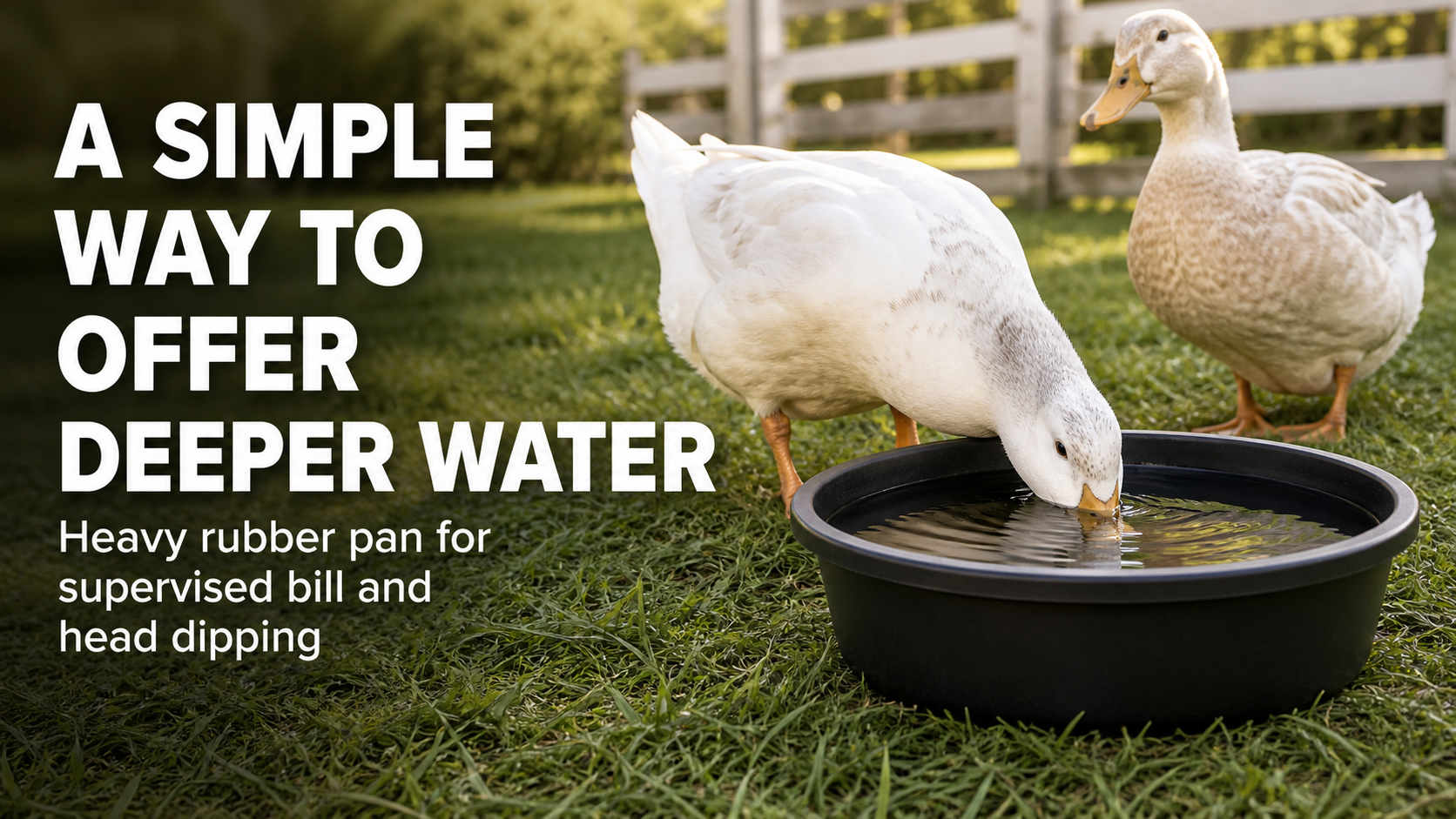
• Ducks need clean water deep enough to submerge the entire bill and dip the head.
• Head dipping clears feed and debris from the nares and helps rinse around the eyes.
• Wet preening cleans and realigns feathers; feather structure—not oil alone—creates water resistance.
• A safe tub can meet these needs. Ducks do not require a pond.
• Persistent wet feather may signal feather damage, illness, parasites, nutritional problems, or preen-gland trouble.
The short answer: every duck should have clean water deep enough to submerge the full bill and dip the head. That access helps ducks clear feed and debris from their nares, rinse around their eyes, and perform wet preening. When space and management allow, a bathing container deep enough for more complete body contact gives them an even better opportunity to maintain clean, functional plumage.
Ducks do more than drink water
A duck’s bill is built to work in water. Ducks drink, dabble, sieve food, rinse their bills, dip their heads, and toss water over their bodies. The nostril openings on the bill are called nares. Feed dust, soil, and small bits of bedding can collect around them, especially when ducks eat dry crumble or pellets.
When a duck submerges the bill and blows bubbles, water moves through and around those openings. Open-water research has found better nostril condition in ducks given access to troughs or other open water than in ducks limited to nipple drinkers. This is why a drinking system that keeps the pen dry is not automatically a complete water system for ducks.
A nipple can deliver water, but it cannot replace head dipping.
Affiliate disclosure: This post contains affiliate links. If you purchase through them, I may earn a commission at no additional cost to you. As an Amazon Associate I earn from qualifying purchases.
What ducks are doing when they preen
Preening is not one single behavior. Researchers distinguish between dry preening, when a duck nibbles or strokes the feathers without water, and wet preening, when the duck collects water in the bill or dips the head, distributes water over the plumage, and then works through the feathers.
During preening, the duck cleans the feathers, removes debris and realigns the tiny feather structures that have separated during normal activity. The bill works almost like a zipper. It draws the feather through and helps reconnect the barbs and barbules that make a feather lie flat and function as part of the whole plumage.
The duck also contacts the uropygial, or preen, gland near the base of the tail and distributes its secretion through the feathers. That secretion matters, but the familiar explanation that “oil waterproofs a duck” is incomplete.
What actually makes duck feathers water-resistant?
A duck’s water resistance is a system, not a coat of oil painted over the bird.
The outer contour feathers overlap like shingles. At a much smaller scale, feather barbs and barbules form an organized physical barrier that helps keep liquid water from reaching the insulating down and skin. The surface chemistry of the feather and preen-gland secretions contributes, but feather structure and alignment do much of the mechanical work.
A controlled study in mallards helps explain the difference. When researchers prevented ducks from reaching the preen gland for only 10 days, they did not find a significant change in plumage water retention. After three months, however, plumage condition declined and water retention increased. The practical interpretation is that preen secretion helps maintain the feather system over time; it is not the only reason water beads and rolls away.
This same feather system also supports temperature control. Dry, orderly plumage traps insulating air close to the body. Once water penetrates deeply and replaces that air, the duck can lose heat much faster. For more on the insulating job feathers perform, see How Chicken Feathers Keep Birds Warm and Cool
How water access relates to wet feather
Wet feather is a descriptive husbandry term for plumage that has lost its normal ability to shed water. Instead of beading on the surface, water penetrates and leaves sections of the bird looking dark, stringy, or soaked. The problem matters because saturated plumage does not insulate normally, and a duck can chill even when the air does not feel especially cold to us.
Clean water and normal preening behavior support prevention. Without suitable water, ducks may struggle to rinse dirt from the bill and plumage or perform a complete wet-preening sequence. But water access is not a guarantee that wet feather will never occur, and adding a pool is not a diagnosis or a cure.
Wet-feather problems can also be associated with:
• Dirty or contaminated water and chronically muddy housing
• Damaged or badly worn feathers
• Heavy mating pressure or physical feather damage
• Pain, weakness, illness, or injury that reduces normal preening
• External parasites or skin irritation
• Preen-gland inflammation, blockage, or injury
• Poor feather quality related to nutrition or molt
If one duck remains soaked while flockmates in the same environment stay water-resistant, look beyond the water container. A persistent problem deserves evaluation by an experienced avian or waterfowl veterinarian, especially if the duck is lethargic, shivering, sitting unusually low in the water, or preening less than normal.
How deep should a duck’s water be?
At minimum, provide a stable container deep and wide enough for the duck to place the entire bill under water and dip the head. The duck should be able to withdraw the head easily without getting trapped or tipping the container.
That minimum supports drinking, bill rinsing, nostril cleaning, eye rinsing, and some wet preening. When possible, add managed bathing water deep enough for the ducks to wet more of the body and perform a fuller sequence of bathing behaviors. Research comparing pools at different depths found that shallow water encouraged more dabbling while deeper water allowed more swimming and additional bathing behavior. Ducks use different depths for different jobs.
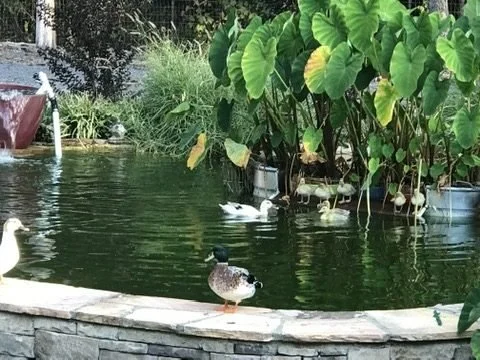
Ducks do not need a decorative farm pond to be healthy. A heavy rubber tub, stock tank, or purpose-built duck bathing station can work. The important parts are safe access, clean water, a dependable exit, and management of the wet area around it.
The tradeoff: healthy behavior without a swamp
The science is honest about the management problem: open water supports natural duck behavior, but poorly placed water can saturate bedding and increase ammonia and pathogen pressure. The answer is not to make ducks live like chickens. The answer is to design the water area for ducks.
Practical options include:
• Place water outdoors or over a well-drained surface whenever possible.
• Use pea gravel, larger smooth stone, pavers, a drain pan, or another surface that can be rinsed.
• Keep bathing water away from sleeping bedding and feed storage.
• Use a heavy container that is difficult to tip.
• Refresh drinking and head-dipping water at least daily, and more often when visibly dirty.
• Empty and scrub bathing containers before a slick biofilm develops.
• Rotate portable water stations if one patch of ground stays saturated.
If summer heat is part of your water-planning problem, use the free Summer Coop Checklist and read How Birds Stay Cool: The Science Behind Heat Stress
Watch the duck, not just the waterer
A good setup should allow you to see the full behavior: bill submerged, bubbles through the nares, head dipping, water tossed over the body, then methodical preening. If the container technically holds water but the duck cannot perform those movements, it is too shallow, too narrow, unstable, or otherwise poorly suited to the bird.
Also watch the individual. A duck that suddenly stops preening, struggles to reach the tail area, has swelling near the preen gland, or remains wet after flockmates have dried may be showing you a health problem—not merely asking for a bigger tub.

Frequently asked questions
Do ducks need a pond?
No. Ducks need clean drinking water deep enough to submerge the full bill and dip the head. Managed bathing water is beneficial, but it can be supplied in a safe tub or stock tank rather than a permanent pond.
Can ducks live with nipple waterers only?
Nipples can supply drinking water, but they do not allow normal head dipping, bill rinsing, nostril cleaning, or a complete wet-preening sequence. If nipples are used to control mess, also provide a clean open-water source designed for head dipping.
Does preen oil waterproof a duck?
It contributes to plumage maintenance, but it is not acting alone. The overlapping feathers and their microscopic barbs and barbules create the physical structure that resists water. Preening restores that alignment and distributes preen-gland secretions through the plumage.
Can lack of bathing water cause wet feather?
Inadequate clean water can contribute by limiting wet preening and allowing dirt to build up, but wet feather has multiple possible causes. Feather damage, illness, pain, parasites, nutrition, molt, and preen-gland problems may also be involved.
Why is one duck wet when the others are dry?
That difference suggests an individual feather or health problem rather than water access alone. Check for damaged feathers, reduced preening, mating injuries, skin irritation, or an abnormal preen-gland area, and seek an experienced veterinarian if it persists.
Can ducklings swim?
Ducklings can use shallow, supervised water, but they must be able to exit easily, dry completely, and return to warmth. Do not assume a young duckling is as water-resistant or thermally capable as a healthy adult.
The practical bottom line
Ducks need water that lets them behave like ducks. At minimum, that means clean water deep enough to submerge the bill and dip the head. Better systems also give them a manageable place to bathe and wet-preen without turning sleeping areas into mud.
The goal is not simply to keep a bucket full. It is to make sure the duck can use that water to clear the nares, rinse the eyes, maintain feather structure, and protect the dry insulating layer underneath.
If you are preparing to hatch duck eggs, visit the Bryant’s Roost guide to incubation temperatures, humidity, timing, and incubator choices (https://bryantsroost.com/incubating).
Jennifer Bryant is a poultry educator, breeder, and founder of Bryant’s Roost. She shares practical, science-informed guidance drawn from years of hands-on experience raising poultry, hatching eggs, and helping other keepers make better decisions for their birds.
Sources and further reading
• Cornell University College of Veterinary Medicine: Basic Duck Care (https://www.vet.cornell.edu/animal-health-diagnostic-center/programs/duck-research-laboratory/basic-duck-care)
• European Food Safety Authority: Welfare of Ducks, Geese and Quail on Farm (https://pmc.ncbi.nlm.nih.gov/articles/PMC10186070/)
• Makagon and Riber: Setting Research-Driven Duck-Welfare Standards (https://pmc.ncbi.nlm.nih.gov/articles/PMC8777151/)
• Preening Cups and Wet-Preening Behavior in Pekin Ducks (https://pmc.ncbi.nlm.nih.gov/articles/PMC10587528/)
• Effects of Access to Preen-Gland Secretions on Mallard Plumage (https://pubmed.ncbi.nlm.nih.gov/20437221/)
• Quantification of Feather Structure, Wettability and Resistance to Liquid Penetration (https://pmc.ncbi.nlm.nih.gov/articles/PMC4032543/)
• Open-Water Systems, Feather Quality and Plugged Nostrils in Pekin Ducks (https://pubmed.ncbi.nlm.nih.gov/19681402/)