

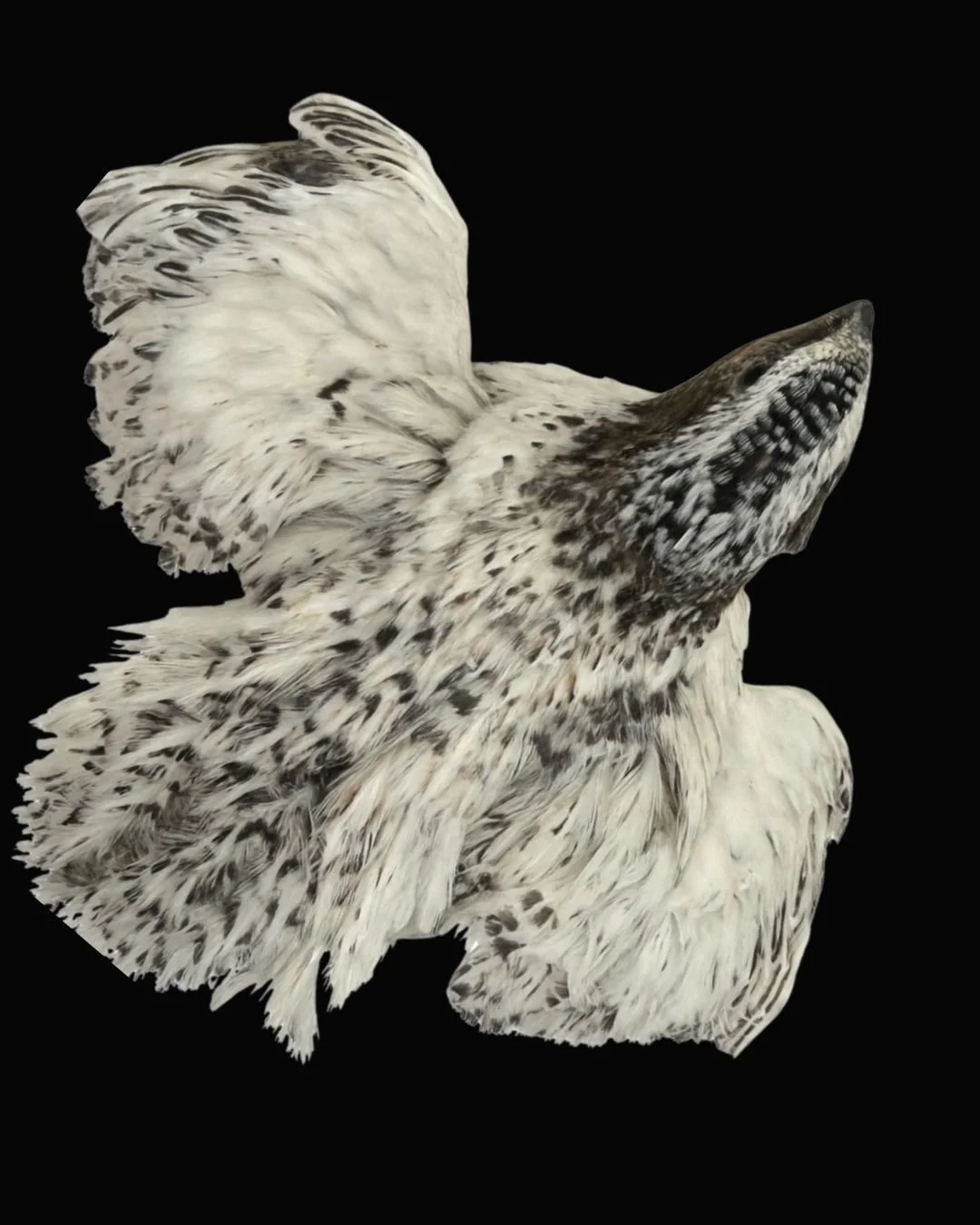
A Breeding Project Starts With a Goal
A breeding project starts with a clear goal. See how outcrossing, hard selection, careful records, and patience shaped Bryant’s Roost’s Quailzilla line.
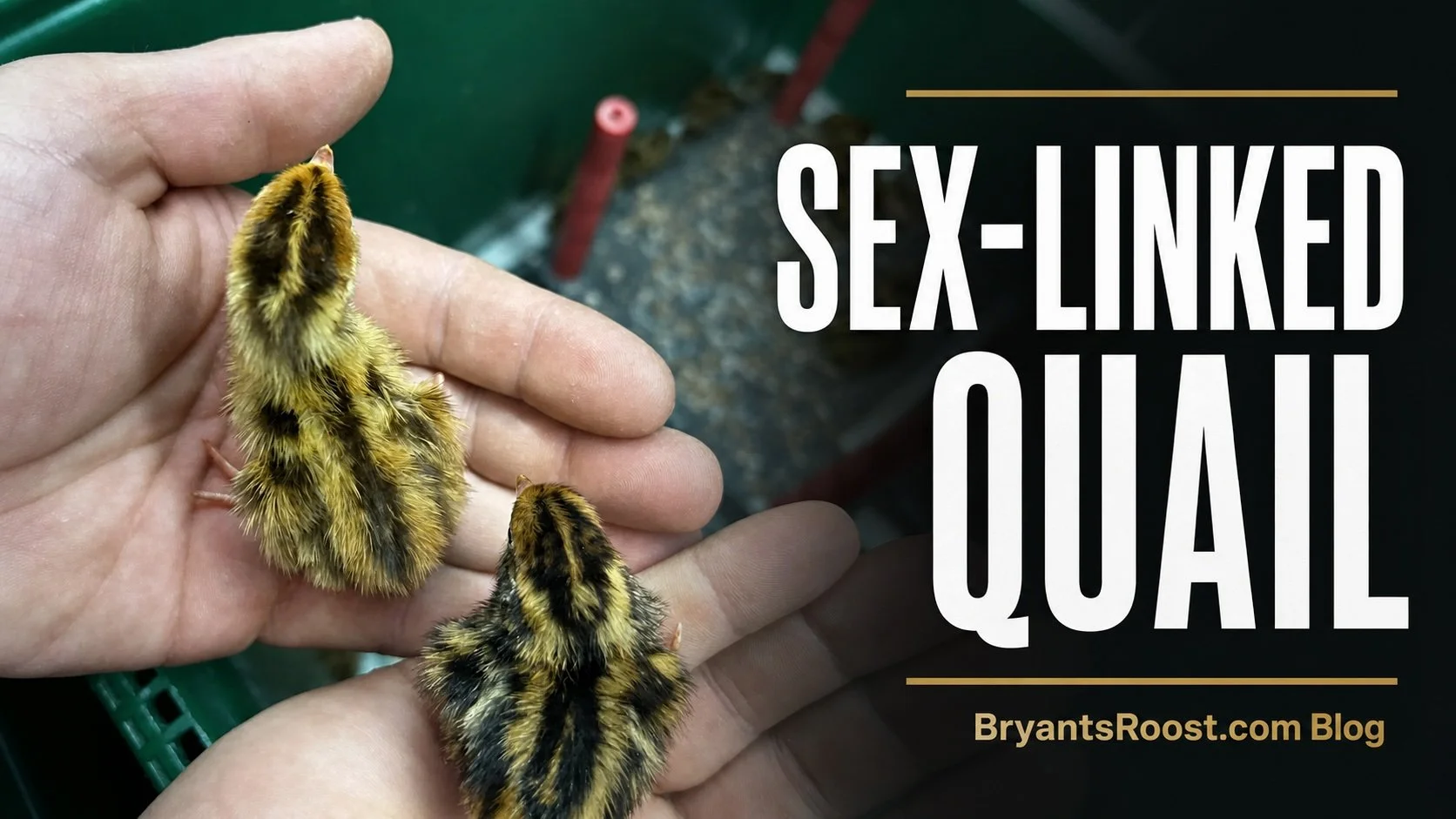
Sex-Linked Quail: How Egyptian × Pharaoh Chicks Can Be Sexed at Hatch
Sex-linked Coturnix quail can be identified as male or female at hatch—but only when the breeding cross is set up correctly. Learn how Egyptian and Pharaoh genetics create light daughters and dark sons, why the direction matters, and why the F1 chicks do not breed true.
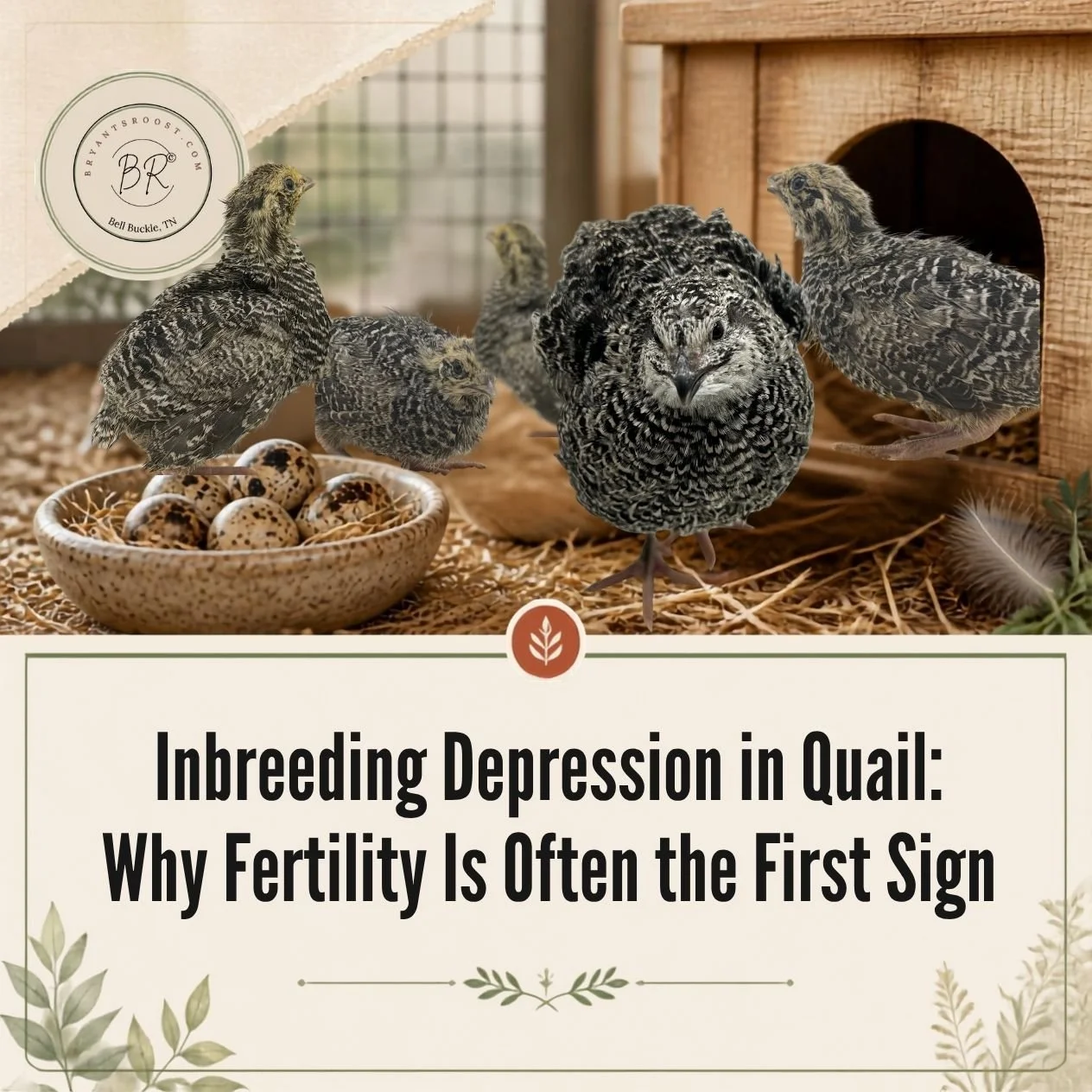
Inbreeding Depression in Quail: Why Fertility Is Often the First Sign
My first Sparkly Fee line didn’t fail with missing eyes or cross beaks. It quietly stopped reproducing. Here’s what declining fertility taught me about inbreeding depression—and how I rebuilt the line with a stronger genetic foundation.
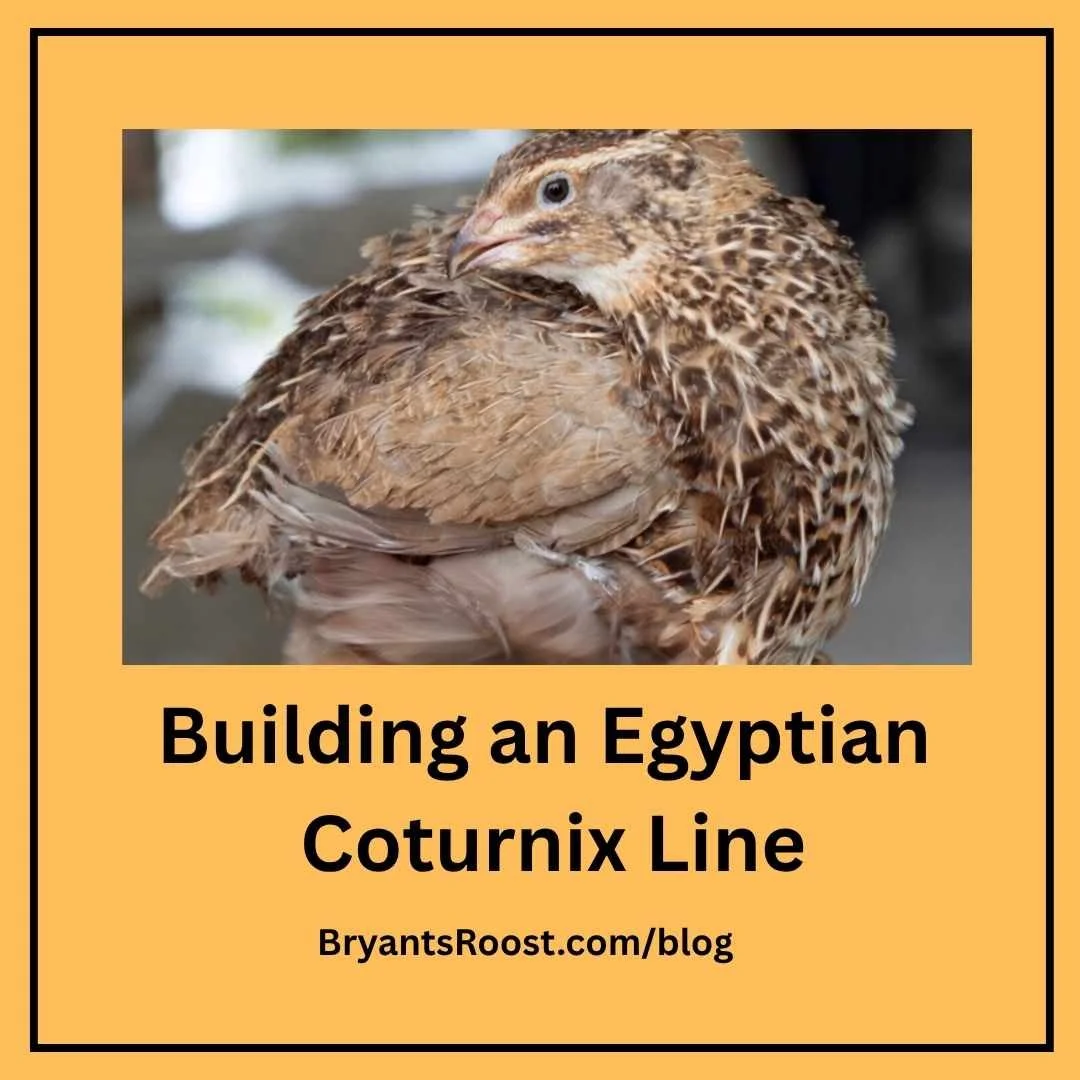
Building an Egyptian Coturnix Line: Why Selective Breeding Matters
Developing a true breeding line takes far more than producing the correct feather color. Discover how selective breeding, hidden recessive genes, and long-term planning transformed a single recessive mutation into an established Egyptian Coturnix line.
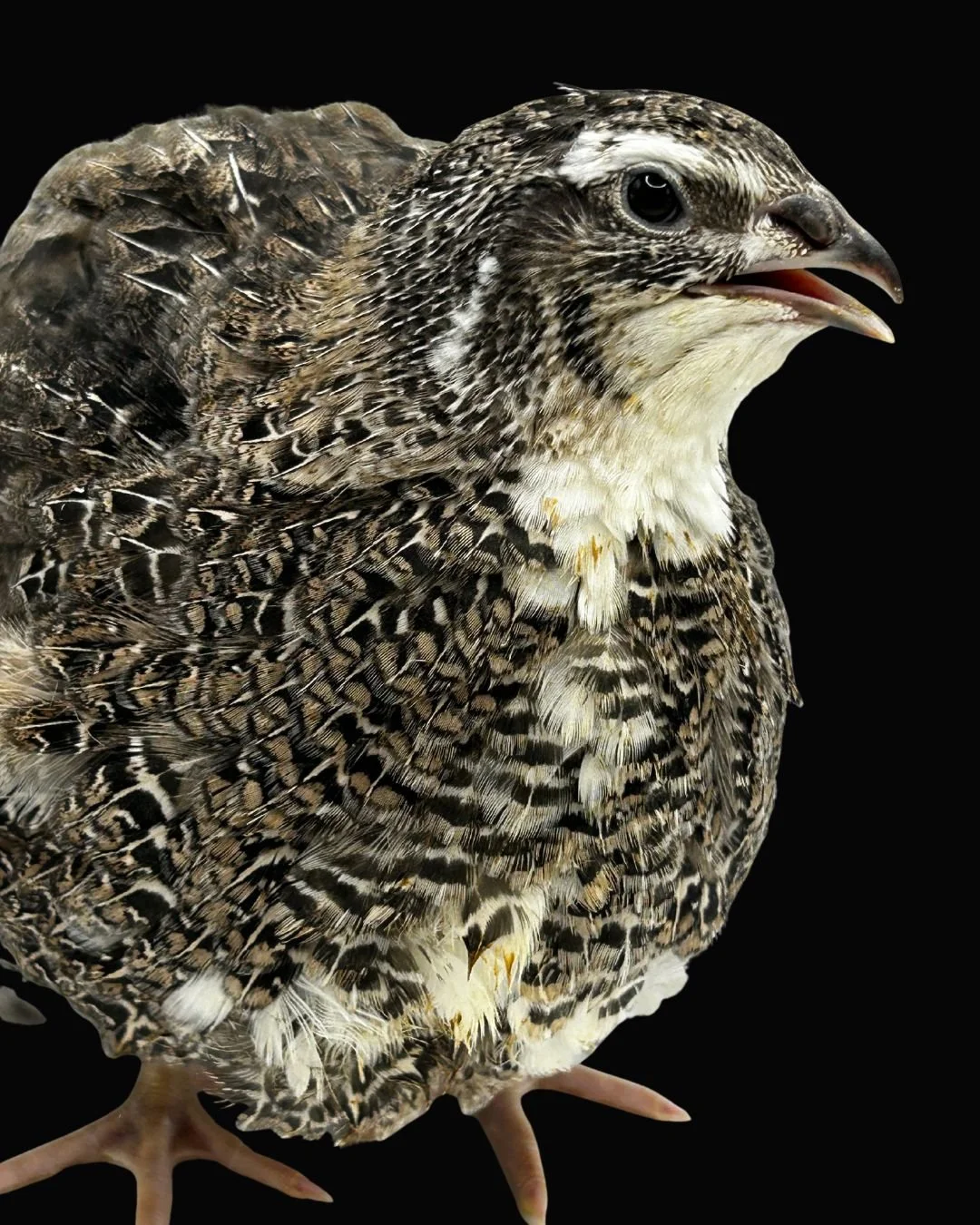
The Fabulous Fee!
The Fabulous Fee! My absolute favorite coturnix gene. Find out why in this week’s blog
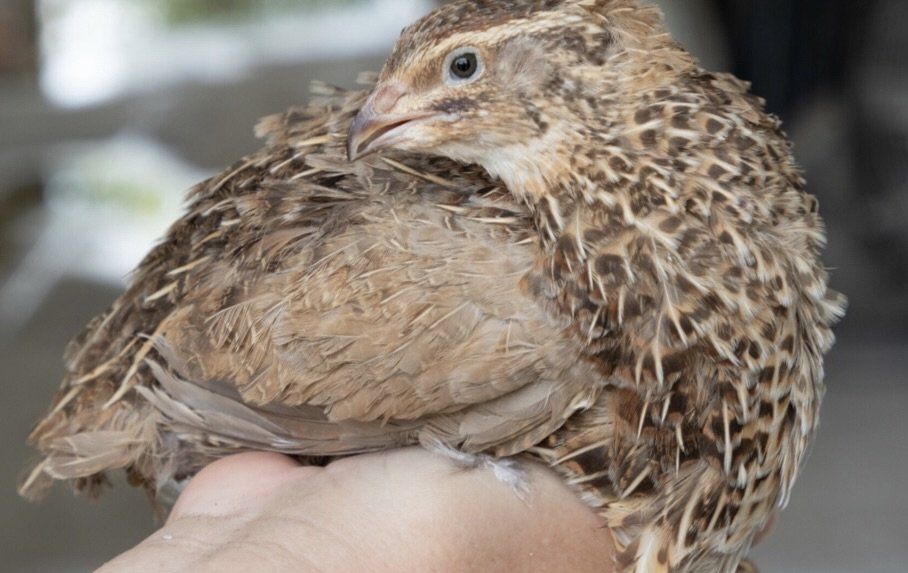
Egyptian Coturnix Quail
The Egyptian quail is a mainstay of most quail coveys and in this week’s blog, we find out why it is so special.
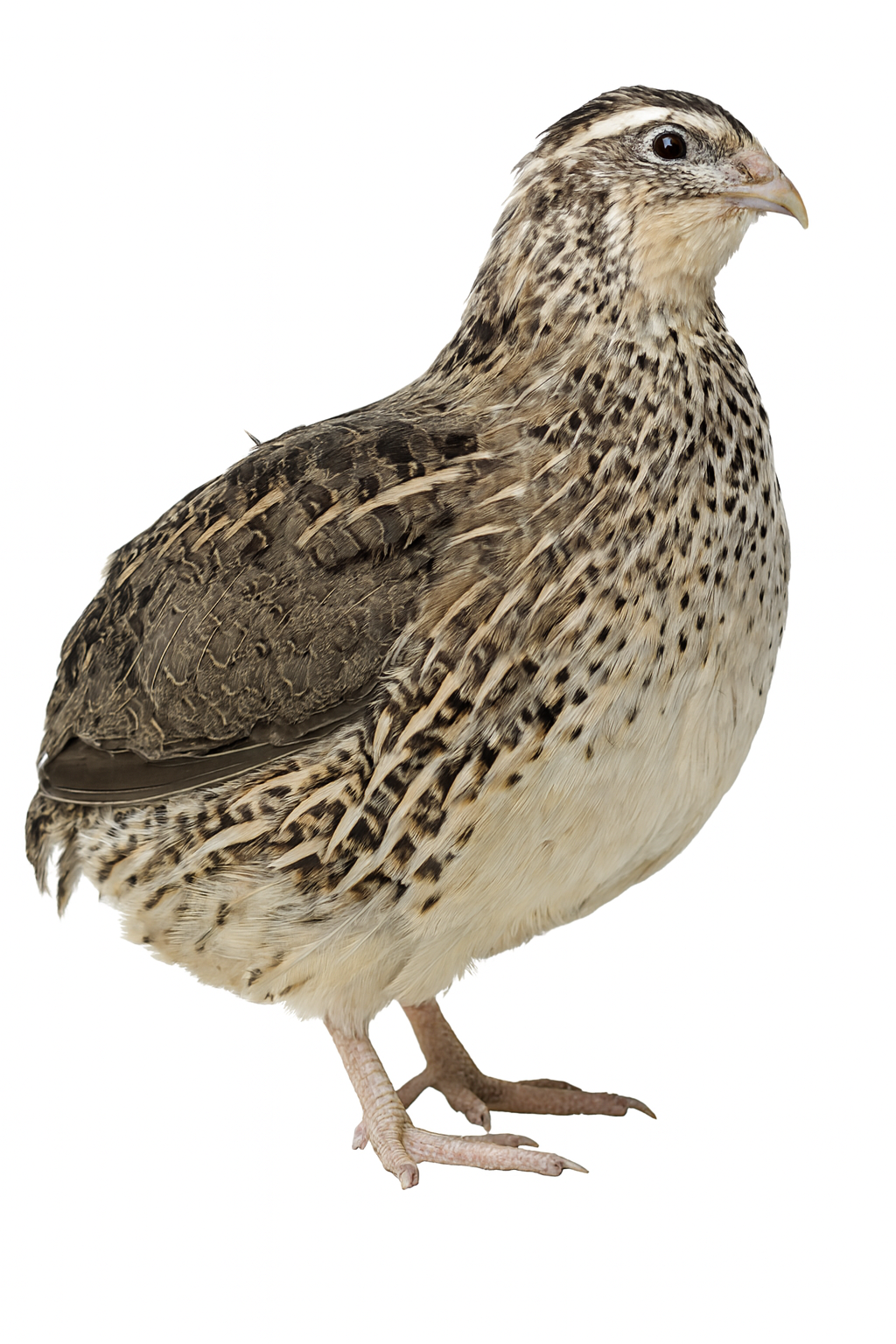
The Pharaoh Coturnix Quail: The Foundation of Every Color
The pharaoh coturnix quail is the beginning of the beginning. It is the wild type, it is feather sexable and lays the larger eggs. Find out more in this week’s blog.
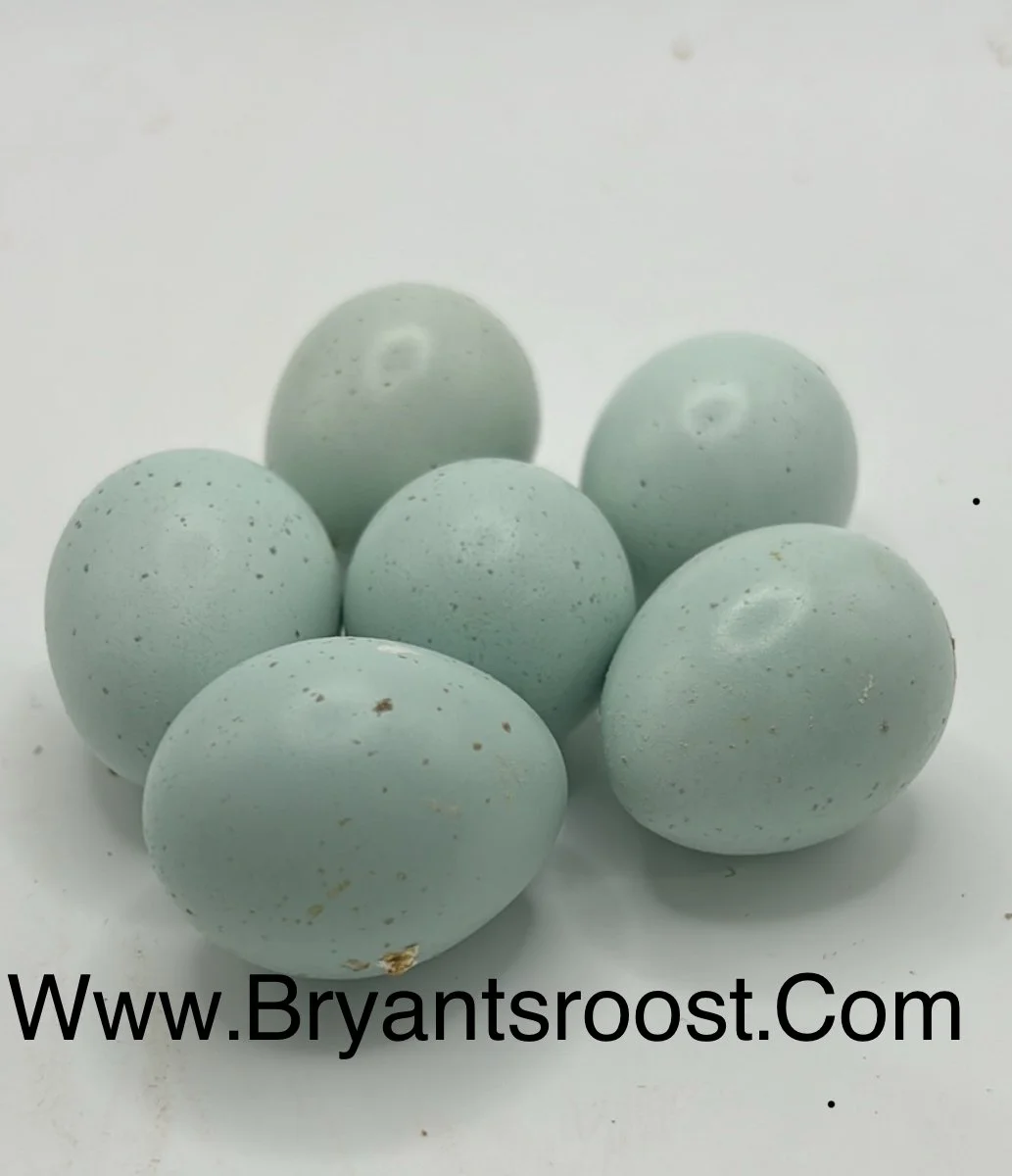
Celadon Quail
Celadon quail is simply the genetics which allow the blue egg. They can come in any feather color and any size.
Quail Breeding: Do You Really Need New Blood?
When unexpected Egyptian quail began appearing in my Pharaoh line, I didn’t immediately add new blood. I used test breeding to uncover the genetics already hiding in my flock—and ended up building two stronger breeding projects.