

How Chicken Feathers Keep Birds Warm and Cool
Chicken feathers help regulate body temperature by trapping still air near the skin, slowing heat movement both into and out of the bird’s body.
We usually think of feathers as a bird’s winter coat, but insulation works in both directions. Feathers slow the movement of heat between the bird’s body and the surrounding environment.
Beneath the visible outer feathers is a softer, downy layer. The branches of these feathers—called barbs and barbules—create thousands of tiny spaces that trap air close to the skin. Still air does not transfer heat readily, so this trapped layer forms a thermal barrier. A broody hen demonstrates this perfectly. She removes feathers from her breast to create a brood patch, allowing her body heat to transfer directly to the eggs.
Research examining heat flow through plumage found that most heat moves through the feathers and the air contained within them by conduction and convection. Radiation accounted for less than five percent of the heat moving through the plumage itself.
In Cold Weather
A bird produces heat internally through normal metabolism. The feathers do not create that warmth; they help keep it from escaping.
When a bird is cold, she can:
Fluff her feathers to increase the depth of the trapped-air layer.
Crouch to reduce the amount of surface area exposed.
Tuck her head and cover her legs with her feathers.
Reduce blood flow to exposed areas such as the comb, wattles, legs, and feet.
Increase metabolic heat production and, when necessary, shiver.
This is why a dry, fully feathered chicken can tolerate temperatures that feel surprisingly cold to us.
In Hot Weather
In summer, the same feather layer can slow heat entering the body from hot air and direct sunlight. Feathers provide shade for the skin and buffer the bird against rapid changes in environmental temperature.
However, that insulation can also make it harder for internally produced heat to escape. A bird cannot simply unzip her feather coat.
Instead, she changes how she holds her feathers and uses the unfeathered portions of her body as adjustable radiators. She may:
Hold her feathers closer to the body, reducing the depth of the insulating air layer.
Lift or hold her wings away from her sides to expose thinly feathered skin.
Increase blood flow to the comb, wattles, legs, feet, and other exposed areas.
Seek shade and reduce activity.
Pant to remove heat through evaporation from the respiratory system.
The comb, wattles, legs, and feet act as thermal windows. When the bird is hot, more warm blood can be sent near their surfaces so heat can escape. When she is cold, blood flow to those areas can be reduced to conserve heat.
Once the surrounding air approaches or exceeds the bird’s body temperature, dry heat loss becomes much less effective. At that point, the bird depends increasingly on evaporative cooling through panting—which also costs water and can disturb her acid-base balance.
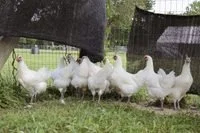
I like shade cloth to protect the birds
Make the environment work for the bird
Good airflow, deep shade, and knowing both the temperature and humidity are more useful than guessing—or automatically reaching for the hose.
What Happens During Molt?
A molting bird is replacing the very structure that provides her maximum insulation.
As old feathers are shed, gaps develop in the plumage and the trapped-air layer becomes less complete. Scientists describe this as increased thermal conductance: heat can move between the bird and her environment more readily.
Birds do not appear to develop a special new way to heat or cool themselves during molt. They must rely more heavily on the systems they already have:
Changing posture and feather position.
Seeking shelter, shade, sun, or protection from wind.
Adjusting circulation to exposed areas.
Increasing metabolic heat production when cold.
Panting and using exposed skin to release heat when hot.
Growing replacement feathers is also nutritionally and energetically expensive. Feathers are largely protein, and developing feathers have an active blood supply. The bird is therefore trying to build new plumage while also spending energy maintaining her body temperature. Molt is also one reason chickens may slow down or stop laying eggs as nutrients are redirected toward growing new feathers.
Fewer feathers do not automatically make a molting bird safer in hot weather. If the surrounding air is cooler than her body, reduced insulation may allow internal heat to escape more readily. But insulation also protects the skin from solar radiation and from heat entering the body when the environment is hotter than the bird. A hard-molting bird may therefore be more vulnerable to sudden temperature changes in either direction.
Her ability to regulate temperature is not gone—but she has less insulation available and therefore less margin for error.
Feathers are built from nutrients—not treats
Molting birds need a balanced diet to grow strong replacement feathers. Adding random high-protein treats can dilute the nutrition already provided by a complete feed. See the blog about treats.
Why Ducks Are Different
Ducks use the same basic feather-insulation system as chickens, but their plumage is highly specialized for life on water.
The visible contour feathers form an overlapping outer shell. Their barbs and barbules create a finely structured surface that resists water penetration and helps trap a layer of air. Beneath that outer layer, the down remains relatively dry and continues insulating the body.
People often say that ducks are waterproof because they spread oil over their feathers. Preen oil is important, but the science shows that it is not the oil alone that makes water roll off a duck’s back. The microscopic structure and condition of the feathers do much of the work. Preening realigns the feather barbs, maintains the plumage, and distributes oil that helps keep the feathers flexible and functional.
If that structure becomes damaged, dirty, contaminated, or poorly maintained, water can penetrate the outer feathers and compromise the insulating air layer.
A Duck’s Adjustable Foot-Radiator System
A duck’s legs and webbed feet contain little insulation and have a large surface area, making them excellent places to exchange heat.
Warm arterial blood traveling toward the feet passes close to cooler venous blood returning toward the body. This countercurrent exchange allows some heat to move from the outgoing blood into the returning blood before it reaches the feet. In cold conditions, the system conserves core warmth while still supplying enough circulation to keep the tissues alive.
Ducks can also adjust blood flow and route it through different vessels. When heat conservation is important, the countercurrent system helps limit heat loss. When the duck needs to release heat, circulation to the legs and feet can increase or bypass some of that heat recovery, allowing the webbed feet to function more like radiators.
That helps explain why access to appropriately cool water is particularly useful for ducks. Their feet are designed to exchange heat with the environment without requiring the insulating body plumage to become saturated.
The Practical Lesson
Feathers help a bird maintain stability, but they do not make her immune to heat, cold, or sudden temperature changes.
Dry, well-maintained feathers provide the best adjustable insulation. Wetting the plumage may provide necessary cooling during a heat emergency, but it also reduces the feather layer’s ability to protect the bird afterward.
That brings us back to the most useful rule:
Cool the bird with purpose, watch her response, and stop before helpful cooling becomes uncontrolled heat loss.
Plumage traps air and birds actively change feather position to alter insulation. Research on plumage and avian thermoregulation
Feather quantity, structure, barbs, and barbules determine how much insulating air can be held. Contour-feather structure research
Studies of molting birds report increased thermal conductance during molt. Sea-duck molt research
Duck water repellency comes substantially from feather microstructure, with preen oil helping preserve feather condition. Feather wettability research
Mallards regulate heat loss through blood flow and countercurrent exchange in their legs and feet. Mallard foot heat-exchange research
Frequently Asked Questions
-
Wetting a chicken can help during serious heat distress, but it should not be the first response for every bird. Begin with shade, ventilation, cool drinking water, frozen water bottles, and shallow pans for cooling the feet. If a bird is panting heavily, weak, stumbling, or becoming unresponsive, controlled wetting may provide faster relief.
-
Start with the feet, legs, comb, and wattles. These unfeathered areas act as thermal windows where circulating blood can release heat. Cooling them can help lower the bird’s temperature without saturating the insulating feather layer.
-
Water can quickly remove heat through evaporation. Controlled wetting may help stabilize a bird experiencing dangerous heat stress while she is moved into shade and better ventilation. In an emergency, the benefit of reducing a dangerously high body temperature may outweigh the temporary loss of feather insulation.
-
Wet feathers lose much of their ability to trap insulating air. A soaked chicken may continue cooling after the immediate heat danger has passed, especially in front of a fan, inside an air-conditioned space, in a draft, or as evening temperatures fall.
Wetting several birds can also increase humidity, create wet litter, encourage ammonia production, and make the enclosure less sanitary.
-
Yes. A wet bird can lose body heat through evaporation even when the weather feels warm to us. Chicks, button quail, bantams, sick birds, and other small or weakened birds are especially vulnerable because they have less body mass and fewer energy reserves.
Once the bird’s panting slows and she becomes more responsive, stop actively cooling her. Keep her away from strong drafts and allow her to dry in a comfortably warm, protected area.
-
A chilled bird may fluff her feathers, huddle, tuck her head, shiver, become unusually quiet, or stop eating and drinking. If her body temperature continues falling, she may become weak, poorly coordinated, unresponsive, or unable to stand.
Move her to a dry, draft-free location, gently towel excess water from her feathers, and warm her gradually without placing her against an intense heat source.
-
Not once the bird begins recovering. Air movement increases evaporation and can continue pulling heat from wet feathers. A fan may be useful during active heat distress, but the bird must be monitored. Once her panting slows and she becomes more alert, reduce the direct airflow and allow her to dry safely.
-
Feathers slow the movement of heat in both directions. In cold weather, they trap body heat close to the skin. During hot weather, they provide shade and help slow environmental heat from reaching the body.
Feathers do not actively cool a chicken, however. Chickens release excess heat by adjusting feather position, holding their wings away from the body, increasing blood flow to the comb, wattles, legs, and feet, and panting.
-
They can be. Missing feathers create gaps in the insulating layer, allowing heat to move more readily between the bird and her environment. A molting chicken may lose body heat faster in cool weather, but she may also have less protection from direct sunlight and extremely hot air.
Growing new feathers also requires protein, nutrients, and energy. Molting birds still regulate their temperature through behavior, circulation, and panting, but they have less insulation and therefore less room for error.
-
Use considerably more caution with small birds. Their high surface-area-to-body-mass ratio allows them to gain and lose heat rapidly. Cooling the environment and providing cool surfaces or shallow, safe foot-cooling options are generally easier to control than soaking their bodies.
A bird experiencing a genuine heat emergency may still require active cooling, but she must be watched closely and protected from becoming chilled afterward.
-
Ducks have highly water-resistant contour feathers that help protect the dry, insulating down beneath them. The microscopic feather structure does much of this work, while preening and preen oil help maintain the condition and alignment of the feathers.
Ducks also regulate heat through their large, webbed feet. Specialized circulation allows them to conserve heat through countercurrent exchange in cold conditions or increase heat loss through the feet when they are hot. This makes access to appropriately cool water particularly useful for ducks.
-
Provide deep shade, strong ventilation, clean cool drinking water, frozen water bottles, cool ground, and shallow pans where the birds can stand safely. Reduce crowding and unnecessary handling, and avoid creating wet, humid litter.
If those measures are not enough and a bird begins showing serious heat distress, cool the bird deliberately and monitor her response rather than automatically soaking the entire flock.
Jennifer Bryant is a poultry educator, breeder, and co-host of the Poultry Nerds Podcast. She helps poultry keepers understand the science behind healthier birds and better hatches.